“With Aristotle … a new cultural type was born, a model of the wise man different from that of his predecessors, and especially different from the sages.” – Carlo Natali: Aristotle: His Life and School, Princeton University Press 2013 ed., p. 2
By Ryan Smith
To our knowledge, we were the first to assess Aristotle as ENTJ. And since Aristotle is such a bedrock of the axioms of Extroverted Thinking (Te) in particular, as well as the intellectual heritage of Western civilization in general, that means that we should say a few words about why Aristotle is ENTJ.
As it happens, Aristotle was the first of the Western thinkers to craft a comprehensive system of thinking out of the various philosophies that had preceded him. Furthermore, Aristotle’s system is as concerned with what we today would call empirical science as with actual philosophy. He did not withdraw into an internal world of thoughts and images by way of which he understood the world. Rather, he seems to have projected his internal processes onto the outside world whereby he objectified them in order to understand them as physical objects.
Though type enthusiasts are often ignorant of Aristotle’s role in the history of philosophy, professional philosophers tend to fall more in line with the portrait that we have just painted above. As the scholar Giovanni Casertano has noted:
“[Aristotle’s] influence has been practically felt for more than two thousand years in all branches of science, from logic to physics, to astronomy, from biology to zoology, and, of course, philosophy. The ingenious nature of his ‘arrangement’ of knowledge, in each and every field, in a consistently organized picture where experience and rationality would meld without evident conflicts, made his thought a set and binding reference point for philosophers and scientists, thus promoting the development and widening of human cognition.” – Giovanni Casertano, in Cordero et al.: Parmenides, Venerable and Awesome, Parmenides Publishing 2012 ed., p. 23
Ironically, even Casertano’s list is incomplete: To the list of Aristotle’s accomplishments, one should also add that he compiled and systematized Ethics, Theology, Literary Theory, Rhetoric, Political Theory, Medicine, and Poetics. However, note what Casertano just said: What was so remarkable about Aristotle was the ingenious nature of his ‘arrangement’ of knowledge, in each and every field, “into a consistently organized picture where experience and rationality would meld.”
To understand what this characterization says about Aristotle’s type, let us turn to van der Hoop’s work on Jungian typology:
“It will make a great difference whether, in addition to their thinking function, persons of the [Extroverted Thinking] type make most use of Sensation or of Intuition. … If it is Intuition that comes second … Thinking will occupy itself … with sorting … ideas and motives. … We find an instance [of this type] in these philosophers whose work is chiefly concerned with … coordinating the views of various thinkers, a process in which creative work [of one’s own] may to some extent be achieved.” – J.H. van der Hoop: Character and the Unconscious, Kessinger Publishing 2010 ed., p. 169
So if a Te type has N as his auxiliary function, he is primarily concerned with organizing and coordinating knowledge. Indeed, this appears a perfect fit for Aristotle’s crowning achievement: His grand compilation of empirical knowledge into a seemingly coherent system. As we recall from both Jung and van der Hoop, the Te type’s foremost interest is not so much in interpreting facts as it is in collecting them and shaping them into a practical guide – thus giving coherence to the overall system of facts.
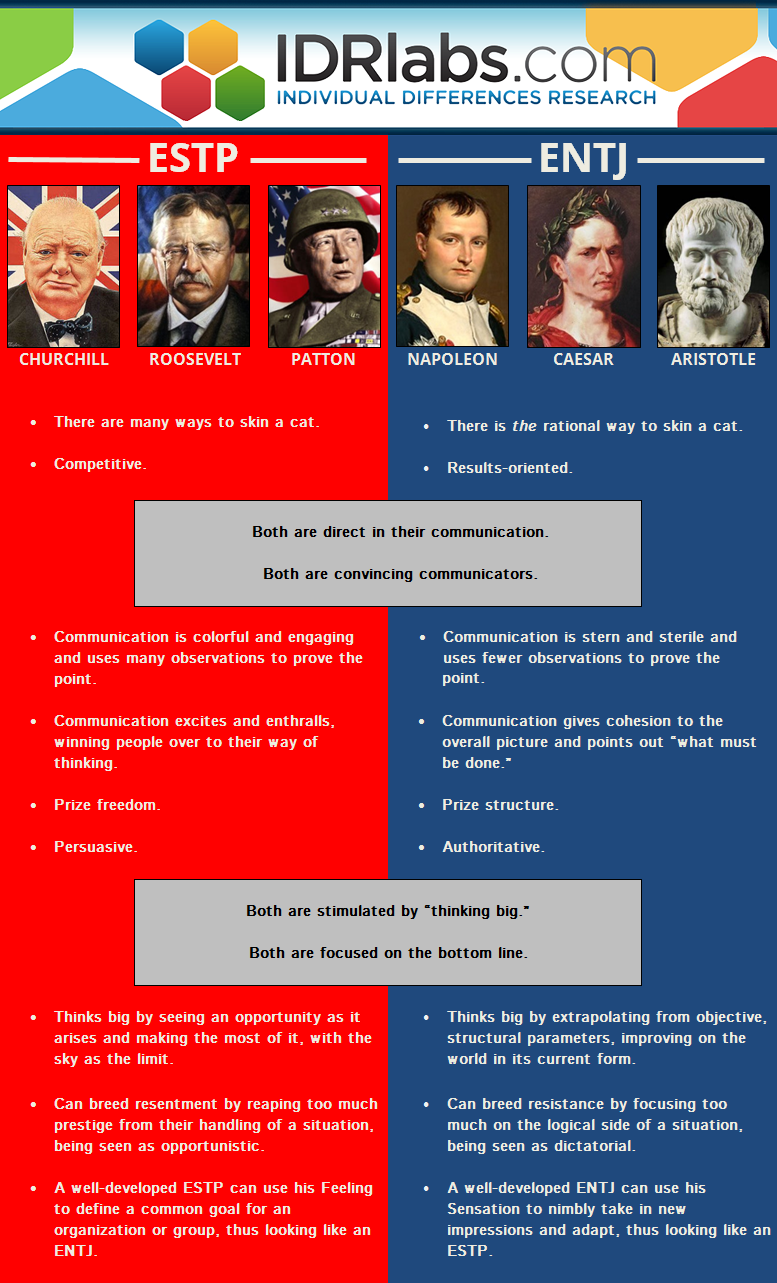
So Aristotle was in fact more of an overall systematizer, compiler, organizer, and applied empirical scientist than what would today be called a philosopher. Going by the functional role that he filled, he would thus be an ENTJ as indicated by the van der Hoop quote, but a functional role is merely a “default” and says little about the specific individual. It is a type of “all else being equal” assessment that can only be final in the absence of other types of evidence. So let’s take a closer look at what we also know about Aristotle.
Primacy of External Objects
In Jung’s definition of introversion and extroversion, the person who is primarily concerned with the external world on its own terms is an extrovert and the person who primarily processes reality through an extra layer of subjective associations is an introvert. And though Jung did not dare to commit himself to any specific typing of Aristotle, he did find it expedient to say that “Aristotle was entirely a man of reality.” With regards to Aristotle, we have several pieces of evidence to indicate that he was an extrovert.
First, Aristotle was known to have acquired every scrap of philosophical papyrus that he could find. When Plato walked past his house, he pointed out Aristotle’s dwelling and called it “the reading shop.” This indicates to us that not only did Aristotle acquire a multitude of sources to study, he was also actively engaged in studying them. This testimony is corroborated by reading Aristotle’s own writings, in which he actively comments on almost every Greek philosopher that came before him. And as the truism goes, Aristotle did not originate a doctrine: He took something of all that went before him and then added his own ideas.
This shows us something about the difference between T and N. As van der Hoop has said, the Thinking function “puts into man’s possession the sum-total of knowledge [of] the species, but it reduces his capacity to work on things for himself, because he is no longer expected to make his own observations,” whereas the N type must in some sense re-discover the knowledge that he works with for himself. So the N function is more original, but also more irrational and personal. By contrast, the T function is less original, but more rational and systematic.
Though much has been made of the amiable philosophies of Plato and Socrates, their bent is really strikingly unsystematic when compared to Aristotle’s (though of course Plato’s perception, being introverted, appears more consistent at first glance than is actually the case. A stroll through his Republic will reveal that he did not even set out a finite number of psychological types for himself (the types being the very bedrock upon which his republic is built). Rather, the number of psychological types that are present to Plato alternates as it suits his discussion.
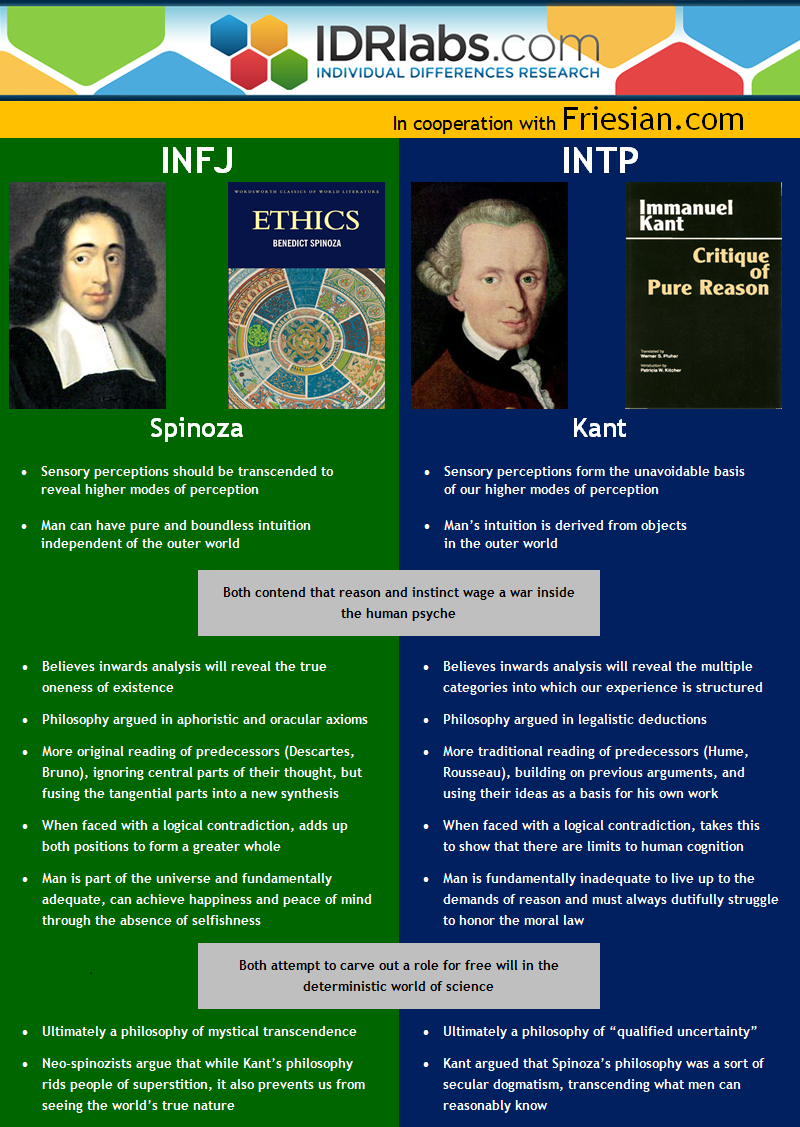
That Plato disdained Aristotle’s eagerness to learn of all prior philosophy before setting out to create his own shows us one further difference between T and N: As we have noted in our Spinoza-Kant Infographic, Kant (the T type) read his predecessors in a factual manner and accepted wholesale the arguments that he found tenable. In contrast to Kant, Spinoza (the N type) read his predecessors in an idiosyncratic manner, and even when he thought he had understood them, he actually welded their thought into something new. This difference can also be seen in Plato’s warping of Parmenides, which was perhaps intended as a development, but which ended up overshadowing Parmenides and cutting him off from the mainstream of Western thought. And finally, Aristotle’s appropriation of Plato’s doctrine is actually quite faithful, although it does make the “necessary reparations” in order to make the theory fit the real world – something that was of no concern to the world-denying Plato.
Interested in Facts for their Own Sake
“[With the Te type] emphasis will always be upon the object, not the idea.” – Marie-Louise von Franz, Lectures on Jung’s Typology, Spring Publications 1971 ed., p. 38
Likewise, in discussing the primacy of external objects in Aristotle’s psyche, it is pertinent to note that Aristotle’s own philosophical interests were but one branch upon the entirety of the tree of knowledge that he organized for himself. Though Aristotle did have a philosophical doctrine (stitched together from various predecessors and upgraded with his own criticisms and corrections), it did not define the entirety of his mental life, as was the case with Plato or Socrates. Rather, Aristotle’s interest in the external world also led him to compile purely descriptive lists like the following:
- All known plants and animals
- All known constitutions of states
- All Olympic winners
As mentioned, Aristotle’s criticism of prior philosophers was just one of the many fields which he subjected to his method of reviewing the totality of past evidence and then organizing it into something more systematic and efficient. Aristotle liked philosophy, but he could easily have done without it. According to ancient testimonies, he would be just as happy collecting clams and sea-shells on the beach and cataloging them according to their properties and species. Certainly, no one ever saw Plato or Socrates examining clams to find out what was inside them. They were far too busy with their introspective musings to interest themselves in the real world on its own terms. And so, while Aristotle’s interest in facts for their own sake does not tell us whether he is an introvert or an extrovert, it does tell us that his Sensation function is unlikely to have been repressed.
What was Aristotle’s inferior function then? A few quotes might offer the clue:
“Aristotle’s writings are in any case uncommonly impersonal.” – Jonathan Barnes: The Cambridge Companion to Aristotle, Cambridge University Press 1999 ed., p. 2
“Aristotle’s personality was not morbidly self-expressive in the way that Rousseau’s clearly was.” – Carlo Natali: Aristotle: His Life and School, Princeton University Press 2013 ed., p. ix
“Though he composed a separate course of lectures on individual conduct (the Ethics), he … offers an apology for dealing with the … individual … apart from the more general doctrine of the organization of society.” – Alfred Edward Taylor: Aristotle, Dover 1955 ed., p. 20
“To the man with any depth of feeling, [Aristotle’s Ethics] cannot but be repulsive.” – Bertrand Russell: History of Western Philosophy, §1.2.20
“His treatises are systematic, his discussions are divided into heads; he is a professional teacher, not an inspired prophet. His work is critical, careful, pedestrian, without any trace of backing enthusiasm. … He is not passionate.” – Bertrand Russell: History of Western Philosophy, §1.2.19
In fact, if the reader is willing to grant that Aristotle’s inferior function was Fi, it is possible to zoom in even further. One may turn to Marie-Louise von Franz’s characterization of the Te type and the repressed Fi that invariably exists in such types. Of the Te type in general she said:
“[In the Te type] feeling attachments to certain ideals or people are present, but they never appear in daytime activities. Such a man may spend his whole life settling problems, re-organizing firms, and stating things clearly; only at the end of his life would he start to ask himself what he had really lived for.” – Marie-Louise von Franz, Lectures on Jung’s Typology, Spring Publications 1971 ed., p. 38
And of course, of Aristotle we might famously say:
“There is in Aristotle an almost complete absence of what may be called benevolence or philanthropy. The sufferings of mankind, insofar as he is aware of them, do not move him emotionally. … There is an emotional poverty in [his] Ethics, which is not found in the earlier philosophers. … Everything that makes men feel a passionate interest in each other seems to be forgotten.” – Bertrand Russell: History of Western Philosophy, §1.2.20
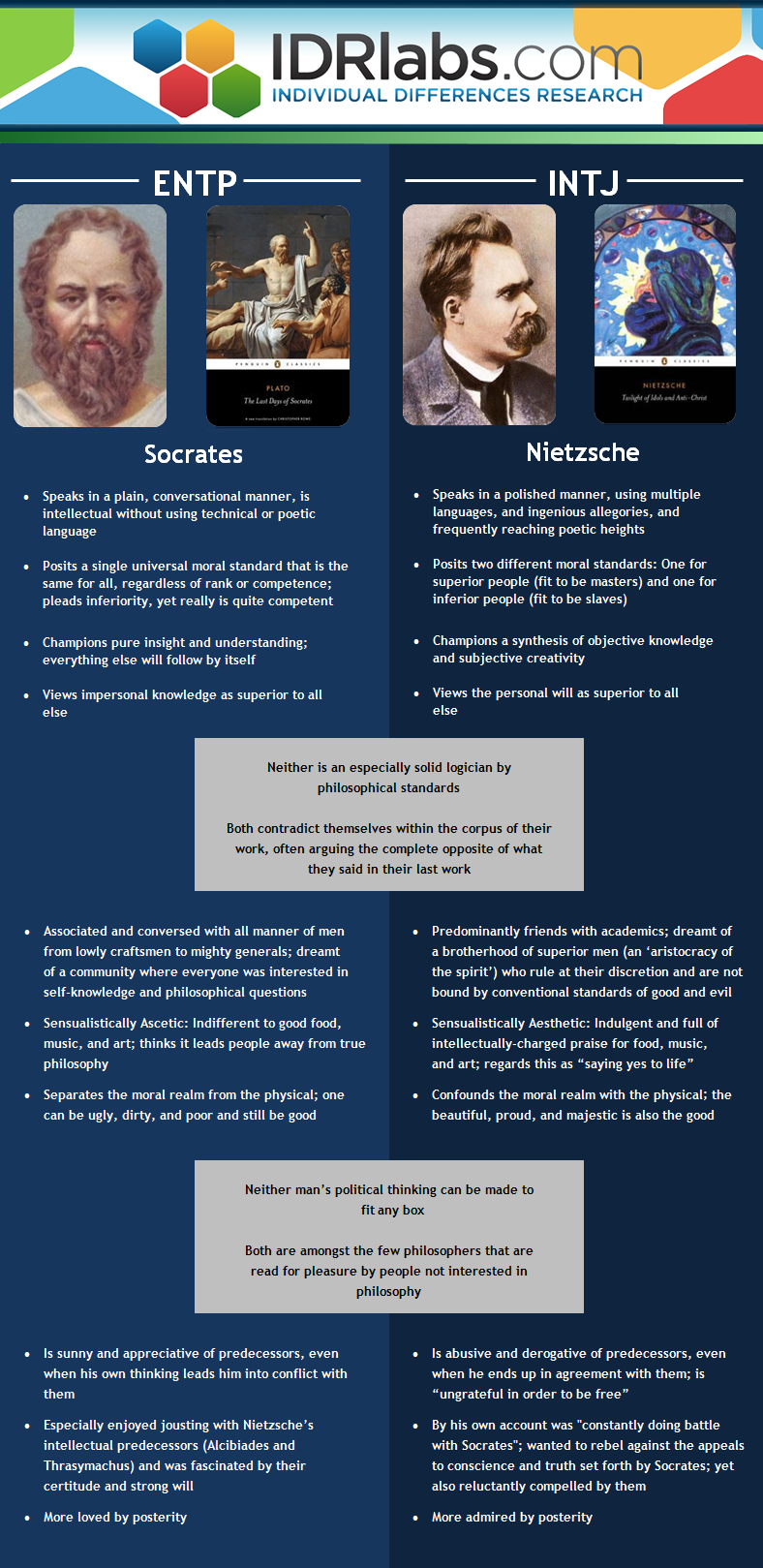
As von Franz further says, with Fi, love does not flow towards the outer object, but is bottled up inside of the person. Indeed, Aristotle’s repressed Fi is the very inverse of Immanuel Kant’s repressed Fe, which, though it was repressed from consciousness, nevertheless attempted to see a value in all men and to put all men on an equal footing; following the same laws and the same morality. Conversely, in accordance with the nature of Fi, which prompts the subject to see differences between men, Aristotle posits a differentiated, Nietzschean ethics, where some are fit to be masters and others are fit to be slaves.
Ti, Te, and Ni: Interpretation vs. Organization vs. Transcendence
“Aristotle’s Rhetoric and Poetics [are not] properly speaking, a contribution to Philosophy. They are intended as collections of practical rules.” – Alfred Edward Taylor: Aristotle, Dover 1995 ed., p. 20
When we look at Ti vs. Te, we should remember that the Te types are drawn to specific fields in order to organize and arrange them, whereas Ti types are intent upon finding some idea that might explain the object. As Joan Evans has said in her work on type:
“According to Jung’s classification, the man whose dominant function is [Te] bases the system of his life on logical conclusions arrived at through consideration of the facts of objective experience. … [But Ti] is concerned not with the intrinsic nature of the object but with [the Ti type’s] own idea of it.” – Joan Evans, Taste and Temperament, Jonathan Cape 1939 ed., p. 24
This characterization is in accordance with what Isabel Myers said about the difference between Te and Ti: Te depends upon the object, and Ti depends upon the overall idea that gives significance to the object. Where does Aristotle stand in this divide?
As it happens, Immanuel Kant had read Aristotle in preparation of his grand philosophical system. And while he certainly did respect Aristotle, Kant nevertheless complained to a friend that in his work, the layout was not going to be like Aristotle’s which “merely set forth entities side by side as he found them.” To Kant it was going to be the pleasing idea that gave coherence to the overall picture, whereas to Aristotle it was the organization of the facts themselves that gave coherence to the problems under investigation.
Likewise, though Plato would contend in his doctrine that there may be things that have existence without existing in the physical world, Aristotle vehemently denied that it could be so. To Plato, for example, Beauty could exist as a universal, even if nothing in the world was beautiful, whereas to Aristotle, Beauty is only meaningful as long as it refers to something that actually exists in the world.
To Aristotle, the physical world formed the beginning and the end of that-which-is, whereas to Plato, the physical world was but a footnote to that-which-is. As is evident from Plato, facts and knowledge should provide us with a clue to something that is altogether higher than facts and knowledge, whereas to Aristotle, facts and knowledge should provide a practical guide to living a good life.
Si vs. Se:
“It would be absurd to try to prove … what is obvious by what is not. This is the mark of a man who is unable to distinguish what is self-evident from what is not.” – Aristotle: Physics, Book II, Chapter 1
By now we have tried to explain why we think Aristotle is an extrovert and a Te type, but perhaps we have not quite said enough, and we certainly haven’t said anything about his Sensation function. Could it not equally well be introverted, thus making Aristotle an ESTJ?
First, let’s get some theory: With Si, the facts that are significant to the subject are accepted extensively, in the way that they are handed down through culture and society. With Se, on the other hand, the facts are accepted intensively, in the way that they are able to prove their worth immediately and to the naked eye (as per Myers & Myers: Gifts Differing, Davies Black Publishing 1995 ed., p. 80).
For this reason, objects suggest all kinds of subjectively significant associations to the person who views them from the Si mode of consciousness, whereas to the Se mode of perception, everything that is presented to consciousness is perceived on remorselessly utilitarian grounds as a guide to greater pursuits.
In other words, with Si, the whole cultural aspect of the object is accepted along with the object, whereas with Se, the practical experience of the object is its “own moderation and lawfulness” (as per Psychological Types §606).
When we ask ourselves which of these modes fits Aristotle better, there should be little doubt as to our answer: For Aristotle did not merely profess to make a distinction between the incidental and essential features of an object; he invented the very distinction between incidental and essential properties, and he single-handedly introduced it into the history of Western thought. In other words, one giveaway to Aristotle’s preference for Se rather than Si is that he does not submerge the facts in the cultural layer in which he finds them, but rather strips them of the cultural layer in order to get to the pure naked facts.
Another way to look at it is to say that if Aristotle had tertiary Se, he would also have auxiliary Ni. When Ni and Te dominate a person’s consciousness, the result will often (but not always) be an attitude towards knowledge where human knowledge becomes empowering in a Bayesian, “the more we know, the more we can know” fashion. That Aristotle subscribed to such as conception is evidenced by the following remarks:
“Aristotle had a valuable country estate, which he put in the care of a manager and did not personally superintend. Someone asked him why he did that; he said, ‘I did not acquire an estate by virtue of my commitment to properties, but by virtue of my commitment to my education; and by that means, I hope to acquire more properties.” – Thomas Cleary: Living a Good Life, Shambhala 1997 ed., p. 34
“Aristotle said, ‘Education adheres to [the soul] as nutrients are incorporated into a healthy body, nurturing it and making it grow.” – Thomas Cleary: Living a Good Life, Shambhala 1997 ed., p. 54
“Aristotle… seems utterly destitute of any sense of the Ineffable. There is no quality more noticeable in him than his unhesitating confidence in the adequacy of the human mind to comprehend the universe. … He never seems to be visited by misgivings as to the compass of human faculty, because his unhesitating mind is destitute of awe. He has no abiding consciousness of the fact deeply impressed on other minds, that the circle of the Knowable is extremely limited; and that beyond it lies a vast mystery … impenetrable.” – George Henry Lewes: Aristotle, Smith, Elder & Co. 1864 ed. p. 41
While it may sound obvious that “the more we know, the more we can know”, it nevertheless serves to indicate that Aristotle is less likely to have been an NTP type. To NTPs, the converse of “the more we know, the more we can know” is often true. To them, human knowledge is not enabling as much as it is stifling, as showcased by the Socratic paradox that “the only thing Socrates knew was that he did not know anything.”
Likewise, in a modern repetition of the same theme, the economist F.A. Hayek has famously said that:
“The curious task of economics is to demonstrate to men how little they really know about what they imagine they can design.” – F.A. Hayek: The Fatal Conceit , University of Chicago Press 1988 ed., p. 76
To Aristotle, then, human knowledge was enabling rather than stifling. By itself, this hardly proves anything, but it does serve as an indicator of his psychological type, and given that it fits the rest of the evidence presented in this article, it strengthens the overall case for Aristotle as an NTJ type.
Aristotle – Like a Boss
Finally, a few miscellanea: With regards to the stereotypes concerning Jungian type, the biggest cliche concerning the ENTJs is of course that ENTJs love to be in charge – that they always want to be the boss. This stereotype is even perpetuated in the professional training material on Jungian typology where the ENTJ is sometimes called “the Boss” or “the Executive,” and it is of course a cliche. But the funny thing about cliches is that they often come from somewhere in a “where-there-is-smoke-there-is-fire” sort of way. Though you cannot say that every ENTJ likes to be in charge, and you certainly can’t say that because someone loves bossing people around, then he or she must be an ENTJ, many ENTJs nevertheless do love being the boss. So what about Aristotle? Did he like being the boss?
He certainly had no shame about toppling Plato from the throne after all that Plato had done for him:
“Plato used to call Aristotle ‘Colt.’ What did he mean by this name? As everyone knows, a colt kicks its mother as soon as it has had enough milk. So Plato was hinting at a degree of ingratitude in Aristotle. When Aristotle had received from Plato the greatest seeds of philosophy and the greatest introduction to the discipline and was full up with the best things Plato had to offer, Aristotle pulled against the reins; taking his friends with him, he set up a different school and declared himself Plato’s rival.” – Aelian: Miscellaneous History, §3.19
And, likewise, when the adult Aristotle was called in by King Philip to tutor his son, the young Alexander the Great, it seems that Aristotle and Alexander got on great initially. But as the years progressed, it seems that Aristotle had a hard time remembering who was the teacher and who was the king. For while Alexander had made it his life’s mission to create a cosmopolitan empire, fusing the Greek and Persian cultures into a greater whole, Aristotle had always seen Greek culture as superior to its Persian equivalent, and though it was plain that this criticism angered Alexander, Aristotle nevertheless kept at it:
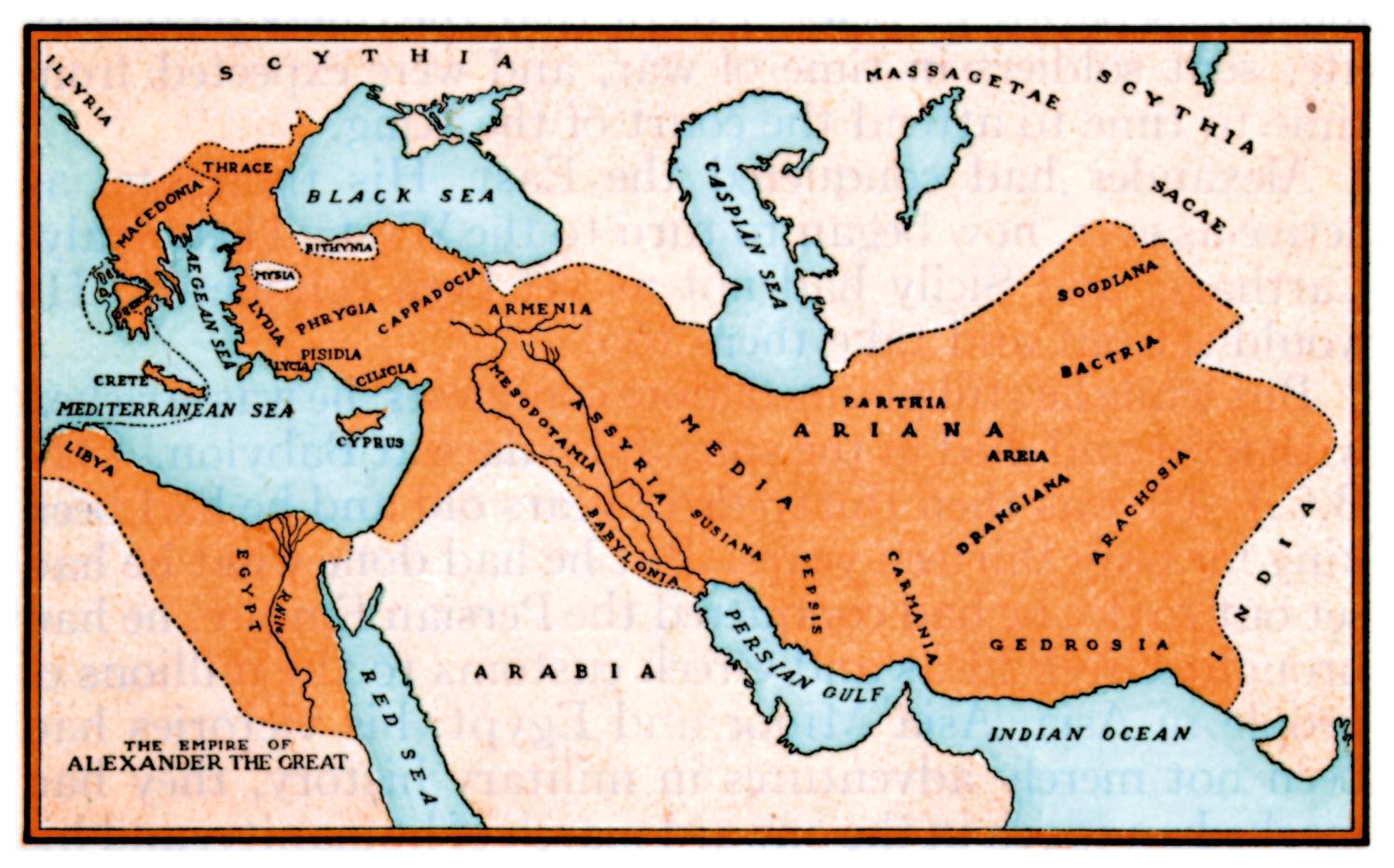
“Angry at Aristotle’s … criticisms of his embracing Persian … culture … [he] sought revenge on his old teacher. … It was an unfortunate falling-out between teacher and student. Alexander, too busy on his India campaigns, did not carry out his revenge. And Aristotle, said to have been gravely disappointed in his student [for defying his advice] would be quoted as remarking that no one would willingly suffer the environment that Alexander had created.” – Partha Bose: Alexander The Great’s Art Of Strategy, Penguin 2004 ed., p. 40
So while such anecdotes about Aristotle wanting to be in charge can never be more than icing on the cake, it nevertheless seems that there was indeed icing on Aristotle’s cake.
On the Scarcity of ENTJs in Philosophy
If our discussion above is correct, and Aristotle is in fact an ENTJ, this naturally prompts the question as to why an ENTJ would engage himself in philosophy. Looking out over the contemporary field of philosophy, one certainly finds very few ENTJs at work today. In fact, one may even say that the ENTJ is perhaps the NT that has the least of an a priori interest in philosophy.
The answer, we believe, has been given in contentious form by the physicists Stephen Hawking and Leonard Mlodinow:
“Living in this vast world that is by turns kind and cruel, and gazing at the immense heavens above, people have always asked a multitude of questions: How can we understand the world in which we find ourselves? How does the universe behave? What is the nature of reality? Where did all this come from? Did the universe need a creator? Most of us do not spend most of our time worrying about these questions, but almost all of us worry about them some of the time. Traditionally these are questions for philosophy, but philosophy is dead. Philosophy has not kept up with modern developments in science, particularly physics. Scientists have become the bearers of the torch of discovery in our quest for knowledge.” – Hawking & Mlodinow: The Grand Design, Random House 2010 ed., p. 13
In other words, philosophy today is a sort of general meta-science fueled by wonder and critical thinking, whereas the “sciences proper” (physics, biology, chemistry) are fueled first and foremost by the empirical study of objects and occurrences. Since the time of Aristotle, the progress of mankind has caused a branching out of science.
We have already seen how van der Hoop said that the Te types with auxiliary N are drawn to scientific fields in order to organize and arrange them. This characteristic of the Te type is corroborated by Joan Evans, who in her work on type writes that the Te type finds a role “where constructive ability of an objective kind is required” – a talent of a variety that does not interpret facts but collects and organizes them constructively. And, certainly, such abilities are no longer appreciated in the field of academic philosophy in the same way as they were in Aristotelian times.
Today, there are simply fewer things of concrete practical value to accomplish in the field of philosophy proper. (Or, alternatively, even if there are questions of immense practical value out there that could more suitably be settled by philosophers than by other types of specialists, the other sciences are no longer wont to listen.) Consequently, ENTJs will on average be far less likely to pursue philosophy today than at an earlier point in history. This holds true in other fields as well: Had H.J. Eysenck and Theodore Millon been born today (after the rise of Cognitive Behavioral Therapy), they would probably not have become psychologists. And had Aristotle lived today, he would probably not have become a philosopher.
Historiographical Note on Aristotle’s Type
Though we say that we are the first to propose that Aristotle was an ENTJ, we are not the first to propose that Aristotle was an extrovert. That was Korzybski (1933), followed by C.A. Meier (1989). Likewise, Joan Evans had previously hinted that Aristotle might be a Te type (1939). And of course David Keirsey Sr. has previously suggested that Aristotle was an NT (1998) – though he did not say which NT.
We are, however, the first to propose the whole type code of ENTJ for Aristotle and to try and argue that claim. Insofar as the claim is wrong, the blame belongs on our shoulders, and insofar as the assessment of Aristotle as an ENTJ will go on to win increased acceptance, the credit should go to Korzybski, Meier, Keirsey, and us.
Acknowledgements
For the analogy of Bayesian inference to NTJ cognition we are indebted to Oliver Bryant of Cape Town, South Africa.
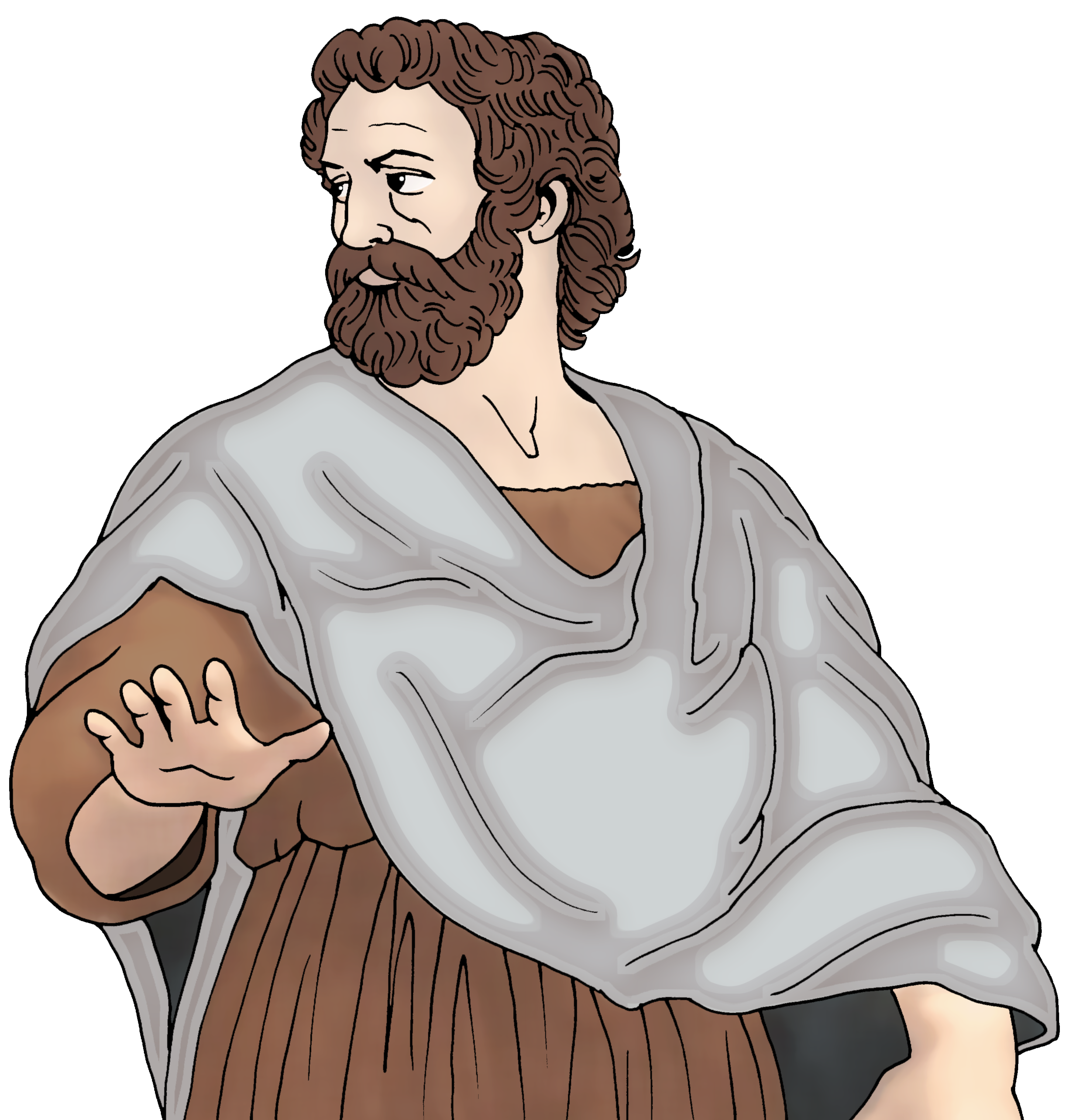
For the illustration of Aristotle, created especially for this article, we are indebted to artist Georgios Magkakis of Greece.