PREFACE TO THE ARTICLES ON GREEK LOVES
The following article series on the Greek Loves has been crafted under the supreme influence of Irving Singer’s The Nature of Love: Plato to Luther (Random House 1966) and Gardner Fair’s An Introductory Guide through Plato’s Symposium (Molloy College 2000). I am immensely indebted to both of these authors; Singer for his original division of the Greek loves, and Fair for his application of them to Plato’s Symposium. While I am in some ways quite close to these authors (in fact quoting them verbatim in places), my study also departs from their conclusions and assessments in substantial and significant ways. All errors are of course my own.
“And so it appears that every lesser creature is too small a receptacle for that good which has no end and is its own measure.” – Dante Alighieri, Paradiso, canto XIX
“A fallen god is not a man: he is a fraud; the lover has no other alternative.” – Simone de Beauvoir, The Second Sex p. 665
“I’ve seen Plato’s cups and table, but not his cup-ness and table-ness.” – Diogenes of Sinope, Fragment, GD 109
By Ryan Smith
The first of the four Greek loves is agape. This is the love found in the Homeric epics: The unapologetic love of the warrior; the love between Achilles and Patroclus. As a love that might befit a hero, agape is eruptive, uncontrollable; an explosive force that indiscriminately draws in the object of its desire and everything else around it.[1] As a love with a considerable public element to it, agape is always close to a carefree, jubilant, almost defiantly triumphant celebration of love and instinct.
Through its reckless, unchained manner and its blown-up bravura, agape also has not just a passionate, but also a comic aspect to it; a feature that one might find collectively expressed in the spirit of the carnival where the rigid order of everyday life is suspended in favor of instinct, joy and the sheer, indiscriminate largesse of love. It is here we find agape as relief: As a love that is cheerfully ironic as stability and order are thrown to the wind in ecstatic jubilee.
It is therefore hardly a surprise that it is where we find the total abandon of both self-release and radical forgiveness, the annulment of all prior faults and value judgments, that we also find agape: It flourishes where established rules are abandoned without taking stock of their raison d’etre.
With its glorification of the sexual instinct as a force that has the power to sweep aside all else, agape might be epitomized, somewhat paradoxically, as a love that cultivates the greed of giving:[4] It is at once self-indulgent and a joyful bestowal upon the other. As such, agape triumphantly disregards any notion of objective value and worth – it is a profoundly instinctual, egoic love.[5] As the carefree jubilee of love that it is, agape excludes all notions of justice and worth from the love relation, reminding us again of the carnival: In the carnival, too, our conventional value judgments are dissolved as we give ourselves over to the reversal of roles on the one day of the year where the commoner orders the nobleman about, the student instructs his teacher, the patient cures the doctor, and so forth.
The arts, moreover, with their ill-defined rules for the measurement of quality, are also an area that could be said to naturally belong to the domain of agape. And so the artist, who blithely shuns any mention of concentrated effort in favor of the sudden, audacious impulse that inspires his art, is found again to be practicing agape. In working with his instinct, rather than with his intellect, the artist confronts us with a species of beauty that is not the result of introspective reasoning, but rather a manifestation of pure instinct and whim. Hence the artist possessed of agape was exactly the artist whom Socrates had in mind when he spoke of the poet who “says true things without knowing why.”[6] In other words, agape is a natural inclination (physis) and not a wisdom that is attained over time (sophia / sophrosyne).
It is also through the radical nature of agape and its disregard for objective standards of value that complex challenges may unapologetically be met with simplicity and naivete. Hence it was agape at play when Columbus crushed the egg to make it stand. With this gesture, Columbus not only smashed the egg, but also the tyranny of the established “rules” of physics. Such impersonal rules and standards are anathema to agape, as they inhibit the creative impulses that are its lifeblood. Thus agape revels and finds a glee in springing open the frame that others have set before it and asserting its ungovernable uniqueness in the face of rules that everyone had taken for granted. Agape acts on the impetus of impulse and in that lack of reflection lies the potential to escape set means and bounds. It is therefore agape that Schiller described when he talked about the mindset of the naive poet:
“I have called naive poetry a favor of nature, in order to observe that reflection has no share in it. It is a happy toss, in need of no improvement, if it succeeds, but also capable of none, if it fails. The entire work of the naïve genius is completed in feeling; here lies its strength and its limit.”[7]
Thus, to sum up so far, agape is generally attuned to instinct and spontaneity; not argumentative, introspective, or rational, but mythopoetic, egoic, aesthetic, and aiming to change everything through unapologetic sweeping gestures that are carried out with abandon. Of good agape we will therefore say that it is a type of love that has a fine nose for the aesthetic, being instinctually attuned to it. Good agape begets a benevolent state of mind that is as forceful as it is joyous, revelling in the divine bestowal of the agape-hero’s love upon the other in a consummate celebration of life.
As for bad agape, on the other hand, we may say that the impulse-fuelled mindset of agape is one that is perennially in danger of having its charming, joyous whims succumb to pure egoity as the benevolent hero turns to self-absorbed child. The naivete turns inconsiderate and the facility of joyful giving is perverted into the baser craving for recognition, reputation, and attention, as demonstrated in the actions of Achilles.[8]
We close by pointing to two examples of agape in philosophy: Diogenes and Foucault.
Agape in Diogenes of Sinope
Diogenes of Sinope was also known as “history’s first punk” and “a Socrates gone mad.” In his time, he was known for his wanton deprecations of almost anyone who crossed his path.[9] In the actions of Diogenes, there was no room for compromise or fear. We might term him an “equal opportunity offender,” levelling insults at good-natured city dwellers and murderous autocrats alike.
While Alexander’s father, the rancorous Philip of Macedon, was marching on Greece, the Athenian Diogenes was captured behind enemy lines. Diogenes was taken before Philip and presented as an Athenian spy. Prompted to plead for his life, Diogenes answered him thus: “I only crossed Macedonian lines because I wished to see how big a fool a king could be.”[10] And upon seeing the fearlessness in his eyes, Philip let him go.
Alexander, too, was once snubbed by Diogenes. Attempting to gain the cynic’s favor, the king Alexander approached the lowly and poverty-stricken philosopher:
“Ask me any boon you like,” said Alexander.
“Step out of my sunlight,” replied Diogenes.[11]
Thus Diogenes conducted nothing less than a reversal of roles on the mighty Macedonian kings. (And adding insult to injury, the house of Alexander identified itself with the sun.)[12] Just as the carnival reverses the order of everyday life, letting commoners pretend to be nobles and nobles descend to the order of subjects for a day, so agape revels in sweeping aside all establishment. Thus, through each of these audiences with the lowly Diogenes, the mighty Macedonian kings were humbled and reduced to subjects, while the commoner Diogenes was exalted to the rank of king.
Diogenes also had his bouts with Plato. Asked of Plato’s philosophy, he remarked on the boredom that its “endless conversation”[13] instils, and with charm and naivete he appealed to the immediacy of the senses, saying that he had seen Plato’s cups and table but not his cup-ness and table-ness.[14] Likewise, Diogenes is also reported to have disrupted one of Plato’s lectures waiving a plucked chicken about at the seance while screaming “THIS IS PLATO’S MAN!”[15]
Thus, Diogenes’ refutation of Plato’s philosophy was carried forward by the same mentality that made Columbus smash the egg to make it stand. While Diogenes was undoubtedly crueler than most agape lovers, he nevertheless reveled in childlike transgressions, charming naivete, a turning of the tables and the reversal of roles. Like Columbus, he upset a great amount of affectation by a small amount of whim.[16] His actions were driven by impulse, spontaneity, and the impetus to escape set rules and value judgments.
Agape in Foucault
Just like Diogenes sought to reverse our notions about ruler and ruled, subject and king, so Foucault tried to change our conventional perceptions of doctor and patient in Madness and Civilization. “Who is really mad,” asks Foucault: “Those we confine to asylums, or those who feel compelled to confine others?” Like Diogenes, Foucault sought to liberate the marginalized and suppressed from the value judgments forced upon them by the doctors. Hence he wrote:“[Is madness] inspiration or hallucination? A spontaneous babble of words, or the pure origins of language? Must [madness] be taken [i.e. defined] from the wretched truth of men, or [must it be] discovered beyond?”[17] and: “van Gogh [did] not need to ask doctors’ permission to paint pictures.”[18]
Indeed with this work, Foucault sought not only to turn the tables on doctor and patient in a reversal of roles but also to make the “volcanoes of madness [erupt to] destroy the oldest laws”[19], that is, laws that shackle the suppressed and confine to a certain identity – these must all be transgressed in order to liberate the irrational genius from ‘beyond.’
***
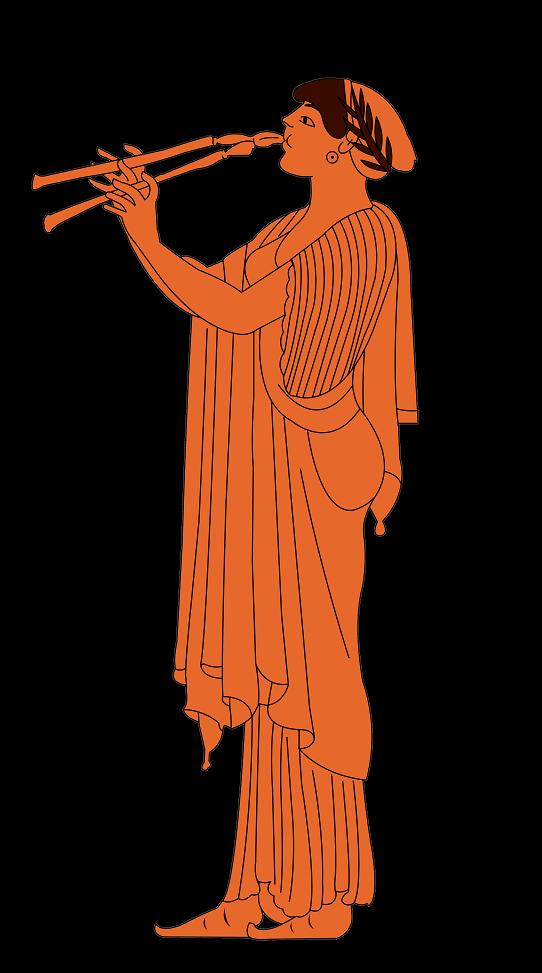
Image in the article commissioned from artist Will Rosales.
‘GD’ fragment ordering follows Guy Devenport’s ‘7 Greeks.’
REFERENCES
Beauvoir: The Second Sex Vintage Publishing 1997
Devenport: 7 Greeks New Directions Publishing 1995
Dudley: A History of Cynicism Mayo Press 2008
Foucault: Madness and Civilization Routledge 1995
Freud: Civilization and Its Discontents W.W. Norton & Company Inc. 1989
Jung: Symbols of Transformation Routledge and Kegan Paul 1970
Miller: The Passion of Michel Foucault Anchor Books 1993
Singer: The Nature of Love: Plato to Luther Random House 1966
NOTES
[1] Singer: The Nature of Love p. 285
[2] Singer: The Nature of Love p. 277
[3] Freud: Civilization and Its Discontents p. 57
[4] Singer: The Nature of Love p. 128
[5] Singer: The Nature of Love p. 295
[6] Plato: The Apology: 22ac
[7] Schiller: On Naive and Sentimental Poetry, part 2
[8] Singer: The Nature of Love p. 317
[9] Diogenes Laertius: Lives and Sayings of Eminent Philosophers, 6.54
[10] Diogenes of Sinope: Fragment GD 29
[11] Diogenes Laertius: Lives and Sayings of Eminent Philosophers 6.38
[12] Jung: Symbols of Transformation p. 194
[13] Diogenes of Sinope: Fragment GD 47
[14] Diogenes of Sinope: Fragment GD 109
[15] Diogenes Laertius: Lives and Sayings of Eminent Philosophers 6.6
[16] Dudley: A History of Cynicism: From Diogenes to the 6th Century A.D. p. 21
[17] Foucault: Madness and Civilization p. 286
[18] Foucault: Madness and Civilization p. 287
[19] Miller: The Passion of Michel Foucault p. 172