
Bipolar II Test
You are here because one of your friends linked you to their Bipolar II Test result:
Take the TestResults:
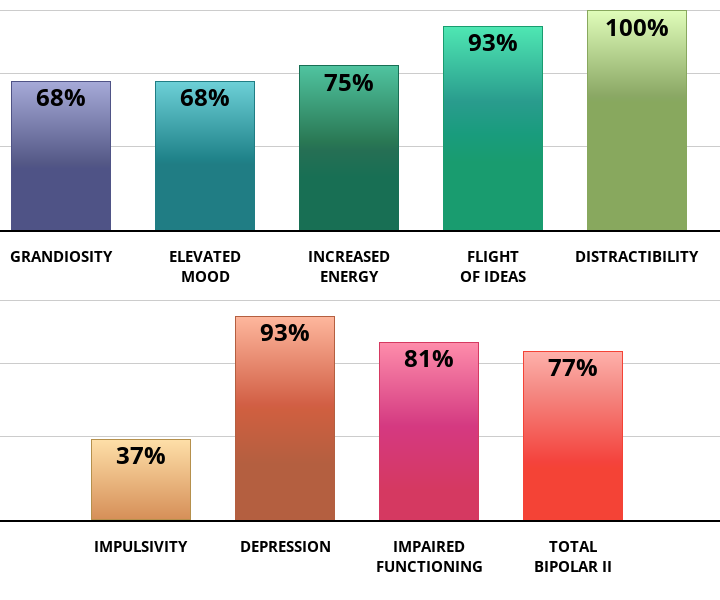
Your friend's bipolar II symptoms are high (77.34%).
Take the TestExplanation of Elements:
Grandiosity involves an exaggerated and unrealistic perception of self-importance and abilities observed during manic or hypomanic episodes. People may display an inflated belief in their extraordinary talents, intelligence, or accomplishments, surpassing objective reality. This elevated self-esteem results in behaviors and expressions reflecting an overwhelming confidence in their capabilities, often accompanied by grandiose claims regarding potential success or distinctive qualities.
Elevated mood signifies a heightened and enduring emotional state marked by euphoria, increased energy, and heightened optimism observed during manic or hypomanic episodes. Individuals may feel an intense sense of well-being, surpassing conventional norms. This elevated mood is commonly associated with a boost in confidence, enthusiasm, and a rapid influx of ideas.
Increased Energy refers to the experience of a notable surge in both physical and mental energy that surpasses typical levels. This heightened energy is frequently a crucial element contributing to observable shifts in behavior. Individuals may involve themselves in a flurry of activities, exhibit signs of restlessness, and sense an invigorating boost. Such heightened energy can result in hyperactivity, an accelerated pace of speech, and a compelling drive to achieve tasks or pursue goals.
Flight of ideas describes a swift and uninterrupted stream of thoughts, often interlinked, expressed rapidly, and in a manner that can be challenging for others to track. This accelerated thought process reflects the heightened mental energy and increased creativity prevalent in manic states. Individuals undergoing a flight of ideas may transition rapidly from one topic to another, establishing connections between seemingly unrelated concepts. They may feel an urgent need to convey their thoughts, contributing to a sense of urgency in communication.
Distractibility, observed as a cognitive symptom in bipolar disorder during manic or hypomanic episodes, involves an elevated challenge in sustaining focus or concentration on a specific task or subject due to heightened mental activity and racing thoughts. Those dealing with distractibility may discover their attention easily swayed by external stimuli or quickly transitioning from one idea to the next. This symptom can hinder the capability to finish tasks, comprehend conversations, or participate in activities demanding prolonged concentration.
Impulsivity is characterized by a proclivity to act on urges or desires without giving much thought to potential negative outcomes. In these instances, individuals may partake in impulsive behaviors that deviate from their typical habits or values. Impulsivity can take various forms, including reckless spending, engaging in risky sexual behavior, substance abuse, or making impetuous and poorly thought-out decisions.
Depression refers to episodes of intense and persistent low mood, incorporating symptoms akin to depressive disorder. Individuals experience pervasive sadness, diminished interest or pleasure in activities, changes in weight and appetite, sleep disturbances, psychomotor agitation or retardation, fatigue, feelings of worthlessness, difficulty concentrating, and, in severe cases, suicidal thoughts.
Impaired functioning refers to difficulties in various aspects of life, including work performance, strained relationships, financial repercussions from impulsive spending, legal problems arising from risky behaviors, disrupted sleep, neglect of health, academic challenges for students, and safety concerns linked to impulsive and potentially hazardous activities. Identifying these impairments is crucial for understanding and addressing the multifaceted impact of mental health conditions like bipolar disorder on an individual's daily life and overall well-being.
Total Bipolar II measures your overall degree of signs and symptoms of bipolar II disorder. Higher scores indicate a stronger indication of having bipolar II.
Take Next










GET THE FULL STORY
Become a lifetime member with a one-time payment

$11.99
WHAT YOU GET
Access to members-only tests
Ability to track and save test results
Access to all of our eBooks (value $44.94)
Access to premium type assessments and infographics
Become a memberGET THE FULL STORY
Manual of Personality Styles

$6.99
WHAT YOU GET
71-page manual, explaining the make-up of all personality styles, their hidden drives, and the theory behind the system.
Presented in an easy-to-read style and backed up by solid academic references.
14-day, no-questions-asked, money-back guarantee.
Order NowSave and monitor your results over time
Become a member today
Sign Up