
Animals Quiz
Can you separate bizarre animal facts from pure fiction?
The animal kingdom is full of surprises, but some adaptations are so bizarre they sound completely made up. From reptiles that shoot blood from their eyes to mammals with bone-crushing bites that only eat bamboo, nature's reality is often stranger than fiction. This quiz will challenge your understanding of biology by presenting you with counterintuitive facts and extremely plausible lies. Are you ready to see if you can spot the genuine miracles of evolution?
Test your knowledge by answering the trivia questions below to see how well you truly know the animal kingdom.
Question 1 of 20
What is the only bird known to be able to fly backward?
BACK NEXT
The psiandme Animal Facts That Sound Fake (But Aren’t) quiz was created by psiandme.
Nature is an endless evolutionary arms race, driving species to develop some of the most outlandish survival strategies imaginable. When faced with relentless predators or extreme environmental conditions, animals adapt in ways that defy human logic. Consider the Texas horned lizard, a creature that deters predators by restricting blood flow to its head until the pressure builds up enough to rupture tiny vessels in the corners of its eyes. This allows the lizard to shoot a stream of foul-tasting blood up to five feet away, confusing and repelling canine predators like coyotes. While it sounds like a superpower from a comic book, it is a highly effective, real-world biological defense mechanism honed over millions of years.
Survival isn't always about fighting; sometimes, it's about waiting out the storm. Extreme weather conditions have pushed animals to develop incredible states of dormancy. For instance, certain species of desert snails can enter a state of estivation—a type of summer hibernation—where they seal themselves inside their shells with a layer of dried mucus to prevent moisture loss. If the climate remains inhospitable, these resilient mollusks can sleep for up to three years, waiting for the perfect rainstorm to wake them up. Similarly, the common wood turtle has adapted to survive freezing winters trapped beneath the ice of frozen ponds. Since they cannot surface for air, they breathe through a highly vascularized area in their rear end, a process scientifically known as cloacal respiration. It sounds like a playground joke, but butt-breathing is a vital winter survival tactic.
The concept of immortality has fascinated humans for millennia, yet we are far from achieving it. However, one tiny ocean dweller has already cracked the code. The Turritopsis dohrnii, commonly known as the immortal jellyfish, possesses the unique ability to reverse its life cycle. When faced with physical damage, starvation, or environmental stress, this remarkable creature can transform its adult cells back into their earliest, polyp stage. From there, it begins its life cycle all over again. This process, known as transdifferentiation, means that biologically speaking, the jellyfish does not die of old age. While they can still be eaten by predators or succumb to disease, their cellular regeneration capabilities make them a subject of intense study for scientists researching human aging and regenerative medicine.
An animal's physical appearance and anatomical structure can often lead us to incorrect assumptions about its lifestyle or diet. The giant panda is a classic example of evolutionary contradiction. Taxonomically classified as a carnivore, a panda possesses the digestive system of a meat-eater and a bite force powerful enough to crush a bowling ball. Yet, despite being equipped to hunt and consume dense bone, the giant panda's diet consists almost entirely of bamboo. To survive on such a low-nutrient food source, pandas must eat up to 80 pounds of bamboo a day and spend most of their time resting to conserve energy. This bizarre mismatch between anatomy and behavior highlights how environmental pressures and food availability can drastically alter a species' trajectory.
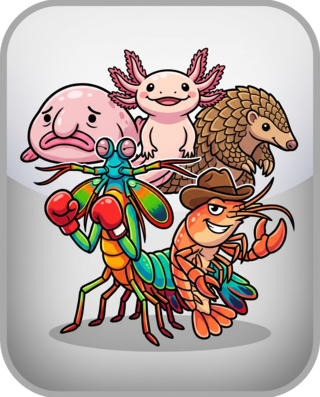
Beyond bizarre physical traits, many animals possess sensory abilities that seem almost supernatural to humans. While we rely heavily on sight and sound, the animal world is navigated through electromagnetic fields, infrared detection, and complex chemical signaling. Sharks, for example, have specialized organs called the ampullae of Lorenzini, which allow them to detect the electrical impulses generated by the muscle contractions of hidden prey. Meanwhile, the mantis shrimp boasts the most complex visual system ever discovered, with up to 16 types of color-receptive cones compared to a human's three. They can perceive polarized light and multispectral images, seeing a world of colors that we cannot even conceptualize. Learning about these hidden senses reminds us that our human experience of the world is just one of millions of possible perspectives.
Understanding these unbelievable animal facts is more than just a fun exercise in trivia; it is a crucial step in appreciating the biodiversity of our planet. Every bizarre adaptation, from the immortal jellyfish to the blood-shooting lizard, represents a unique genetic legacy that took millions of years to develop. Unfortunately, many of these incredible species are currently threatened by habitat destruction, climate change, and human interference. By learning about the strange and wonderful creatures we share the Earth with, we foster a deeper sense of connection and a stronger desire to protect them. Conservation efforts rely on public awareness, and highlighting the sheer wonder of the natural world is one of the most effective ways to inspire action and ensure these animals continue to thrive.
For more information about our online tests and quizzes, consult our Terms of Service.
Why Use This Quiz?
1. Discover Nature's Best Kept Secrets. This quiz goes far beyond basic biology to uncover the most astonishing and counterintuitive facts about the animal kingdom. You will learn about bizarre survival mechanisms, from extreme hibernation to cellular regeneration, that challenge everything you thought you knew about nature. It is a fantastic way to expand your knowledge and gain a newfound appreciation for the incredible adaptability of life on Earth.
2. Challenge Your Intuition. Many of the facts presented in this quiz sound completely fabricated, making it a thrilling test of your scientific intuition. You will have to carefully weigh highly plausible lies against unbelievable truths, sharpening your critical thinking skills in the process. Whether you are a wildlife enthusiast or just love a good trivia challenge, this quiz promises to surprise, entertain, and educate you.