
Body Quiz
How well do you know your own internal organs?
You inhabit your body every single day, yet it is incredibly easy to misremember exactly how it works on the inside. From the actual location of your heart to the surprising identity of your largest organ, human anatomy is full of fascinating facts that defy common sense. Many of us learned the basics in middle school biology, but the intricate details of our internal systems often fade over time. Now is your chance to see if you can separate anatomical fact from popular fiction.
Answer the questions below to test your knowledge of human organs and basic physiology.
Question 1 of 20
Which organ acts as a filter for the blood, recycling old red blood cells and helping the immune system?
BACK NEXT
The psiandme The Human Body 101: Organs quiz was created by psiandme.
When most people think of organs, they immediately picture the heart, lungs, or brain tucked safely away inside the body. However, the largest organ you possess is actually on the outside. The skin covers about twenty square feet in an average adult and accounts for a significant portion of your total body mass. It is a complex organ system in its own right, packed with nerves, blood vessels, and specialized tissues that protect your delicate internal structures from the outside world. Without this heavy, waterproof shield, human survival would be entirely impossible.
Moving inside the body, the liver holds the title of the largest solid internal organ and is arguably one of the most overworked. Weighing in at over three pounds, this vital structure performs more than five hundred distinct functions, from filtering toxins out of your blood to producing the bile necessary for digestion. Perhaps the most miraculous trait of the liver is its ability to regenerate. Even if a massive portion of it is removed or damaged, a healthy liver can grow back to nearly its full original size, making it entirely unique among our internal solid organs.
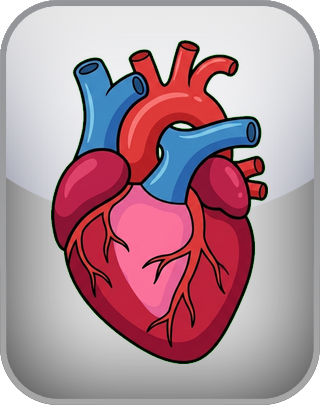
The human heart is the subject of countless myths, poems, and cultural misunderstandings, starting with its exact location. While people traditionally place their hand over the far left side of their chest during a pledge, the heart actually sits near the center of the chest cavity, tilted just slightly to the left. It is also much smaller than many realize, roughly the size of a clenched fist. Despite its modest size, this muscular pump beats around one hundred thousand times a day, pushing thousands of gallons of blood through a vast network of vessels that could circle the Earth multiple times.
Up in the skull, the human brain acts as the ultimate control center, consuming a massive twenty percent of the body's energy despite making up only two percent of its weight. Interestingly, the brain is the fattiest organ in the human body, with fat comprising about sixty percent of its dry weight. It is also entirely devoid of pain receptors. This anatomical quirk means that surgeons can perform delicate operations on conscious patients without the brain itself feeling any physical pain. It is a highly efficient, energy-hungry organ that dictates everything from basic breathing to complex emotional processing.
The digestive tract is another marvel of human engineering, operating with such autonomy that it is often referred to as the second brain. The gut wall contains millions of neurons capable of coordinating digestion semi-independently of the central nervous system. The small intestine, where the vast majority of nutrient absorption takes place, is incredibly long, measuring over twenty feet in an adult. If it were not carefully coiled and folded within the abdomen, it would stretch far taller than any human being. Meanwhile, the stomach utilizes an acid so strong it could dissolve metal, protected only by a specialized mucus lining.
Our respiratory and filtration systems feature remarkable redundancies and unique physical properties. For instance, the lungs are the only organs in the human body capable of floating in water because they are filled with air. The left lung is purposefully smaller than the right to make room for the heart. Lower down, the kidneys filter nearly two hundred quarts of fluid every single day to keep our blood clean. Although humans are born with two kidneys, a single healthy kidney is more than capable of handling the body's filtration needs, which is why living kidney donation is a safe and common procedure.
While anatomists generally agree there are around seventy-eight distinct organs in the human body, only five are considered absolutely vital for survival: the brain, heart, lungs, liver, and kidneys. People routinely live long, healthy lives after the removal of non-vital organs like the spleen, gallbladder, or appendix. Yet, even the smallest organs play massive roles in our daily functioning. The tiny, pea-sized pituitary gland acts as a master switchboard, regulating multiple other endocrine organs and influencing nearly every system in the body. Every organ, whether vital or expendable, works in a deeply interconnected network to sustain human life.
For more information about our online tests and quizzes, consult our Terms of Service.
Why Use This Quiz?
1. Test Your Anatomical Knowledge. Taking this quiz is a fantastic way to see how well you actually understand the body you live in every day. You will learn surprising facts about organ sizes, locations, and functions that often contradict popular belief. It is an engaging way to brush up on basic biology while discovering just how resilient and complex human physiology truly is.
2. Challenge Common Health Myths. Many of us hold onto outdated or incorrect information about our internal organs, from where the heart is located to how digestion works. This quiz provides a fun, low-pressure environment to correct those misconceptions. By the end of the test, you will have a much clearer picture of how your vital systems operate and cooperate to keep you alive.