
Mahjong Solitaire
Can you clear every tile?
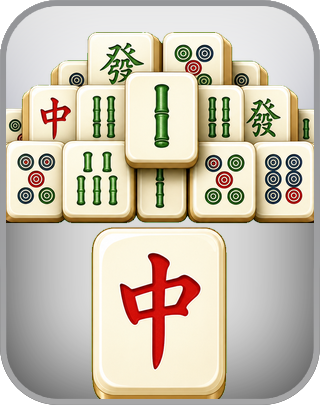
Mahjong Solitaire is a timeless game of patience played with a tray of intricately stacked tiles. Match pairs of identical free tiles, those open on the left or right, to remove them and slowly dismantle the layout. Every tile you clear frees others beneath and beside it, so the order you choose matters. Get greedy and you can strand the last pairs with no legal move left. Can you clear the entire board? Find your first match and begin.
Mahjong is a traditional game that originated in China and has since developed into one of the most widely recognized tile-based systems in global gaming culture. Although its exact historical origins are debated, most researchers place its formal development in the mid-to-late 19th century during the Qing dynasty. From there, it spread across East Asia and eventually worldwide, evolving into multiple regional rule sets and modern digital adaptations.
At its core, Mahjong is played with a set of 144 tiles (though this can vary depending on the variant). These tiles are typically divided into suits such as dots, bamboo, and characters, along with honor tiles like winds and dragons, and sometimes bonus tiles such as flowers and seasons. The game is usually played by four players, each attempting to build a winning hand composed of specific combinations, often resembling sets of three tiles (called “melds”) and a pair.
The gameplay blends probability, memory, and strategic decision-making. Players draw and discard tiles in turns, constantly adjusting their hands based on both chance and observation of opponents’ behavior. Unlike purely deterministic games, Mahjong relies heavily on incomplete information, making deduction and risk assessment central to success. A skilled player must track discarded tiles, infer what opponents are collecting, and decide when to pursue aggressive strategies or defensive play.
Over time, regional variations of Mahjong have emerged, each emphasizing different mechanics and scoring systems. Chinese Classical Mahjong is closer to the game’s historical roots, while Hong Kong Mahjong simplifies scoring for faster play. Japanese Riichi Mahjong introduces a formalized declaration system and complex scoring bonuses, making it highly structured and competitive. American Mahjong, regulated by organizations such as the National Mah Jongg League, uses an entirely different set of standardized hands that change annually, adding a meta-layer of adaptation and memorization.
In the modern era, Mahjong has also become a major digital game format. Online platforms and mobile apps have introduced both traditional multiplayer versions and single-player adaptations like Mahjong Solitaire, where the focus shifts from competitive play to pattern-matching and spatial puzzle-solving. These digital transformations have significantly broadened the game’s audience, making it accessible to players who may never encounter the physical tile game.
Culturally, Mahjong carries deep social significance. In many communities, it functions not just as a game but as a social ritual, often played during family gatherings, holidays, and community events. The rhythmic sound of shuffling tiles, the tactile engagement with physical pieces, and the conversational atmosphere around the table all contribute to its enduring appeal. It is as much a social instrument as it is a competitive system.
From a game design perspective, Mahjong is notable for its balance of randomness and strategy. The shuffled tile wall introduces chance, but long-term success depends on pattern recognition, probability management, and psychological insight. This combination has influenced numerous modern board games and digital puzzle systems.
Today, Mahjong exists as both a preserved tradition and a living, evolving game ecosystem. Whether played in its classical four-player form or reimagined in digital puzzle variants, it continues to demonstrate how simple components—tiles, symbols, and rules—can generate an extraordinarily deep and enduring strategic experience.
Why Play This Game?
1. Free and widely available. Mahjong Solitaire is accessible on many platforms at no cost.
2. Pattern recognition training. It helps you practice attention, memory, and visual matching through tile-based gameplay.
3. For relaxation and focus. The game is designed for calm, single-player enjoyment rather than competition.