
Reality Quiz
Can you separate Hollywood fiction from everyday reality?
We have all seen the dramatic moments on television: the doctor shocking a flatlining patient back to life, the detective demanding a 24-hour wait for a missing persons report, or the hacker furiously typing to stop a cyber attack. But how much of what we see on screen is actually true? Hollywood loves to bend the rules for the sake of a good story, creating widespread misconceptions about law, medicine, and science. It is time to put your pop culture knowledge to the test and see if you can spot the difference between TV tropes and real-world facts.
Answer the questions below to see how well you can separate fact from fiction.
Question 1 of 20
TV police often tell families they must wait a specific amount of time before filing a missing persons report. What is the actual legal waiting period in the U.S.?
BACK NEXT
The psiandme TV Tropes in Real Life: What Shows Get Wrong quiz was created by psiandme.
One of the most pervasive areas of television fiction involves medical dramas. Shows frequently depict doctors performing miraculous, high-stakes procedures that bear little resemblance to actual hospital protocols. A classic example is the use of a defibrillator on a patient who has flatlined, also known as asystole. On screen, the paddles are charged, the doctor yells clear, and the patient miraculously gasps for air. In reality, a defibrillator is used to correct a chaotic, irregular heartbeat by stopping the heart momentarily so its natural pacemaker can reset. Shocking a flatline does absolutely nothing, but it certainly makes for compelling television.
Law enforcement and police procedurals are equally guilty of spreading misinformation. For decades, television detectives have told frantic families that they must wait 24 or 48 hours before filing a missing persons report. This trope was likely invented to add tension and delay the plot, but it has created a dangerous real-world myth. In the United States, there is no mandated waiting period to report someone missing. In fact, the first 48 hours are often the most critical in a missing persons investigation, and police encourage immediate reporting, especially if the person is a child or vulnerable adult.
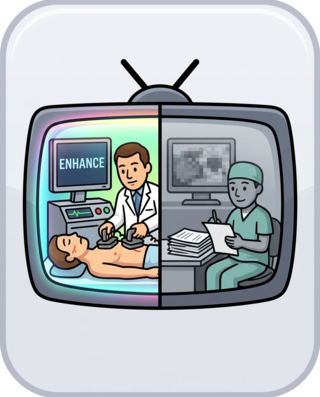
The realm of technology and forensic science is another fertile ground for Hollywood exaggeration. The infamous enhance trope is a staple of crime shows. Detectives will look at a grainy, pixelated reflection in a suspect's sunglasses captured on a low-resolution security camera, and with a few keystrokes, the image magically sharpens to reveal a perfectly clear face. In the real world, digital images are made of pixels, and you cannot magically create data that the camera sensor never captured in the first place. While AI upscaling exists today, it guesses missing details rather than revealing the objective truth, making such enhanced images completely inadmissible as definitive proof in a real court of law.
When the action moves from the crime scene to the courtroom, the dramatic license only intensifies. Legal dramas thrive on the surprise witness bursting through the courtroom doors at the eleventh hour to deliver a shocking testimony that turns the case upside down. However, the real legal system is designed specifically to prevent trial by ambush. During the pre-trial phase known as discovery, both the prosecution and the defense are legally required to share all evidence and lists of witnesses they intend to call. If a lawyer tried to introduce a surprise witness in a real trial, the judge would almost certainly exclude the testimony and might even sanction the attorney.
Cybersecurity is perhaps the most visually misrepresented profession on television. When a TV network is hacked, the screen usually flashes with giant red skulls, and the resident tech genius must type at lightning speed to block the intruder, sometimes even sharing a keyboard with a coworker. Real hacking and cybersecurity defense are far less cinematic. They involve tedious log analysis, automated scripts, firewalls, and pre-configured security protocols. If an active, severe intrusion is detected, the most common immediate response is not a furious typing battle; it is simply physically disconnecting the affected servers from the network to stop the data exfiltration.
While these tropes make for highly entertaining television, they can have surprising real-world consequences. When juries expect forensic evidence to be as flawless and instantaneous as it is on TV, a phenomenon known as the CSI Effect, they may wrongfully acquit guilty parties when real-world evidence falls short of Hollywood standards. Similarly, medical misconceptions can lead to unrealistic expectations for patient outcomes. By learning to identify these tropes, we can enjoy our favorite shows while maintaining a healthy, grounded understanding of how these vital professions actually operate in our daily lives.
For more information about our online tests and quizzes, consult our Terms of Service.
Why Use This Quiz?
1. Test Your Pop Culture Literacy. We consume countless hours of television, but how much of it is subtly shaping our view of the world? This quiz challenges you to separate the dramatic flair of Hollywood from the grounded reality of everyday professions. You will learn fascinating facts about medicine, law, and technology while seeing your favorite shows in a whole new light.
2. Bust Widespread Myths. Many TV tropes have become so ingrained in our culture that people accept them as absolute truth. By taking this quiz, you will uncover the real procedures behind police investigations, courtroom trials, and emergency medical care. It is a fun, engaging way to become a more informed viewer and a smarter consumer of media.