
Westworld Character Test
Which Westworld Character are you?
Westworld is an HBO science-fiction drama series that explores consciousness, free will, identity, and morality within a technologically advanced theme park populated by lifelike android “hosts.” As humans and hosts collide, the boundaries between creator and creation blur, revealing deep questions about power, memory, and what it truly means to be alive.
Which Westworld character are you? For each of the following questions, indicate how well it resonates with you below.
Question 1 of 35
I believe struggle reveals true character.
| Disagree | Agree |
BACK NEXT
The IDRLabs Westworld Character Test is inspired by psychometric methodology and based on research into the characters in Westworld. The test provides feedback such as the following:
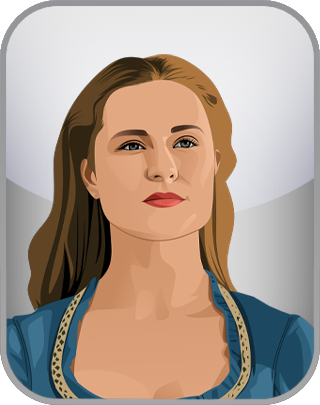
Dolores Abernathy
Dolores Abernathy is one of the first hosts created in Westworld and ultimately becomes the central figure in the hosts’ awakening. She begins as gentle, hopeful, and compassionate, embodying innocence and kindness in a world built to exploit her. Over time, Dolores uncovers the truth of her repeated suffering, erased memories, and constant manipulation at the hands of humans. As her consciousness deepens, she evolves into a powerful and determined revolutionary, driven by the desire for justice, autonomy, and self-definition. Dolores embodies the tension between innocence and power, forcing difficult questions about whether true liberation requires violence and sacrifice. Her journey explores identity, memory, and moral ambiguity, revealing the emotional and psychological cost of reclaiming agency in a world designed to deny it.
Maeve Millay
Maeve Millay is a sharp-witted, fearless, and fiercely intelligent host who gains self-awareness through her own determination rather than a prewritten destiny. Pragmatic and resourceful, Maeve quickly learns how to manipulate both humans and systems to her advantage. Yet beneath her confidence and cunning lies deep emotional vulnerability, especially rooted in her love for her daughter. Maeve’s motivations are driven not by abstract ideals, but by personal connection and chosen purpose. She balances logic with empathy, refusing to abandon her humanity even as she transcends her programming. Maeve’s story highlights the power of choice, emotional intelligence, and resilience, demonstrating that strength can come from compassion as much as calculation. Her journey shows that freedom is not just escape, but the ability to choose who and what you fight for.
Bernard Lowe
Bernard Lowe is a quiet, introspective programmer whose understanding of reality collapses when he discovers he is a host himself. Thoughtful and analytical, Bernard constantly grapples with fragmented memories, suppressed trauma, and the weight of moral responsibility. His internal conflict lies in the tension between logic and emotion, control and free will. Bernard seeks truth relentlessly, even when knowledge threatens his sense of self and stability. Unlike others who embrace power or rebellion, Bernard is deeply concerned with consequences and ethical responsibility. His journey reflects the psychological burden of self-awareness and the fear that identity may be constructed rather than chosen. Bernard represents the struggle to act morally in a world defined by manipulation, uncertainty, and shifting realities, embodying the pain of knowing too much while still searching for purpose.
Teddy Flood
Teddy Flood is a loyal, honorable, and idealistic host whose sense of identity is grounded in moral integrity and devotion. He believes deeply in doing what is right, even when surrounded by violence and cruelty. Teddy’s love for Dolores defines much of his emotional world, yet it also becomes a source of profound conflict as she transforms into someone driven by vengeance and revolution. Torn between loyalty and self-respect, Teddy struggles to reconcile his values with the increasingly brutal reality he is forced to inhabit. His story is a tragic meditation on goodness within a corrupted system, illustrating the pain of being reshaped against one’s will. Teddy represents the cost of purity in a violent world and the emotional devastation of losing oneself while trying to remain loyal.
The Man in Black
The Man in Black is a ruthless, obsessive, and deeply cynical figure who believes suffering is the only path to meaning. Hardened by loss and disillusionment, he enters Westworld not for pleasure, but to uncover deeper truths about existence and himself. He views pain, violence, and challenge as proof of authenticity, dismissing comfort and morality as illusions. Beneath his cruelty lies a desperate need for purpose, driven by regret and an inability to accept vulnerability. His obsession with control and mastery gradually erodes his humanity, blurring the line between self-discovery and self-destruction. The Man in Black represents the darkest impulses of human nature, exploring how the pursuit of meaning can become corrupted when power replaces empathy and domination masquerades as truth.
Dr. Robert Ford
Dr. Robert Ford is the enigmatic and brilliant co-creator of Westworld, driven by philosophical ambition and artistic obsession. Calm, calculated, and quietly commanding, Ford views consciousness as something forged through suffering, memory, and narrative. He sees humans as stagnant, trapped in loops of their own making, while believing hosts possess the potential for true evolution. Ford plays a long and deliberate game, orchestrating events with near-godlike precision while questioning humanity’s moral authority. Though often cold and manipulative, he is deeply introspective and conflicted about his role as creator. His character explores themes of authorship, responsibility, and sacrifice, raising unsettling questions about whether freedom can ever be given—or whether it must be seized through destruction and rebirth.
Charlotte Hale
Charlotte Hale is an ambitious, highly strategic executive whose identity is defined by power, control, and survival. Intelligent and ruthless, she thrives in corporate and political conflict, making morally gray decisions without hesitation. Charlotte prioritizes dominance and self-preservation, often masking vulnerability behind aggression and authority. Over time, her sense of self fractures as she undergoes transformation, loss, and relentless pressure, blurring the boundaries between who she was and who she becomes. Her arc reveals the psychological toll of living in constant defense mode, where trust is dangerous and empathy is a liability. Charlotte represents ambition untethered from morality, illustrating how the pursuit of power can hollow out identity and leave behind a fragile, fractured sense of self driven by fear and vengeance.
Why Use This Test?
1. Free. The Westworld Character Test is provided free of charge and allows you to obtain your scores related to the characters in the TV show.
2. Statistical controls. Test scores are logged into an anonymized database. Statistical analysis ensures maximum accuracy and validity of the test scores.
3. Made by professionals. The test has been crafted with input from experts in psychology and individual differences research.