
 English
 Español
 Português
 Deutsch
 Français
 Italiano
 Polski
 Українська
 Русский
 Türkçe
 العربية
 日本語
 한국어
 ไทย
 汉语
 Tiếng Việt
 Bahasa
Ancient Faces Attraction Test
Are you drawn to foragers, farmers or steppe herders?
The Ancient Faces Attraction Test is based on facial reconstructions of people who lived in Europe and Anatolia thousands of years ago: the hunter-gatherers who followed the last Ice Age, the first farmers and the herders of the steppe. Each portrait is a new face drawn to a set mix of those three ancestries, so the faces you prefer show which of them you lean towards.
The Your Type Test looks at the kind of partner you are drawn to, the Mate Value Test at what you bring to a relationship, and the Beauty Privilege Test at how looks shape the way people are treated. To take the test, press Start test below.
Choose between pairs of AI-generated portraits, then see your preference scores for three ancient-inspired ancestries and the mixes you picked most often.
Start test
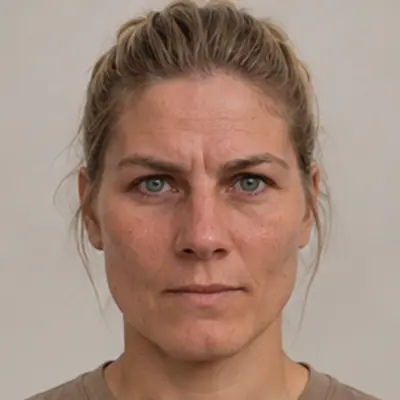
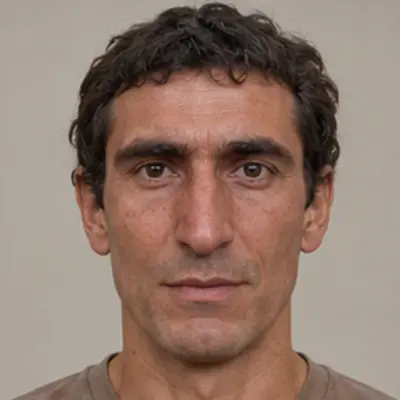
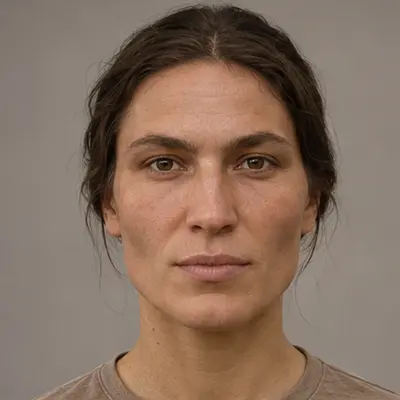
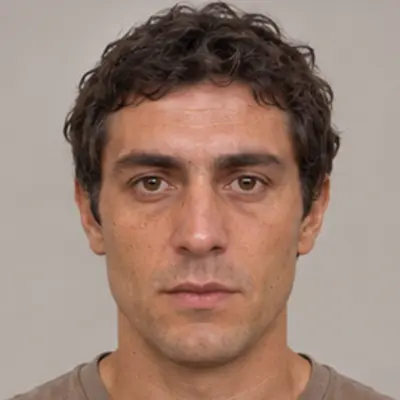
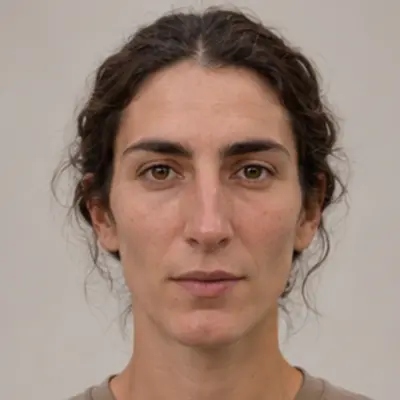
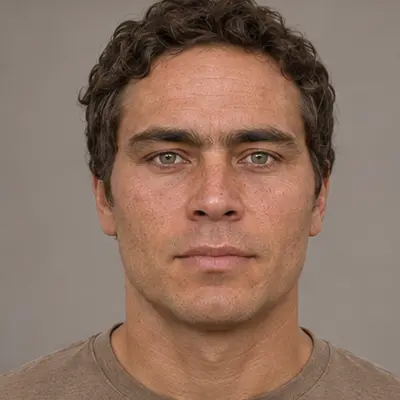
144 portraits · 9 ancestry mixes
The portraits are fictional. Your result reflects your choices among these faces.
Question 1 of
BACKNEXT
How the portraits and mixes were made
We gave the image generator front-facing reconstructions from the Ancestral Whispers catalog as visual references for every portrait. The Western hunter-gatherer references include Cheddar Man, Loschbour Man, La Braña 1, the Bad Dürrenberg woman, Søgnekvinnen and the woman from Téviec. The farmer references come from Neolithic Anatolia and closely related early farmers in Europe. The early-steppe references come from Yamnaya and Afanasievo burials. Some steppe-rich blends also draw on the catalog’s Battle Axe/Corded Ware reconstruction, a later context with steppe-, farmer- and forager-related ancestry.
The single-source portraits use one catalog reference as their main visual guide. The blend percentages describe which references the image generator was asked to draw on. Facial reconstructions interpret the appearance of individual ancient people, and the portraits in this test are new fictional faces.
Portraits use similar lighting, framing, clothing, age and expressions. Within each pair, both portraits show women or both show men. Each portrait appears once per run, and each mix appears equally often on each side. Results depend on the specific faces and pairings you saw.
How these scores work
For each ancestry, choosing the face with a higher assigned percentage raises its score; choosing the face with less lowers it. Each answer is weighted by the percentage-point difference between the two faces. “No preference” is neutral, and pairs with equal percentages do not affect that ancestry’s score.
A score of 100 means you chose the higher share whenever the shares differed; 0 means you always chose the lower share. The three scores are separate scales and do not add up to 100. They describe your choices among these fictional portraits, whose ancestry labels vary together.
References
- Allentoft, M. E., Sikora, M., Sjögren, K.-G., et al. (2015). Population genomics of Bronze Age Eurasia. Nature, 522(7555), 167–172. https://doi.org/10.1038/nature14507
- Ancestral Whispers. (n.d.). Reconstructions. https://www.ancestralwhispers.org/reconstructions
- Brace, S., Diekmann, Y., Booth, T. J., et al. (2019). Ancient genomes indicate population replacement in Early Neolithic Britain. Nature Ecology & Evolution, 3(5), 765–771. https://doi.org/10.1038/s41559-019-0871-9
- Haak, W., Lazaridis, I., Patterson, N., et al. (2015). Massive migration from the steppe was a source for Indo-European languages in Europe. Nature, 522(7555), 207–211. https://doi.org/10.1038/nature14317
- Kılınç, G. M., Omrak, A., Özer, F., et al. (2016). The demographic development of the first farmers in Anatolia. Current Biology, 26(19), 2659–2666. https://doi.org/10.1016/j.cub.2016.07.057
- Mathieson, I., Lazaridis, I., Rohland, N., et al. (2015). Genome-wide patterns of selection in 230 ancient Eurasians. Nature, 528(7583), 499–503. https://doi.org/10.1038/nature16152
- Natural History Museum. (n.d.). Cheddar Man FAQ. https://www.nhm.ac.uk/our-science/research/projects/human-adaptation-diet-disease/cheddar-man-faq.html
Frequently Asked Questions
Are these real ancient people?
No. The portraits are new fictional faces made by an image generator from facial reconstructions of ancient people. The percentages describe which references it was asked to draw on.
How many pairs are there?
There are 36 pairs. Each portrait appears once, and each of the nine mixes appears eight times, four times on each side. If you choose to see everyone, you can choose 72 pairs instead: all 144 portraits, each once.
Does my result say anything about my own ancestry?
No. It describes your choices among these portraits, not where your family comes from.

Why Use This Test?
1. Free. This Ancient Faces Attraction Test is delivered free of charge and lets you compare 36 pairs of portraits, then see which of nine ancestry mixes you picked most often.
2. Built from ancient reconstructions. Every portrait was drawn from facial reconstructions of people who lived thousands of years ago, among them Cheddar Man, early farmers of Neolithic Anatolia and Yamnaya herders of the steppe, grouped by the ancient populations described in genetic studies such as Haak et al. (2015) and Allentoft et al. (2015).
3. A balanced design. Every mix is paired with every other mix once, so each of the nine mixes appears eight times, four on each side, and none gets more chances to be picked than another.
4. Three separate scores. Your result gives a score from 0 to 100 for each of the three ancestries, where 50 means you showed no lean either way, along with the faces of the mix you picked most often and your ranking of all nine.
5. Fictional faces. The portraits are new faces made by an image generator, not photographs of anyone. Your result describes your choices among them and says nothing about your own ancestry.