
Torben Mark Pedersen is a contributing guest writer for CelebrityTypes. As always with guest writers on the site, Pedersen’s piece represents his own insights and assessments and not necessarily those of the site.
By Torben Mark Pedersen, Ph.D.
David Hume was arguably the greatest thinker of the Scottish Enlightenment. According to Hume, society is not 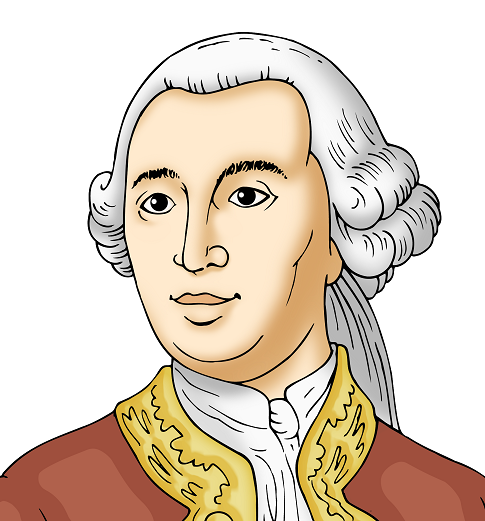 “planned from above” according to the whims of some central architect (or group of architects), but has in fact “emerged from below” by the gradual transmission of customs and moral habits particular to that society to each new generation. In this way, the customs and mores of a given society contain a “hidden rationality” that supersede the comprehension of any single individual. In other words, according to Hume, the underpinnings – the true workings of society – are not planned or designed (nor are they the result of any “original social contract,” as Hobbes and Locke had said). Instead, society has gradually ordered itself by way of a centuries-long evolutionary process wherein best practices have been discovered and disseminated over time as individual groups learned that they could achieve more of their aims through cooperation than through conflict. Thus, one famous motto of the Scottish enlightenment is that “society is the result of human action but not of human design.”
David Hume and the Reversal from State to Society
In his capacity as political thinker, Hume is famous for instigating “the reversal from state to society,” meaning that he turned the attention of philosophy away from the state and onto the workings of civil society. With regards to the history of ideas, one can say that it was Hume who “discovered” civil society as a field of study that merited the attention of philosophers. Certainly, Hume was the first Western thinker who developed a theory pertaining to those areas of the political order that exist beyond the control of the state: Morals, customs, norms, traditions, and the British Common Law. Among other things, Hume contributed a theory on how these components of civil society influence human behavior and thus help create a sense of community and cohesion that supervenes on the cognitive processes of the individual.
With regard to Hume’s predecessors, both Hobbes and Locke lacked an eye for how the inherited practices of civil society influence human sociability, and as a consequence, each depended on their unwitting assumptions of what human nature must be like. But Hume is different: He does not hinge his philosophy upon any one conception of human nature, but allows for the fact that people are different. To Hume, there is not one human temperament, but many. Furthermore, in Hume’s view, most men have the capacity to do good or bad, depending on the circumstances (and so the constitution of civil society becomes all the more important).
Unlike Hobbes and Locke, Hume rejects all thoughts of a so-called primordial social contract, where rulers and the ruled had supposedly gotten together in ancient times to agree on the political constellation of the state. Likewise, to Hume, political rights are conventions, and these conventions have achieved legal protection over time because they are to everyone’s benefit – rights are historical discoveries and not self-evident truths.
For Hume, society was never “ordered” or “agreed to” at any point in history, but simply grew from a multitude of individuals, each pursing their own, uncoordinated interests. The big question in Hume’s philosophy is therefore how such a stable and largely self-regulating body as “society” could have emerged without central coordination and from a starting point resembling chaos. Hume’s answer is that the order of civil society has come about by an evolutionary process whereby those civil practices that best satisfied the sentiments of justice and fairness among its participants won out over others.
Again, this process was not guided by the careful direction of insightful Heads of State, or by the deep thoughts of political philosophers: According to Hume, the advances of civil society were piecemeal discoveries that were made one by one as men gradually discovered that it was in the interests of the majority to comply with common standards of justice and fairness, as long as others do the same.
Thus, over time, informal promises between neighbors become codified into the practice of formal contractual obligations. Since the majority of the population in a well-functioning society will eventually discover that it is also in their interest that the promises given in that society are generally kept, they will tend to support the codification of such obligations, even if they are not themselves involved in contractual feuds. For Hume, it is the premium that (most) civil societies place on honesty that allows human cooperation to flourish and human organization to grow beyond the village level to provide us with civilization.
As Hume sees it, the development of customs, morals, and law is admittedly rooted in self-interest. But at the same time, promoting these practices also has the consequence of promoting altruistic and pro-social behavior. The agreed-upon conventions of civil society have “hidden virtues,” such as teaching people self-control and moderation, as the satisfaction of immediate needs must be postponed in favor of long-term interests. Common interests, customs, and morals create trust and cohesion between people and keep society in one piece, while putting a damper on political and religious conflicts to boot. Thus, the Bourgeois Virtues were never devised as any sort of community project “from the start,” but were the unintended result of millions of people each pursuing their own interests and discovering what worked best in the pursuit of them.
Finally, it is worth pointing out that though Hume had great faith in the self-regulatory mechanisms of civil society, he did not contend that civil society could stand alone: The state is a necessity that cannot be done away with. However, Hume does prefer for the state to give civil society a large degree of autonomy, indeed mostly consigning itself to the enforcement of the law.
Conclusion: Smith’s Elaboration of Hume
As said, Hume was arguably the greatest thinker of the Scottish Enlightenment. The intellectual contributions set forth by Hume were to a large extent elaborated on by his friend and younger colleague Adam Smith. These developments lent a more formal character to Hume’s observations and gave his philosophy more of a liberty-oriented bent.
To Hume, a lenient state that allows for the autonomy of civil society leads to the blossoming of morals, customs, culture and civilization – in short, it promotes the common good. In Smith’s treatment of Hume, this autonomy becomes more synonymous with freedom and the evolutionary and historical process by which best practices are discovered is referred to as “The System of Natural Liberty.” Smith stresses, however, that the benefits of such freedoms are not always self-evident, but must necessarily be seen in relation to the whole of society and in relation to the long term. In the shorter term, and in individual instances, the effects of freedom may well be negative, such as the traders of a certain profession colluding against the consumers. But in the long run and as a whole, Smith contends that the effects of freedom upon both state and society will always be positive.
Hume’s idea of society as a spontaneous order exists in sharp contrast to the popular notion that politicians and philosophers can instigate ideal societies by way of reason. Smith illustrates this idea by comparing such social engineers to people, “wise in their own conceit,” who imagine that they can arrange the trillions of variables that inhere in society “as neatly as the hand moves the different pieces on a chessboard.” But Smith contends that this is impossible: Attempts to construct communities by way of rationally-designed morals and laws, devised in the drawing room and forced upon society from above, must necessarily fail. As far as healthy communities go, they are always the result of a lengthy historical process.
***
Image of Hume in the article commissioned for this publication from artist Georgios Magkakis.