
 English
  Español
  Português
  Deutsch
  Français
  Italiano
  Polski
  Română
  Українська
  Русский
  Türkçe
  العربية
  فارسی
فارسی  日本語
日本語  한국어
한국어  ไทย
ไทย  汉语
汉语  Tiếng Việt
  Filipino
  हिन्दी
  Bahasa
 The Boondocks Test
Which Boondocks character are you?
The Boondocks follows the Freeman family as they navigate life in the wealthy suburb of Woodcrest. From Huey’s radical activism to Riley’s obsession with gangsta culture, the show pits clashing worldviews against the absurdities of modern society. Whether you are a cynical revolutionary, a wannabe thug, or a weary guardian, your personality reflects the chaotic spirit of the show.
Which Boondocks character are you? Answer these questions to discover your match.
Question 1 of 35
I often act before considering the potential outcomes.
| Disagree | Agree |
BACK NEXT
The Boondocks Test is inspired by psychometric methodology and based on research into the characters of the animated series. The test provides feedback such as the following:
Tom DuBois
Tom DuBois is an anxious, polite attorney who embodies the respectable striver archetype. He believes deeply in the legal system and often prioritizes institutional order over his own community. His life is defined by a profound fear of chaos and social rejection, which drives him to over-obey rules and avoid confrontation at all costs. While he occasionally displays genuine courage and deep love for his family, he often struggles to assert himself, frequently deferring to dominant voices to maintain a sense of safety. He represents the tension between the desire for professional success and the fear of losing one’s identity in a rigid, unforgiving society.
Huey Freeman
Huey Freeman is a solemn, hyper-intelligent ten-year-old revolutionary who serves as the moral conscience of his family. He possesses a genius-level intellect and a deep, unwavering commitment to social justice, often acting as the lone voice of reason in a world he views as fundamentally broken. His primary contradiction lies in his profound isolation; while he fights tirelessly for the liberation of others, his cynical, stoic exterior keeps him socially detached and emotionally guarded. He handles conflict through meticulous strategy and long-term planning, distrusting mainstream authority figures and institutions. Ultimately, he is a burdened child who sacrifices his own peace to pursue truth.
Riley Freeman
Riley Freeman is an eight-year-old aspiring gangsta who embodies the impressionable rebel archetype. He is obsessed with status, money, and the hypermasculine tropes found in mainstream hip-hop culture. Riley handles conflict through immediate, emotional confrontation, often relying on bravado and petty aggression rather than long-term strategy. He rejects conventional authority figures and rules, preferring to align himself with the perceived toughness of street icons. Beneath his defiant exterior lies a sensitive child who fears vulnerability and struggles with deep-seated abandonment issues. He hides his insecurities behind a performative, tough-guy persona, yet he remains intensely loyal to those he considers his own.
Jazmine DuBois
Jazmine DuBois is a kind, devout, and idealistic girl who serves as the innocent heart of her community. As the biracial daughter of a Black father and white mother, she often navigates a world that feels both confusing and overwhelming. She handles conflict by appealing to authority, praying, or seeking emotional harmony rather than engaging in direct confrontation. While she deeply values belonging and family stability, her desire for acceptance sometimes leads her to overlook harsh social truths or ignore warning signs. Her journey reflects the painful transition from protected childhood innocence to a more complex, critical awareness of the world around her.
Ed Wuncler III
Ed Wuncler III is a reckless, trigger-happy war veteran who embodies the archetype of the entitled, violent man-child. As the grandson of Woodcrest’s most powerful oligarch, he treats the world like a playground where his social status shields him from any consequences. He is driven by a constant need for adrenaline, often initiating dangerous, poorly planned crimes just to stave off boredom. While he projects an image of toughness and military bravado, his actions frequently reveal deep immaturity and a reliance on his grandfather’s influence to survive. He avoids rules entirely, preferring impulsive, explosive solutions over any form of logic or long-term accountability.
Robert 'Granddad' Freeman
Robert 'Granddad' Freeman is an aging, selfish yet loving patriarch who struggles to reconcile his past as a civil rights participant with his current desire for a life of ease. As the legal guardian of Huey and Riley, he often prioritizes his own comfort, romantic pursuits, and social standing over the needs of his grandsons. He is quick to anger and prone to blustery outbursts, yet he possesses a surprising capacity for genuine remorse and courage when his family is truly threatened. His main contradiction lies in his longing for respectability and wealth, which frequently leads him to make questionable choices that clash with his underlying sense of morality.
Uncle Ruckus
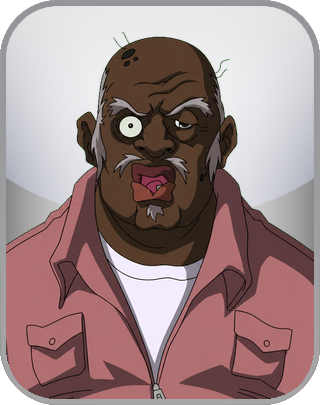
Uncle Ruckus is a grotesquely self-hating man who insists he is white, embodying the archetype of the internalized racist. He suffers from a fictional condition called re-vitiligo and spends his days obsessively denigrating Black people while worshiping white authority. He works numerous low-status jobs in Woodcrest, where he serves his white employers with a disturbing, cheerful zeal. His core motivation is a twisted sense of salvation; he believes that by rejecting his own identity and policing his community, he can earn a place in a white-dominated world. Beneath his abrasive, hateful exterior lies a man deeply damaged by the very systemic prejudices he defends.
Why Use This Test?
1. Free. The Boondocks Test is provided free of charge and lets you compare your answers with characters in the series.
2. Everyday self-report. The items translate character traits into ordinary choices, habits, and reactions, so your result is easier to relate to outside the series.
3. For entertainment and reflection. The result is meant for fan comparison and self-reflection, not diagnosis or formal assessment.