
Heraclitus Fragment Test
What is your Heraclitus Fragment?
More than 2,500 years ago, the Greek Philosopher Heraclitus wrote a book whose meaning has never been settled. The book itself disappeared, leaving only fragments: brief, enigmatic sayings about change, conflict, knowledge, character, and the hidden order of the world.
This is the mystery of Heraclitus. His words are profound, yet resist any single explanation. Every fragment seems to reveal something essential before withdrawing again into ambiguity. Generation after generation has returned to these sayings, discovering new questions in the same ancient words. The mystery has never been solved. Each age must grapple with it for itself.
The Heraclitus Fragment Test compares your philosophical temperament the fragments. Your answers reveal the fragment whose underlying pattern most closely resembles your temperament. One ancient voice. Ninety-three possible fragments.
What is your fragment? To take the test, enter your input below.
Question 1 of 36
People understand the world better when they reason together.
| Disagree | Agree |
BACK NEXT
Heraclitus of Ephesus was a Greek philosopher active around 500 BCE. Only fragments of his work survive, preserved as quotations by later authors. Yet these enigmatic sayings have had a long afterlife. Heraclitus writes about change, conflict, knowledge, character, law, nature, and the hidden order of the cosmos. He is best known for the image of the river, in which continuity exists through constant change, and for the idea that apparent opposites can belong to a unity.
The Heraclitus Fragment Test approaches these sayings as different expressions of a philosophical temperament. It does not simply ask which quotation you like best. Instead, your responses are compared across six broad facets: Sociality, Change Orientation, Conflict Orientation, Epistemic Independence, Paradox Tolerance, and Cosmic Orientation. Together, these dimensions describe whether you tend toward shared or solitary understanding, stability or transformation, concord or productive struggle, inherited authority or independent inquiry, literal clarity or layered contradiction, and practical concerns or a more metaphysical view of existence.
The test contains 36 statements, with six items devoted to each facet. Some items are phrased in the opposite direction to reduce automatic agreement and produce a more balanced profile. Your answers generate six scores. Each of the 93 retained Heraclitean fragments has also been coded on the same six dimensions, allowing the system to compare your overall pattern with the philosophical pattern expressed by each saying.
No facet is treated as better than its opposite. A high score on Conflict Orientation, for example, does not mean hostility; it may indicate a tendency to see tension and opposition as productive. Likewise, Cosmic Orientation distinguishes emphasis, not belief or disbelief. Because ancient texts survive through transmission, translation, and quotation, the wording of a fragment may vary between editions. The test uses one consistent English translation while the accompanying commentary notes ambiguities.
Your result is the fragment whose profile most closely resembles your own. This does not necessarily mean that the quotation summarizes your entire personality, nor that Heraclitus would have classified people in this way. The surviving fragments were not written as a personality system, and their meanings are often fiercely disputed. The matching procedure is therefore interpretive: it uses the fragments as lenses through which different orientations toward life and thought can be viewed.
The result page presents the matched fragment together with several short scholarly pointers explaining its immediate meaning, its place within Heraclitus’s wider thought, and an important nuance or caution. Sources from major academic and university-press scholarship are included so that readers can move beyond the popular slogans often attributed to Heraclitus and encounter the interpretive difficulties of the original material.
The test is best understood as a meeting point between personality reflection, intellectual history, and philosophical play. It is not a clinical assessment and does not measure mental health, intelligence, or philosophical sophistication. Its purpose is to offer a memorable starting point for reflection: a fragment from antiquity that may illuminate how you approach knowledge, change, disagreement, society, ambiguity, and the larger order of things.
References
- Barnes, J. (1982). The presocratic philosophers (Rev. ed.). Routledge & Kegan Paul.
- Diels, H., & Kranz, W. (1951–1952). Die Fragmente der Vorsokratiker (6th ed.). Weidmann.
- Graham, D. W. (Ed.). (2010). The texts of early Greek philosophy: The complete fragments and selected testimonies of the major Presocratics. Cambridge University Press.
- Kahn, C. H. (1979). The art and thought of Heraclitus: An edition of the fragments with translation and commentary. Cambridge University Press.
- Kirk, G. S. (1954). Heraclitus: The cosmic fragments. Cambridge University Press.
- Marcovich, M. (1967). Heraclitus: Greek text with a short commentary. Los Andes University Press.
- Mouraviev, S. N. (2006). Heraclitea III.3.A: Recensio: Fragmenta. Academia Verlag.
- Robinson, T. M. (1987). Heraclitus: Fragments: A text and translation with a commentary. University of Toronto Press.
Frequently Asked Questions
How does the Heraclitus Fragment Test match me to one of the fragments?
It compares responses on six facets—Sociality, Change Orientation, Conflict Orientation, Epistemic Independence, Paradox Tolerance, and Cosmic Orientation—to the patterns coded in 93 surviving Heraclitean fragments.
What does it mean if the test picks a particular Heraclitus fragment for me?
The result identifies the single fragment whose six-facet profile most closely matches the pattern of your answers.
How many questions does the Heraclitus Fragment Test ask and what do they cover?
It scores 36 statements, six per facet, then matches the overall profile to fragments rather than asking which quotation you like best.
Can the Heraclitus Fragment Test prove what Heraclitus originally meant?
The matching procedure is interpretive because the fragments were never intended as a personality system and their meanings remain disputed among scholars.
What do I get from taking the Heraclitus Fragment Test besides the fragment itself?
The result page supplies the matched fragment plus short scholarly pointers that point readers toward academic sources for further study of the sayings.
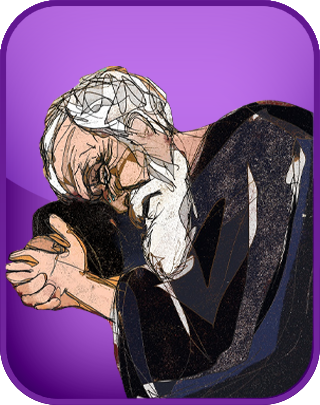
Why Use This Test?
1. Six-dimensional matching. This test measures your orientation toward Sociality, Change, Conflict, Epistemic Independence, Paradox, and the Cosmos. Your resulting profile is compared with the unique six-dimensional profile assigned to each Heraclitean fragment, allowing the test to identify the fragment that most closely resembles your overall philosophical temperament.
2. Free. This online test is delivered to you free of charge and allows you to discover which of 93 retained fragments of Heraclitus most closely corresponds to your way of approaching knowledge, society, change, disagreement, ambiguity, and existence.
3. Ninety-three possible results. Unlike tests that sort respondents into a small number of broad categories, the Heraclitus Fragment Test offers 93 distinct possible outcomes. Every fragment has its own combination of scores, making the matching process unusually specific and allowing for considerable variation between individual results.
4. Grounded in academic scholarship. The fragments and their interpretations have been reviewed with reference to major scholarly sources from Cambridge University Press, Oxford University Press, the University of Toronto Press, and the Stanford Encyclopedia of Philosophy. Each result includes short interpretive pointers and direct links to the relevant academic sources.
5. Balanced item construction. The test consists of 36 statements, with six items devoted to each of the six dimensions. Four items on each scale are scored normally, while two are reverse-scored. This structure helps reduce automatic agreement and produces a more balanced representation of the respondent’s philosophical orientation.
6. Made by experienced test developers. The authors of this free online test have worked professionally with personality assessment, typology, and online test construction. The test is intended for philosophical reflection and educational use rather than clinical assessment, and its results should be understood as interpretive matches rather than psychological diagnoses.