
 English
 Español
 Português
 Deutsch
 Français
 Italiano
 Polski
 Українська
 Русский
 Türkçe
 العربية
 日本語
 한국어
 ไทย
 汉语
 Tiếng Việt
 Bahasa
How to Train Your Dragon Test
Which HTTYD character do you most resemble?
How to Train Your Dragon follows the Vikings of Berk as they trade generations of war for an unlikely bond with the dragons they once feared. From Hiccup and Toothless to Astrid, Stoick, and Valka, each member of this world faces the pressure of tradition, loyalty, and protecting their home in their own way.
Answer the questions below to find out which of seven How to Train Your Dragon characters you resemble the most.
Question 1 of 35
I go easy on myself when I make a clumsy mistake.
| Disagree | Agree |
BACK NEXT
The How to Train Your Dragon Test is inspired by psychometric methodology and based on research into the characters of the animated series. The test provides feedback such as the following:
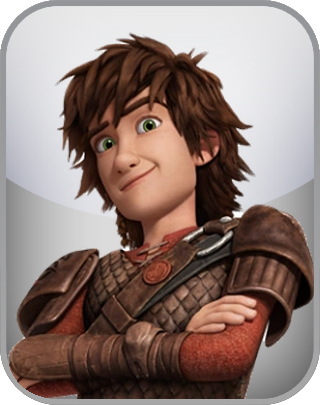
Hiccup
Far from being the loudest brawler in the hall, you are a thoughtful apprentice who would rather sketch a blueprint in the back of a blacksmith shop than follow three hundred years of bad advice. You have a habit of taking long flights purely to fill in the blank edges of a map, and you believe that almost any misunderstanding can be cleared up with patience and a basket of fresh fish. On the flip side, you will go to great lengths to dodge a serious conversation about your future responsibilities, and you often assume you can talk a warlord into seeing reason. Even so, when your people need a chief, you always step forward.
Toothless
While you may be the last of your kind, you have never let a singular background stop you from making a friend for life. You pay close attention to tone of voice, posture, and unspoken signals, and you have a sharp sense of humor for someone who prefers not to speak a word. You care little for rules or formal hierarchy, choosing instead to rely on personal trust and a shared sense of direction. However, you can be quick to react physically when you feel cornered or coerced, and you are easily unsettled by the thought of being left behind. All the same, you know when to let go for the good of your own kind.
Astrid
Your disciplined focus is one of your greatest assets: when pressure mounts, you simply grip the reins tighter, trust your instincts, and steer straight into the storm. You have very little patience for boastful suitors or reckless shortcuts, preferring to build your reputation on skill, duty, and a companion who moves as sharply as you do. A quiet evening flight can change your entire perspective on a problem, even if you needed a little persuading to get off the ground at first. However, your fear of coming up short can make it hard for you to ask for help when you are outmatched. In the end, you make any leader braver just by standing beside them.
Stoick
Commanding and traditional, you are a practical guardian who believes the best way to protect the people you love is to stand directly between them and the fire. You keep your oldest confidant at the local forge, trust the customs that kept previous generations alive, and prefer decisive action to delicate negotiation. Because you are better at giving orders than sharing doubts, you often assign a dangerous rite of passage when a quiet conversation with your child would have worked much better. On the flip side, your worry easily turns into anger, and you tend to treat a softer temperament as a failure to listen. Nevertheless, there is nothing you would not throw yourself in front of to keep your family safe.
Fishlegs
While you look ready for a fight, you would rather understand what makes someone dangerous than rush to prove your courage. Curiosity turns details into confidence: you read, take notes, and remember what others overlook. Around friends, you are the calm voice that turns a reckless idea into a workable plan. You may feel uneasy when plans change without warning, and you sometimes wait for an invitation before joining in. Yet your kindness has a backbone. When someone you care about needs help, you bring the knowledge, patience, and steady loyalty that help them feel safe.
Snotlout
Like many a loud-mouthed warrior, you are the first to volunteer for glory and the very last to admit that someone else's idea might have been better than yours. You carry yourself with noisy swagger, treat every group effort as a personal tournament, and take a great deal of pride in your strength, your cleverness, and your physical appeal. On the flip side, taking orders from someone you used to look down on tries your patience, and you can get quite defensive when a mistake leaves you looking ordinary. Even so, you have learned the hard way that respect cannot be forced through bluster, and you always show up when your team is cornered.
Valka
Perhaps due to your deep skepticism of human institutions, you are much more comfortable rescuing vulnerable creatures from traps than attending a neighborhood gathering. You have a gift for learning the unspoken habits of animals and earning their trust without ever needing a saddle or a rulebook. Your methods can look intimidating from a distance, yet those in your care know you as a gentle and attentive guardian. However, you can be somewhat absolute in your judgments, and you often assume that people are incapable of change simply because you are afraid they might reject you. All the same, when someone proves they share your heart, you are more than willing to let them back into your life.
Frequently Asked Questions
What does the How to Train Your Dragon Test measure?
The test uses 35 questions to match your personality to Hiccup, Toothless, Astrid, Stoick, Fishlegs, Snotlout, or Valka from the animated series.
What does the How to Train Your Dragon result tell you?
The result identifies which of the seven characters from the animated series matches your personality the closest based on your responses.
What is the How to Train Your Dragon Test based on?
The assessment is grounded in psychometric methodology and thorough research into the personalities of the seven characters from the series.
Is the How to Train Your Dragon Test a clinical tool?
This test offers fun and self-reflection through fictional characters and does not function as a clinical or diagnostic instrument.
How should I answer the How to Train Your Dragon questions?
For an accurate result, respond to all 35 statements based on how you genuinely think and behave rather than choosing ideal traits.
Why Use This Test?
1. Free. The How to Train Your Dragon Test costs nothing to take, and your match is shown the moment you finish.
2. Grounded in the series. Every question draws on how Berk's riders and dragons actually face danger, challenge tradition, and build trust, mapping their habits onto your everyday choices.
3. Fan fun, not diagnosis. Your result is a way to see yourself through the series, not a clinical measure or a formal personality assessment.