
Self-Compassion Test
You are here because one of your friends linked you to their Self-Compassion Test result:
Take the TestResults:
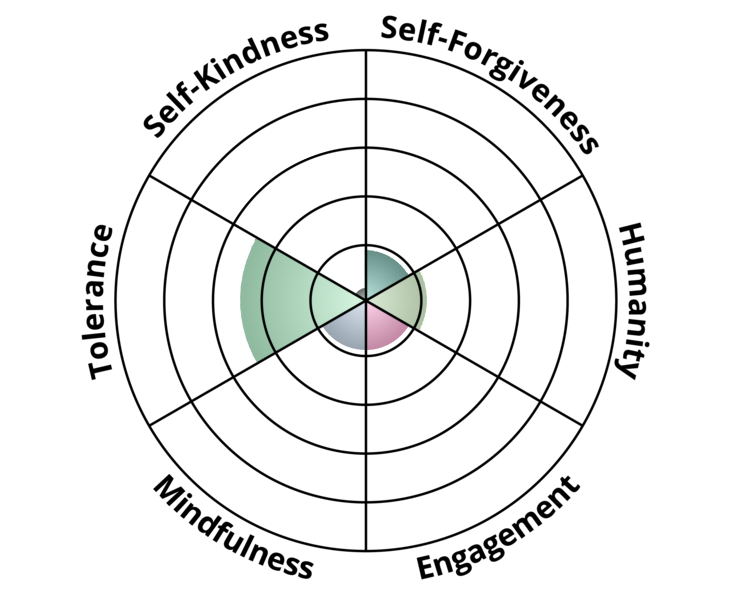
Your friend's self-compassion is low (23%).
Take the TestExplanation of Elements:
Self-Kindness: People who have a high level of self-compassion have an easy time thinking of challenges in ways that are kind to themselves and constructive concerning the problems they face. They are warm and understanding in their way of viewing occurrences that could cause others to fail or suffer. Such people do not engage in excessive self-criticism, as they understand that one cannot always achieve one’s goals and that there are times in life when things do not go according to plan. They are gentle with themselves when facing distressing experiences.
Self-Forgiveness: People who are good at self-compassion often practice self-forgiveness; they refrain from getting angry when they do not get what they want or when things do not go according to their expectations. Likewise, they do not beat themselves up with all the “shoulds” and “musts” that they have in their heads on account of their ideals. Hence, such people are good at dealing with high levels of stress and frustration and at expertly navigating setbacks.
Humanity: Many people who score high on self-compassion understand that failures and other unpleasant situations are common to humanity. They recognize that struggles are a part of the human experience and that they are not alone in their hardships. They refrain from isolating themselves, and they do not think that they alone are having difficulties.
Engagement: One feature of self-compassion is the tendency to remain active in one’s social life when beset by troubles; indeed, to refrain from self-isolating. Conversely, those who have low levels of self-compassion often isolate themselves by thinking that they alone face troubles and difficult situations in life. Such people do not realize that personal struggles are a part of the human experience that we all share and that remaining social through such challenges makes them easier to bear.
Mindfulness: People who score high on self-compassion often pay attention to the present moment and accept their current thoughts, sensations, and feelings. They understand that even the most distressing thoughts can, to some degree, be counteracted by the neutral observation of what is going on around them. They can identify and gracefully accept the negative emotions, thoughts, and sensations that are present. This is a balanced approach so that feelings are neither suppressed nor exaggerated.
Tolerance: Individuals who have high levels of self-compassion tend to accept and be tolerant of their negative thoughts and feelings. Where others get swept away by negative reactivity, such people take an understanding approach toward themselves and do not exaggerate their difficulties. Thus, those with high levels of tolerance tend to have a compassionate, non-judgmental, and receptive state of mind, accepting sensations, thoughts, and feelings as they are.
References
- Houston, E. (2022). The self-compassion scale and test. Positive Psychology.
- Neff, K. D. (2003). The self-compassion scale is a valid and theoretically coherent measure of self-compassion. Mindfulness 7: 264-274.
- Neff KD (2016). Development and validation of a scale to measure self-compassion. Self and Identity, 2, 223-250.
- Williams M, Dalgleish T, Karl A, Kuyken W (2014) Examining the factor structures of the five facet mindfulness questionnaire and the self-compassion scale. Psychol Assess 30: 669-689.
Take Next








GET THE FULL STORY
Become a lifetime member with a one-time payment

$11.99
WHAT YOU GET
Access to members-only tests
Ability to track and save test results
Access to all of our eBooks (value $44.94)
Access to premium type assessments and infographics
Become a memberSave and monitor your results over time
Become a member today
Sign Up