
 English
 Español
 Português
 Deutsch
 Français
 Italiano
 Polski
 Українська
 Русский
 Türkçe
 العربية
 日本語
 한국어
 ไทย
 汉语
 Tiếng Việt
 Bahasa

Based on Patrick W. Galbraith’s The Otaku Encyclopedia.
Tsundere or Yandere Test
Do you hide your crush, or love at full volume?
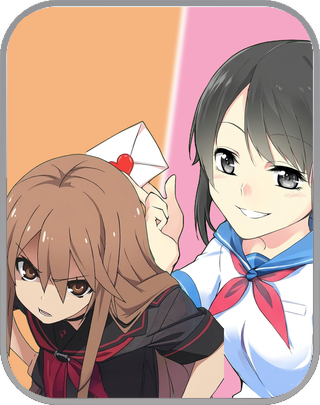
Tsundere and yandere are two of anime’s most famous romantic types, and they are near opposites. The tsundere hides a soft heart behind teasing, eye-rolls and “It’s not like I like you!”, while the yandere loves at full volume: devoted, clingy and more than a little jealous.
Which one are you? Rate how much each statement sounds like you.
Question 1 of 24
When I give someone a gift, I pretend it was no big deal, even if I spent weeks choosing it.
| Disagree | Agree |
BACK NEXT
Both words are otaku slang that spread from Japanese visual novels, manga and anime in the 2000s, and both end in dere, from deredere, the sound of someone going soft and lovey-dovey. A tsundere is tsuntsun, prickly and aloof, before the dere shows: the character who snaps at the person they like, denies everything and blushes anyway. A yandere takes yanderu, “to be sick,” and makes the love itself the extreme part: sweet and devoted at first, then so attached that a rival becomes a crisis. Patrick W. Galbraith’s The Otaku Encyclopedia describes both types among the character tropes fans use to talk about the characters they love.
The two types are close cousins: both care intensely about one person. What sets them apart is how the feeling comes out. The tsundere hides it, turning affection into teasing, arguments and gifts that were “just lying around.” The yandere shows it, often all at once, with constant attention, big romantic plans and a jealous streak. One worries that someone will notice how much they care; the other worries that someone will take their person away. The trope is popular enough that researchers in human-robot interaction have even built a “tsundere” style of interaction that mixes cold and kind actions (Tainaka et al., 2021).
The test has 24 statements about crushes, texting, jealousy and being teased. Half describe tsundere habits and half describe yandere habits. Agreeing with a tsundere statement pulls your result toward the tsundere side, and agreeing with a yandere statement pulls it toward the yandere side. Your result is the side your answers pull toward, and the chart shows how far: a split near the middle means you have a good dose of both.
The test is meant for fun and self-reflection. Dere types are fan archetypes from fiction, not psychological diagnoses, and the yandere in particular is a dramatic story trope: in real life, possessiveness and jealousy are not relationship goals. If you would like to see how you compare with all seven of the best-known types, try the Dere Type Test.
References
- Galbraith, P. W. (2009). The otaku encyclopedia: An insider’s guide to the subculture of Cool Japan. Kodansha International.
- Galbraith, P. W. (2014). The moé manifesto: An insider’s look at the worlds of manga, anime, and gaming. Tuttle Publishing.
- Tainaka, K., Kodama, T., Butaslac, I. M., III, Kawase, H., Sawabe, T., & Kanbara, M. (2021). TSUNDERE interaction: Behavior modification by the integrated interaction of cold and kind actions. In Companion of the 2021 ACM/IEEE International Conference on Human-Robot Interaction (pp. 153–156). ACM. https://doi.org/10.1145/3434074.3447149
Frequently Asked Questions
What is the difference between a tsundere and a yandere?
A tsundere hides their affection behind teasing, denial and a prickly attitude, while a yandere shows it openly and intensely, with devotion that can turn jealous and possessive. Both care deeply about one person; they differ in how the feeling comes out.
How does the Tsundere or Yandere Test work?
You rate 24 statements, half about tsundere habits and half about yandere habits. Your answers pull your result toward one side or the other, and your result is the side they pull toward.
What does the percentage on the chart mean?
It shows how far your answers lean toward each side. The two numbers add up to 100%: the bigger number is your result, and a split close to 50% means you have a lot of both types in you.
Can I be both a tsundere and a yandere?
Yes. Many people have a bit of both, and fans even talk about characters who switch between the two. The test tells you which side is stronger in your answers.
Is the Tsundere or Yandere Test a psychological diagnosis?
No. Tsundere and yandere are character types from anime and manga fandom, and the test is for fun and self-reflection only.
Why Use This Test?
1. Free. Take the test and see your result right away, at no cost.
2. Quick. 24 short statements about crushes, texting and jealousy.
3. One clear answer. Find out whether you are a tsundere or a yandere, and how strongly.