
“[With Pythagoras] everything derives from a wisdom equally and undividedly committed to the sacred and the worldly, the rational and the religious – it is the wisdom of one whose knowledge ‘transcends’ that of the common man.” – Walter Burkert: Weisheit und Wissenschaft (Verlag Hans Carl 1962) p. 173
“[Pythagoras’] motive in acquiring power … was not personal ambition but a zeal for reforming society according to his own moral ideas.” – W.K.C. Guthrie: A History of Greek Philosophy vol. I (Cambridge University Press 1992) p. 175
“[Pythagoras had an] overpowering feeling of sympathetic stirring that bound [men] to him.” – Friedrich Nietzsche: The Pre-Platonic Philosophers (University of Illinois Press 2006) p. 55
By Ryan Smith
Since Jung said that it was necessary to know some philosophy in order to understand his typology in full (Bennet: Meetings with Jung [Daimon 1985] p. 27), an introduction to some of the philosophical archetypes may be in order. Especially so with the Pre-Socratics, who according to Nietzsche constituted the only philosophical “pure types.”
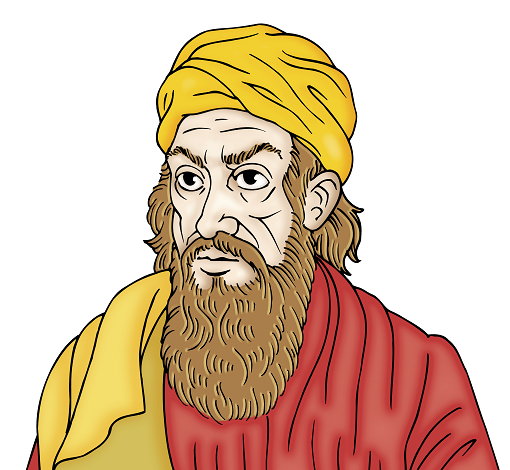 Pythagoras of Samos (ca. 570-495 BCE) was a Greek philosopher, mathematician, and spiritual leader. Around the age of 40, Pythagoras established a community of followers, all of whom vowed to live according to his teachings. The members of this brotherhood took an integrative approach to learning, making it their discipline to weave spirituality, philosophy, and science together in a seamless whole.
Pythagoras had enormous personal dynamism, and his influence and inspiration were profoundly felt by all who were around him. It is said that he once gave a speech on the precepts of his brotherhood to the laypeople of the town of Croton and that afterwards an entourage of 600 citizens rushed forward to join in the Pythagorean order without even going home to their families to say goodbye. Whatever the historical veracity of this claim and others like it, our reports on Pythagoras clearly suggest that he was a man of the utmost social intelligence and with an extraordinary power to inspire.
Pythagoras vs. the Ionians
As opposed to the Ionian philosophers who preceded him (Thales, Anaximander, and Anaximenes), Pythagoras preached a new way of life: Where they had tried to grasp nature as an impersonal principle (arche) which stood apart from man and spiritual life, Pythagoras built a philosophy that united a love of science and critical inquiry with the ethical, moral, and social foundations that were also part of his oeuvre.[1] In his person, the scientific fused with the spiritual and the mathematical joined forces with the moral.
Pythagoras seized upon what he saw holistically and intuitively. When engaged in the work of science, he always took care to bind his inquiries to the existential and moral significance that his findings would have for his fellow men and for the purification of their spiritual and emotional lives. Pythagoras could thus combine the roles of scientist and social reformer in his one person. He represents an archetype that has been lost to us today – indeed, one who has little in the way of later counterparts.
According to Pythagoras, philosophy and science are mankind’s entry points to communion with the divine. It is by the practice of these disciplines that the soul is led to participate in the harmonious order of nature. To Pythagoras, the universe is already an ordered harmony, a cosmos, but the man who has no scientific training is bound to miss this order and perceive the universe as unordered and chaotic. To Pythagoras, it is therefore imperative that we study the natural sciences – not just for their own sake, but also in order to discover the harmony and beauty that inheres in the universe, and to experience a sense of kinship with the cosmos first-hand.
To Pythagoras, when we partake in social communion with the aim of doing good in the world, we are participating in the harmonious order of nature. Through friendship, fellow-feeling, and a benevolent state of mind we acquire a gradual affinity with the cosmos, which is reciprocal in the sense that it allows not just us, but all of the cosmos to become better integrated with itself. The more our relations deepen, the more the cosmos forms connections with itself and the more our kinship tightens.
Pythagoras as Moral Teacher
With its rowdy orgies, festival-plays, and religious mysteries, Greek society offered its citizens multiple opportunities to acquire so-called mystical experiences where the individual experiences his surroundings in an ego-less state. Pythagoras, too, aimed to instill such experiences in his followers. But in contrast to the ecstatic Dionysian methods and rituals, which aimed to produce this effect through excess, Pythagoras carved out a new path characterized by decency and moderation. His teaching was twin-pronged: On the one hand, he instructed his followers in arithmetic, geometry, astronomy, and music, which were all taught as objective sciences under his tutelage. On the other, he instructed his followers in the practice of meditation and taught them to cultivate redemptive moral practices (such as the following) in themselves:
“Let not your eyes receive the sweetness of sleep until you have examined each of your acts of the day three times: Where did I transgress? To whom did I do good? What should I have done which I did not do?” – Hierocles: The Pythagorean Golden Verses §40-43
Pythagoras thus approaches the world in a fundamentally ethical way where respect for others, wisdom, temperance, and honoring one’s fellow man and nature constitute the highest virtues according to the Pythagorean way of life.
As opposed to the prior Greek emphasis on the body or spirit as the true essence of man, Pythagoras is among the first in the Western tradition to identify man’s innermost being with the soul, to the exclusion of the former two. According to Pythagoras, only those who cultivate a life of good will and calm purity, studying science and music along with his moral prescriptions for living a good life, will ever come to know their own soul and thus to really be themselves. Hence the Pythagorean moral practices are no mere system of morality, aiming to uphold certain standards of conduct within one’s community, but deployed as a series of practices to purify men’s souls and to bring them closer to the divine. And thus, Pythagoras’s greatness as a spiritual and social teacher is precisely that he unites the interests of the collective with the interests of the individual while offering his followers a vision of the human condition that is characterized by hope and purpose.
Pythagoras as Integrative Genius
To us moderns, the Pythagorean union between science and spirituality is bound to seem disjointed, if not downright contrived. To our disadvantage, we are unable to conceive of this synthesis in the same brilliantly integrative manner that Pythagoras was. Indeed, to Pythagoras, probing deeply into the nature of arithmetic, geometry, astronomy, and music was completely synonymous with the spiritual quest to orient one’s soul toward the divine cosmos and to cultivate an experience of the universal spirit in oneself. Like Einstein, who marveled at the intricacies of the universe, giving words to a feeling of “cosmic religiousness” without the trappings of concrete religion, Pythagoras upheld no distinction between spirituality and science or between the objective laws of the universe and mankind’s place and subjective experience of beauty within it.
To exemplify, Pythagoras saw music as an important example of the mathematically ordered harmony and beauty that he perceived to be all around us. Pythagoras therefore made music an object of objective, scientific study, and – like Goethe did with colors – Pythagoras was effortlessly able to connect objective qualities such as string lengths, rhythms, and intervals with the subjective effects they produced in the listener. With great prescience and precision, he discerned what psychological and aesthetic feeling the listener would be stirred to experience.[2] Again the duality of objective laws and subjective feelings were united without distinction.
When today we try to sum up the Pythagorean teaching, we cannot but speak of it as a union of divergent disciplines – science, philosophy, music, and the spiritual. But to do so is precisely to miss the Pythagorean spirit of natural unity and to limit the scope of the integrative and holistic genius of the Fe function. Indeed, because his ethical teaching was presupposed in everything that he did, Pythagoras could allow himself to conduct scientific experimentation with humility and without fear of its results. With Pythagoras, the predisposition for benevolence was given in feeling and could never not be a coloring on the world as he saw it, whereas with Plato, his ethical stance was derived from a philosophy that had to be true in order for his ethics to hold water. Hence Plato could not risk science disproving what he needed to be true, and so the Platonists were barred from undertaking scientific inquiry in the same open-minded spirit as the Pythagoreans had done. Indeed, with Plato, science in the main becomes preoccupied with proving what he had already thought.
Since modernity has been unable to produce a Pythagoras – to cherish and cultivate its integrative geniuses – the disciplines that Pythagoras once united in his person have now become everything that he would have dreaded: In science, in spite of Einstein’s warnings, the approach of Bacon and Newton now rules supreme: Knowledge is Power, the universe is mechanical, and the aim of the sciences is to establish mankind’s dominion over nature. Theology, once intimately connected with medicine, geography, and astronomy, has often become entrenched in textual dogma and alienated itself from the sciences proper, having little to say on evolution and the beginnings of the universe. And philosophy, once a broad discipline of the utmost importance, has now in many cases been divorced from all but technical jargon and empty word games.
Hence we ignore the integrative genius of Pythagoras and the example that he set before us at our own peril.
ACKNOWLEDGEMENT
I am particularly indebted to Constantine J. Vamvacas for his discussion of Pythagoras.
***
Image of Pythagoras in the article commissioned for this publication from artist Georgios Magkakis.
NOTES
[1] Conceptually we may construe this as a typical difference between NTPs and NFJs.
[2] In the vein of Pythagoras’s later counterparts, we find of course Goethe, but perhaps more surprisingly, also Nietzsche. Where Goethe tried to ignore the modern division of knowledge that took place all around him, Nietzsche would earnestly try to arrest it and turn back the tide. In his works, he dreamt of an era where the integrative genius, the Overman, could best the ignoramus-specialist in all respects. Butler: The Tyranny of Greece over Germany (Cambridge University Press 1935) p. 313