
 English
 Español
 Português
 Deutsch
 Français
 Italiano
 Polski
 Українська
 Русский
 Türkçe
 العربية
 日本語
 한국어
 ไทย
 汉语
 Tiếng Việt
 Bahasa

Based on research into private taste in faces by Johannes Hönekopp.
Face Tournament Test
Find your face champion
The Face Tournament Test shows you pairs of fictional faces in a knockout tournament. In each pair you choose the face you prefer, or pass on both, until one face, your champion, or none is left. Your first-round choices show which visible traits and which of eight groups of faces you tend to choose.
The Your Type Test looks at the kind of partner you are drawn to, the Ancient 'Your Type' Test at which ancient-inspired faces you prefer, and the Beauty Privilege Test at how looks shape the way people are treated. To take the test, press Discover my type below.
You have a type. Let’s find it.
Some faces catch your eye. Others don’t. Discover the patterns behind your first impressions.
Discover my type
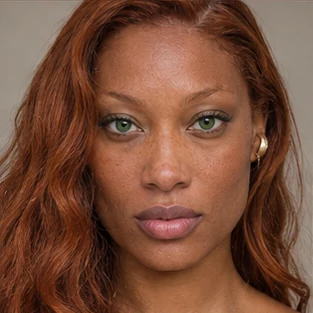
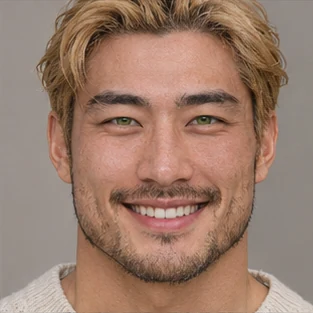
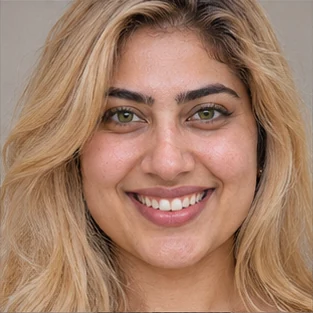
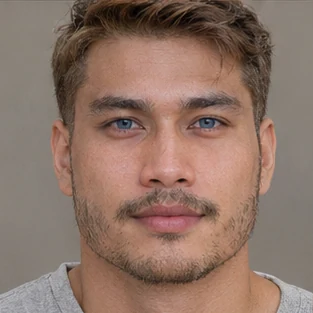
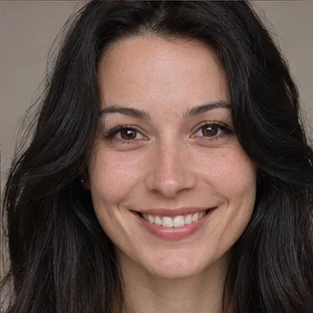
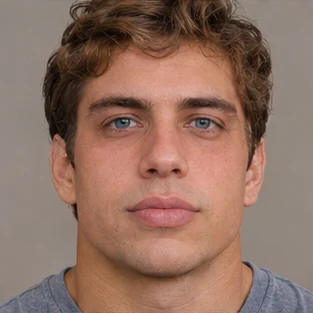
The details make the difference.
256 faces · 8 groups · 14 traits · Free results
Passing rejects both faces. Neither will advance, and you can finish without a winner.
Question 1 of
BACKNEXT
How the tournament works
You see all 128 faces if you choose women or men, or all 256 if you choose everyone. In round one, every face appears exactly once, in random pairs: most pairs are two faces from the same group that differ in one detail, such as glasses, a smile or hair length, and a few pairs are faces from two different groups. Choose a face only if one appeals to you, or use “Neither / pass” to reject both. The faces you choose go on to the next round and are paired again, until one face or none is left: up to 127 choices for women or men, or 255 for everyone. In round one, women are paired with women and men with men; later rounds can mix them. You can go back and change a choice, even after a new round has started.
Your champion is the last face left after your own choices: you chose it in every pair it was in, and no winner is ever picked at random. If you pass on the last faces left, there is no champion. The champion is not a ranking of all the faces. Your groups and traits are counted from round one only, where every face appears once, so faces that win more rounds do not count extra. Choosing one face of a pair only means you preferred it to the other one, not that you dislike the other. How often you passed in round one is shown separately.
How these scores work
Your favourite group is the group whose faces you chose most often in round one. Every face counts in its group, including the ones you passed on. If two or more groups come out level at the top, the result names all of them: a tie stays a tie. If you pass on every pair in round one, there is no favourite group. Later rounds are left out because the faces that keep winning appear in them more often.
Trait summaries compare decided first-round pairs within the same group and gender pool. Four decided comparisons and a win-rate difference of at least ten percentage points from 50% are required. These are descriptive associations across different faces; facial features can vary together.
About the portraits
This exploratory test uses 256 original fictional adults: 128 women and 128 men. Every group has the same number in each gender pool. The labels were fixed when the portraits were made, rather than inferred from real photographs or your own identity.
Facial dimensions include face width, jawline, cheekbones, chin shape, nose width, lip fullness, eye shape and eyebrows. Hair tone and eye colour also contribute to the profile. The casting brief uses varied black, brown, blonde, auburn and copper hair, and brown, hazel, green and blue eyes. A quarter of the portraits wear glasses. These are fictional styling choices; hair dye and coloured contacts are allowed. 75% of the women have long hair, with a smaller share of shorter bobs. This is an authored design mix, not a population norm or a measured attractiveness ranking.
These broad fictional group labels overlap in real life and are not verified identities or genetic estimates. The scores describe this portrait set, rather than relationship compatibility, personality or genetic ancestry. No direct ethnicity-preference question is asked.
Inspired by the face-rating format of mytype.fyi, with independent images and scoring.
References
- Germine, L., Russell, R., Bronstad, P. M., Blokland, G. A. M., Smoller, J. W., Kwok, H., Anthony, S. E., Nakayama, K., Rhodes, G., & Wilmer, J. B. (2015). Individual aesthetic preferences for faces are shaped mostly by environments, not genes. Current Biology, 25(20), 2684–2689. https://doi.org/10.1016/j.cub.2015.08.048
- Hönekopp, J. (2006). Once more: Is beauty in the eye of the beholder? Relative contributions of private and shared taste to judgments of facial attractiveness. Journal of Experimental Psychology: Human Perception and Performance, 32(2), 199–209. https://doi.org/10.1037/0096-1523.32.2.199
- Little, A. C., Jones, B. C., & DeBruine, L. M. (2011). Facial attractiveness: Evolutionary based research. Philosophical Transactions of the Royal Society B: Biological Sciences, 366(1571), 1638–1659. https://doi.org/10.1098/rstb.2010.0404
- Rhodes, G. (2006). The evolutionary psychology of facial beauty. Annual Review of Psychology, 57, 199–226. https://doi.org/10.1146/annurev.psych.57.102904.190208
Frequently Asked Questions
Are these real people?
No. The portraits are original fictional adults. Their group labels were fixed when they were made.
How many choices are there?
Round one has 64 pairs for women or men, or 128 for everyone. Later rounds halve the survivors when there are no passes, so the whole tournament takes up to 127 choices for a single pool or 255 for everyone. Passing shortens it.
What happens when I pass?
Passing rejects both faces. Neither advances, and both stay in their groups’ counts. If you pass on the last faces, the tournament ends without a winner.
Why do only first-round choices count?
In round one every face appears exactly once. Faces that win appear again in later rounds, so counting those rounds would give them extra weight.
Why Use This Test?
1. Free. This Face Tournament Test is delivered free of charge and lets you choose between pairs of fictional faces in a knockout tournament, then see the traits and groups of faces you chose most.
2. A large portrait bank. 256 fictional adults, 128 women and 128 men, in eight groups of equal size, with glasses, expressions, hairstyles and face shapes varied within every group.
3. Pass when neither appeals. You never have to pick a face you do not like: passing rejects both faces, and the tournament can end without a winner.
4. 14 trait dimensions. Your result shows which visible traits won more of your first-round choices, from glasses and smiles to jawlines, cheekbones and eye shape.
5. Fictional faces. The portraits are not photographs of anyone. Your result describes your choices among them, not relationship compatibility or personality.