
 English
 Español
 Português
 Deutsch
 Français
 Italiano
 Polski
 Українська
 Русский
 Türkçe
 العربية
 日本語
 한국어
 ไทย
 汉语
 Tiếng Việt
 Bahasa

Portraits are fictional faces based on artistic reconstructions; your result shows preference, not ancestry.
Ancient Peoples Attraction Test
Gravettian hunter-gatherers, Natufians, Jōmon people, Yamnaya herders, ancient Egyptians, Mycenaeans, Scythians, Xiongnu or Kipchaks? These groups lived in widely different periods and regions. Select the fictional faces you find attractive, then see which groups you preferred.
The Ancient 'Your Type' Test compares faces drawn from three ancestral groups of early Europe, and the Your Type Test looks at the kind of partner you are drawn to. To take the test, press Start test below.
Four portraits from one category on each slide. Pick the faces you like and let an adaptive search help you explore a shortlist.
Start test
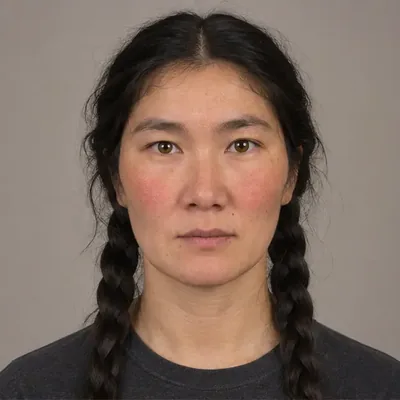
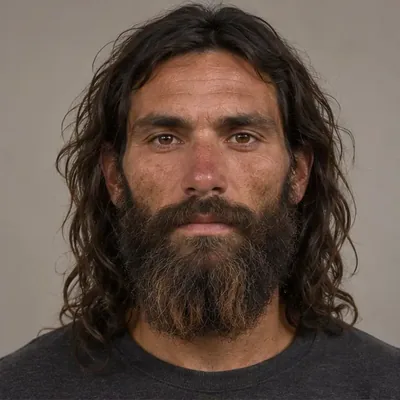
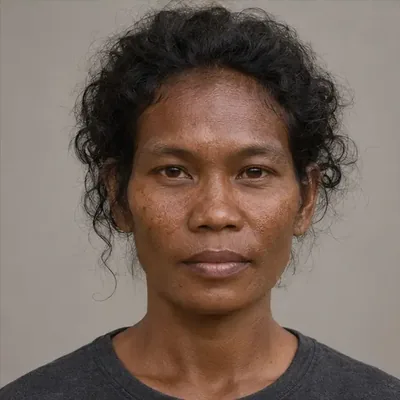
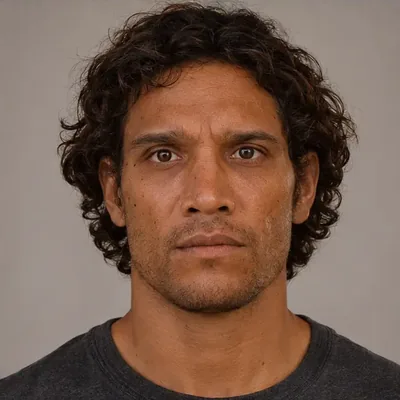
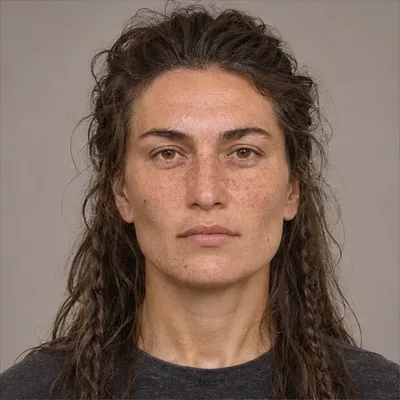
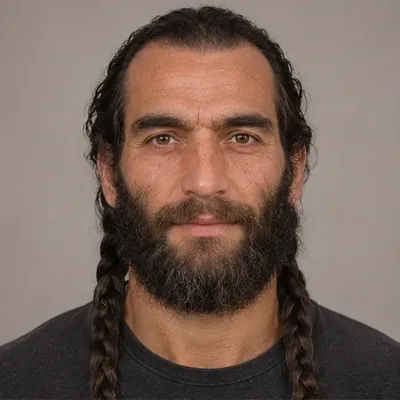
165 quiz categories · 1,320 portraits
The portraits are fictional. The catalog labels include genetic, archaeological and historical categories. Your result describes your choices among these faces.
Question 1 of
BACKNEXT
How the groups, portraits and scores work
This test uses 289 reconstructions from the 2026-11-16 snapshot of the Ancestral Whispers catalog. A question mark in an original catalog label is treated as a tentative assignment, not a measured probability or a confirmed genetic identification of the reconstructed individual. Repeated labels and already represented subgroups are consolidated into 165 quiz categories.
Ancestry comparison groups, archaeological cultures and historical language communities describe different things. A plus sign indicates a proposed combination or affinity; a slash can join alternatives or overlapping labels. Neither sign alone establishes a measured genetic mixture.
We gave the original reconstructions to an AI image generator as visual references. For every new portrait, we requested an adult around 30, plain clothing, a neutral expression, matching framing and soft light. Up to four catalog images guide a category. Generating variants does not create additional ancient samples, and these faces are artistic interpretations rather than population averages.
Each slide shows four distinct portraits of one category, in shuffled positions. Women and Men show four portraits of the selected gender for every category; Everyone uses two women and two men. Select every face you like, or choose “None of these”. Every scored category has four observations. Its score is the number liked divided by four, multiplied by 100. Equal scores share a rank. Four portraits give coarse scores and can produce many ties; the results describe these fictional faces.
Category consolidation covers spelling aliases, repeated uncertainty-qualified names, equivalent region-and-period codes, redundant umbrella wording, and subgroups already explicitly represented among a broader entry's references. A merge is a presentation choice, not a claim that different people have identical ancestry. Distinct historical phases and unresolved affinities remain separate.
The adaptive route rates 16 categories. It begins with visually varied categories. Later choices use visual resemblance to categories you liked, while regular exploratory choices keep the search from staying in one narrow area. If your ratings are all equal, it continues exploring varied categories. These visual matches guide presentation only: an unseen category never receives an inferred score. Select the full catalog at setup to rate every category.
The visual-similarity index uses image features from the four portraits eligible for the selected mode. It does not use the category names or ancestry labels. This is an approximate search aid, not a validated prediction of your preferences. A shortlist cannot establish your favorite across the full catalog. The labels overlap in meaning and are not interchangeable with tribes or measured ancestry percentages.
Abbreviations and catalog symbols
AASI — Ancient Ancestral South Indian
Ancient South Asian hunter-gatherer-related ancestry; distinct from the later Ancestral South Indian mixture.
ANA — Ancient North African, also called Ancestral North African
A deep North African ancestry lineage; this is the catalog-context expansion, not a universal acronym used identically in every paper.
CHG — Caucasus hunter-gatherers
An ancient genetic comparison lineage associated with hunter-gatherers from the Caucasus.
EEF — Early European Farmers
A broad grouping of Europe's early farming populations.
EHG — Eastern European hunter-gatherers
An ancient genetic comparison grouping from eastern Europe.
WHG — Western European hunter-gatherers
An ancient genetic comparison grouping from western and central Europe.
WSHG — Western Siberian hunter-gatherers
An ancient genetic comparison grouping from western Siberia.
BMAC — Bactria–Margiana Archaeological Complex
The Bronze Age Oxus civilization of southern Central Asia.
IVC — Indus Valley Civilization
The Bronze Age Harappan civilization of northwestern South Asia.
IVCp — Indus Valley Civilization periphery
An Indus-related genetic comparison profile from individuals outside the core Indus cities; also called Indus Periphery.
LBK — Linearbandkeramik, or Linear Pottery culture
An early farming culture of central Europe; the initials come from its German name.
PPNB — Pre-Pottery Neolithic B
An early farming period in the Levant before widespread pottery use.
HG — Hunter-gatherer
A subsistence description; it does not itself identify one genetic population.
N — Neolithic
A regionally defined archaeological period, often associated with farming or pottery; its meaning varies by region.
LN — Late Neolithic
The later part of the local Neolithic sequence.
C — Chalcolithic, or Copper Age
A period between the Neolithic and Bronze Age; also called Eneolithic.
BA — Bronze Age
An archaeological period defined regionally; it is not a single worldwide date range.
EBA — Early Bronze Age
The early part of the regional Bronze Age.
EMBA — Early and Middle Bronze Age
A combined period label used in ancient-DNA comparison groups.
MLBA — Middle and Late Bronze Age
A combined period label used in ancient-DNA comparison groups.
LBA — Late Bronze Age
The later part of the regional Bronze Age.
LNBA — Late Neolithic and Bronze Age
A combined regional period label, including in Siberian genetic group names.
IA — Iron Age
A regionally defined archaeological period; it does not identify a language or ethnicity.
IA1 — Iron Age, catalog group 1
The 1 is a group identifier in the Liushui code; the supplied catalog does not define a historical phase 1.
Arm — Armenia or the Armenian highlands
A geographical prefix in the catalog's period codes, not proof of modern nationality.
Ukr — Ukraine
A geographical prefix referring to the territory of present-day Ukraine.
Uzb — Uzbekistan
A geographical prefix referring to the territory of present-day Uzbekistan.
Tkm — Turkmenistan
A geographical prefix referring to the territory of present-day Turkmenistan.
CHN — China
A country prefix, used here for the Liushui site code.
SSA — Sub-Saharan African
A broad geographical descriptor covering many distinct populations.
ZK — Zlatý kůň
An early modern human site in Czechia, genetically connected with early individuals from Ranis in Germany.
_o — Ancestry outlier
A technical suffix for individuals differing genetically from their assigned comparison group; it is not a medical or facial label.
? — Tentative catalog assignment
We interpret the source question mark as uncertainty about the particular reference's assignment, not about the full name's spelling, and not as a numerical confidence score.
+ — Proposed combination or affinity
A plus sign in a catalog label does not itself establish measured genetic admixture or its proportions.
/ — Alternative or overlapping labels
A slash may join related or alternative comparisons; it does not automatically mean a genetic mixture.
~95% + 5% — Approximate catalog proportions
The Linear Pottery source label's figures are not validated DNA measurements for these fictional faces or the test-taker.
like / proto — Proposed affinity or precursor
These qualifiers express a comparison or a suggested historical relationship, not a confirmed individual identity.
References
- Ancestral Whispers. (n.d.). Reconstructions. https://www.ancestralwhispers.org/reconstructions
- Jeong, C., Wang, K., Wilkin, S., Taylor, W. T. T., et al. (2020). A dynamic 6,000-year genetic history of Eurasia’s Eastern Steppe. Cell, 183(4), 890–904. https://doi.org/10.1016/j.cell.2020.10.015
- Jones, E. R., Gonzalez-Fortes, G., Connell, S., et al. (2015). Upper Palaeolithic genomes reveal deep roots of modern Eurasians. Nature Communications, 6, 8912. https://doi.org/10.1038/ncomms9912
- Lazaridis, I., Patterson, N., Mittnik, A., et al. (2014). Ancient human genomes suggest three ancestral populations for present-day Europeans. Nature, 513(7518), 409–413. https://doi.org/10.1038/nature13673
- Narasimhan, V. M., Patterson, N., Moorjani, P., et al. (2019). The formation of human populations in South and Central Asia. Science, 365(6457), eaat7487. https://doi.org/10.1126/science.aat7487
- Posth, C., Yu, H., Ghalichi, A., et al. (2023). Palaeogenomics of Upper Palaeolithic to Neolithic European hunter-gatherers. Nature, 615(7950), 117–126. https://doi.org/10.1038/s41586-023-05726-0
- Salem, N., van de Loosdrecht, M. S., Sümer, A. P., et al. (2025). Ancient DNA from the Green Sahara reveals ancestral North African lineage. Nature. https://doi.org/10.1038/s41586-025-08793-7
- Sümer, A. P., Rougier, H., Villalba-Mouco, V., et al. (2025). Earliest modern human genomes constrain timing of Neanderthal admixture. Nature. https://doi.org/10.1038/s41586-024-08420-x
- Wang, C.-C., Reinhold, S., Kalmykov, A., et al. (2019). Ancient human genome-wide data from a 3000-year interval in the Caucasus corresponds with eco-geographic regions. Nature Communications, 10, 590. https://doi.org/10.1038/s41467-018-08220-8
- Zeng, T. C., Vyazov, L. A., Kim, A., et al. (2025). Ancient DNA reveals the prehistory of the Uralic and Yeniseian peoples. Nature. https://doi.org/10.1038/s41586-025-09189-3
- Zhang, F., Ning, C., Scott, A., et al. (2021). The genomic origins of the Bronze Age Tarim Basin mummies. Nature, 599(7884), 256–261. https://doi.org/10.1038/s41586-021-04052-7
Frequently Asked Questions
Are these real ancient people?
No. The portraits are new fictional faces drawn from facial reconstructions of ancient people. Each group's portraits draw on up to four of the catalog's reconstructions.
How many slides are there?
The adaptive shortlist has 16 slides, one group each. If you choose the full catalog, you rate all 165 groups.
Does my result say anything about my own ancestry?
No. It describes your choices among these portraits, not where your family comes from.

Why Use This Test?
1. Free. This Ancient Peoples Attraction Test is delivered free of charge and lets you rate the faces of 16 ancient groups, or all 165, then see which you liked most.
2. Built from ancient reconstructions. Every portrait was drawn from facial reconstructions of people who lived in the past, from Ice Age hunter-gatherers to Bronze Age herders and medieval steppe peoples, grouped by the labels of the Ancestral Whispers catalog.
3. An adaptive shortlist. The test starts with groups that look very different and then shows more groups that look like the ones you liked, so 16 slides cover a wide range.
4. Fictional faces. The portraits are new faces, not photographs of anyone. Your result describes your choices among them and says nothing about your own ancestry.