“The freedom of the individual finds its high point in Xenophanes and in [his] almost boundless withdrawal from all conventionality.” – Nietzsche: Philosophy in the Tragic Age of the Greeks §10
“His temperament was … restless, curious, many-sided, critical as well as biting, he would rightly be considered … the man who would trace new paths in crucial theological, philosophical, and gnoseological areas.” – Vamvacas: The Founders of Western Thought p. 85
“There is nothing in the whole of the literature of philosophy that is so critical, so self-critical, so correct and so true as … Xenophanes.” – Popper: The World of Parmenides p. 46
By Ryan Smith
Since Jung said that it was necessary to know some philosophy in order to understand his typology in full (Bennet: Meetings with Jung p. 27), an introduction to some of the philosophical archetypes may be in order. Especially so with the Pre-Socratics, who according to Nietzsche constituted the only philosophical “pure types.”
Lifestyle and Temperament
Unlike the majority of his philosopher-peers, Xenophanes did not live a secluded life of solitude. On the contrary, he was always travelling, indeed travelling his whole life in search of the new: New sights, new learning, and new intellectual conversations.
His temperament, as has already been hinted above, was acerbic: Though a foreigner and a guest in the various cities where he travelled, he would seek out the public and scorn them. Legend has it that Xenophanes once met Empedocles and snubbed him thus (Diogenes Laertius §9.2.20):
Empedocles: “It is impossible to find a wise man.”
Xenophanes: “For you, naturally, since it takes a wise man to recognize one.”
He enjoyed making fun of people and pointing out their flaws. However, in contrast to Heraclitus, Xenophanes was not merely an arrogant and unabashed elitist: While Xenophanes was indeed a castigator of men, he was also a moral egalitarian. Far from agreeing with Heraclitus’ dictum that “one man is worth ten thousand if he is extraordinary” (DK22 B49), Xenophanes posited a unitary morality that was common to all and equal to all. Whether peasant or king, God or man, high or low, good is good and bad is bad and everyone should follow the same rules, striving for the same good in this world (DK21 B11).
The advancement of this egalitarian code of ethics flung Xenophanes into an open contest with the morality and works of Homer, which were highly lauded at time, and whose morality was of course quite the opposite of Xenophanes’: In the Homeric works it is naturally assumed that heroes and gods may act according to moral codes that are different from those of mere mortals. But as noted above, Xenophanes begs to differ: If an act is blameworthy, it is blameworthy no matter who the perpetrator, God or man.
Natural Philosophy
Like Epicurus, who came after him, Xenophanes was interested in observing and understanding natural phenomena on their own terms and without recourse to mythology. But unlike Thales, who came before him, Xenophanes was not interested in natural phenomena for their own sake. Rather, Xenophanes wanted to understand these phenomena in order to know what psychological import they held for men.
For example, Xenophanes was most likely the first European who recognized that:
- Seawater is not naturally salty, but has acquired its saltiness because other elements have been dissolved in it. (DK21 A33)
- The moon gets its light from the sun. (DK21 A42)
- The reason petrified shellfish are found high up on mountains is that ocean once covered them. (DK21 A33)
To Xenophanes, there is no divine creator or genesis myth of the world coming into being. He sees it all as having come about by natural causes. Like Epicurus after him, he de-mythologized and explained natural phenomena, so as to diminish the fear of God among men. Xenophanes wished to understand nature; he did not wish to harness it as Bacon or Newton did.
Theology
In spiritual matters, the triumph of Xenophanes was that he remained receptive to the transcendent element of existence without abandoning the dictates of his rational, innovative, and critical mind. This achievement is not just important on its own terms, but also makes Xenophanes highly relevant to the discussions that are found in today’s intellectual climate where a dubious opposition between science and spirituality has often been posited. An opposition in which scientism has become its own branch of metaphysics, often without its proponents realizing it.
Like Immanuel Kant after him, Xenophanes solved the conflict between spirituality and science by positing a transcendent aspect of reality that was in no way like anything that we normally cognize, “neither in body nor in mind” (DK21 B23).
In order to convince his fellow men that their conception of the gods is false, Xenophanes uses the method of inference: In Africa, men paint their gods as dark-skinned and snub-nosed, but on the western coast of the Black Sea, men paint their gods as blonde and blue-eyed (DK21 B16). The anthropomorphic gods are therefore more likely to be figments of man’s imagination than divine entities in their own right. Likewise, the existence of multiple gods, or even of one anthropomorphic god, must be rejected since any such notions would entail concepts of quantity and relation which are human concepts and not at all applicable to the divine (DK21 B23).
Insofar as there is a divine being in his philosophy, Xenophanes conjectures from his observations of the world that this being is most likely unconcerned with human affairs (if it exists at all). It may have played some role in the original formation of the cosmos, but it is implausible that such a being would be actively influencing the world today or even caring about human affairs. Xenophanes is therefore also the first deist in the Western tradition.
Epistemology
Xenophanes explicitly tells us that all of our knowledge is tentative (DK21 B34). Epistemologically, he was a nominalist, the way Jung says we should expect of an extrovert (Psychological Types §40 ff.). According to Xenophanes, even though one has the best arguments and win all discussions on a topic over and over again, that does not, and can never, constitute finalized knowledge. One must always be willing to go back and re-evaluate everything that was hitherto regarded as certain – to intellectually start afresh, as it were.
In his epistemological method, Xenophanes is skeptical of both the senses and of reason (DK21 B32, B39). In his reasoning, Xenophanes prefers knowing by a third method, namely by a process of mental activity that is not sensation or reason but reasonable inferences made through personal inquiry with a sceptical mind. In this way, Xenophanes does not trust ‘authority’ to arrive at a universally valid systematized body of knowledge that others can use; we must set out for ourselves.
Unlike Epicurus, Xenophanes does not contend that we can have direct knowledge of objects. On the contrary, as humans we can only have indirect knowledge of the objects that they seek to understand. They can only be understood through their relations and not their essences (DK21 B35). Likewise, human knowledge can never be absolute, but must always be comparative and relative in some sense (DK21 B38). Again the stress is placed upon never being too certain of any one piece of knowledge and always retaining a willingness to relinquish one’s beliefs as better arguments and better observations are brought to light.
Social Philosophy
Xenophanes recognizes the fundamental phenomenological impediments to the possibility of ever attaining objective knowledge, but still maintains that we have a responsibility to try and push beyond these limits. He does not satisfy himself with subjective knowledge-claims, as Jung or Heidegger did. He recognizes the ultimate impossibility of comprehensive and objective knowledge, but believes that we have a duty to try and attain it anyway. We have to be as objective as we possibly can and not write ourselves epistemological blank checks simply because it would be convenient to do so.
To Xenophanes, seeking and curiosity are powerful inner drives in humans, and we humans are always obligated to make the most of these drives. We should always be in search of the new; indeed we should be willing to always stake our entire lives upon the betterment of the status quo. While other Greeks saw the Prometheus myth as a word of warning – “don’t tinker too much, don’t assault the gods, and don’t challenge the status quo” – Xenophanes saw humanity as destined to follow in the footsteps of Prometheus no matter the consequence (DK21 B1). To him, humanity was none other than Prometheus and vice versa.
Unlike Epicurus, Xenophanes does not believe that the pleasure and contentment of the body is in any way a social goal in itself. But nor is Xenophanes like Plato in taking a depreciative view of the body; the body is simply immaterial and not of primary importance. Rather, what should be the priority of men is the gratification of their intellectual life and a cultivation of mental cleverness (DK21 B2).
As we recall, there is no God or providence in Xenophanes’ social theory. Social progress and the details of our political order are entirely in man’s own hands. Man is free to shape his existence as he sees fit and there is no hubris or nemesis to strike him down for his choice, since there are no gods keeping an eye on him anyway.
Unlike those who say that truths (or at least moral truths) were revealed in the beginning and set humans on a path from there, Xenophanes believes that even if there was a divine being in the beginning, that being did not reveal everything crucial to man. Thus, there is a similarity to Hayek here in the sense that humanity should be free to experiment with the social order in order to find gradually better solutions (DK21 B18) and adapt from there. Freedom therefore becomes a kind of meta-value for Xenophanes (as it was for Hayek too). And also like Hayek, there is a crucial omission in the philosophy of Xenophanes, namely that we are told that we should be free to experiment and discover better solutions but never how to do this in practice (or how we are to decide between two equally cogent conjectures). We are simply told that given sufficient freedom, these things will happen by themselves.
The Hidden Tragic Feeling
Finally, in spite of his optimistic and ebullient spirit, the personality of Xenophanes also seems to contain some notes of hidden tragedy. The tragic feeling in Xenophanes can be seen in many ways.
In depriving mankind of myth and fettering him to reason, Xenophanes removes any conceivable clutch or excuse that religion might have afforded man for his dissatisfaction with life. Only the individual and his fellow men are responsible for what they make of their lives, no matter what. Unlike Homer who was concerned with showing our human potential and flowering at its best, so as to create a brilliant and enticing spectacle with human passions at the center of it, Xenophanes is as much concerned with the impediments and limitations that will forever curb human existence, no matter what innovations we manage to make. A new phone, a nice house, or a fancy car is at best an existential sweetener that softens the suffering of being human; they can never overtake it.
Unlike in the work of his predecessors, the word ‘harmony’ does not appear a single time in the oeuvre of Xenophanes. His conception of the world is one as a place of solitude and strife. Unlike the Olympian gods, who could be pleaded with for blessings, Xenophanes remains agnostic as to whether there even is a divine being out there. And even if there is, this divinity does not care about mankind; much less the fates of individual human beings. Man is alone in the wilderness of the cosmos – existentially lonely and fundamentally limited in his being. Thus the tragic feeling arises precisely out of this psychic awareness of the crushing limits that are set before us by existence. Limits that Homer’s glorious spectacle aims to make us forget – limits which Xenophanes cannot forget.
In spite of his tragic burden, however, man may not resign, but must go on suffering nobly, continually striving and intellectually creating anew. This is the tragic heroism of Xenophanes. This is the tragic heroism of the human spirit that he exemplified.
ACKNOWLEDGEMENT
I am particularly indebted to Constantine J. Vamvacas for his discussion of Xenophanes.
REFERENCES
Bennet: Meetings with Jung Daimon 1985
Nietzsche: Philosophy in the Tragic Age of the Greeks Regenary Publishing 1996
Nietzsche: The Pre-Platonic Philosophers University of Illinois Press 2006
Popper: The World of Parmenides Routledge 2012
Vamvacas: The Founders of Western Thought Springer 2009
Warren: Pre-Socratics University of California Press 2007
Waterfield: The First Philosophers Penguin 2009
***
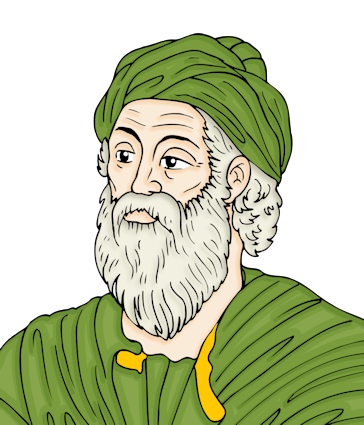
Image of Xenophanes in the article commissioned for this publication from artist Georgios Magkakis.