
 English
 Español
 Português
 Deutsch
 Français
 Italiano
 Polski
 Українська
 Русский
 Türkçe
 العربية
 日本語
 한국어
 ไทย
 汉语
 Tiếng Việt
 Bahasa
Formula 1 Test
Which F1 driver do you most resemble?
Formula 1 is the pinnacle of motorsport, where the world's fastest drivers fight a high-speed battle of nerve, engineering, and ambition. Every race weekend forces competitors to balance relentless drive against team orders, mechanical limits, and split-second danger. From legendary champions to modern stars, each driver handles the pressure of the grid in their own distinct way.
Which Formula 1 driver are you? For each of the following statements, indicate how well it describes you below.
Question 1 of 40
I push rules to their limits when pursuing a goal.
| Disagree | Agree |
BACK NEXT
The Formula 1 Test is inspired by psychometric methodology and based on research into the public racing personas of its drivers. The test provides feedback such as the following:
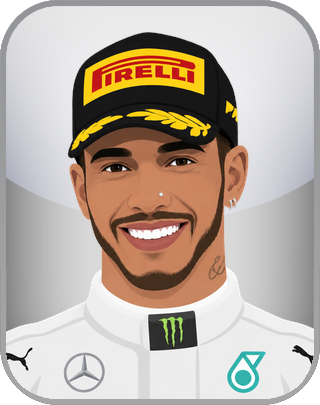
Lewis Hamilton
Lewis Hamilton is a seven-time Formula 1 World Champion whose ambition reaches from racecraft to redefining what a modern driver can represent. He wants mastery and purpose, treating even historic success as unfinished work. On track, he adapts to shifting conditions, brakes late under pressure, and collaborates closely with engineers to find every fraction of pace. Away from the garage, he uses fashion, music, and advocacy to express who he is instead of fitting a narrow mold. His main contradiction is that a polished global icon speaks openly about doubt and emotional strain, auditing his own methods whenever competition turns hard.
Fernando Alonso
Fernando Alonso is a two-time Formula 1 World Champion and the grid's ultimate tactical survivor. Driven by a fierce need to prove his ability still matters, he extracts competitive results from imperfect machinery. He studies the whole race from inside the cockpit, spots clever loopholes in the rulebook, and waits patiently for younger rivals to make mistakes. Yet his extraordinary patience on the track clashes with his sharp impatience toward any team system that wastes potential. When frustrated, he delivers biting team-radio remarks and confronts problems head-on rather than accepting defeat. He refuses to let bad luck or flawed equipment write the final chapter of his career.
Kimi Antonelli
Kimi Antonelli is a Mercedes Formula 1 driver and young world champion who stepped directly into the seat left by a racing legend. Driven by the joy of racing and a desire to prove he belongs at the top, he combines natural speed with an easygoing warmth. His central contradiction is carrying the weight of massive public expectation before having the chance to simply be a normal rookie. Forced to learn under constant scrutiny, he responds with practical resilience rather than drama. He absorbs new instructions quickly, shakes off mistakes without dwelling on them, and favors steady point-scoring over reckless gambles. With his engineers and teammates, he remains cooperative, cheerful, and composed under pressure.
Michael Schumacher
Michael Schumacher is a seven-time Formula 1 World Champion who made his name as the ultimate builder of winning racing systems. Driven by a desire for total mastery and collective victory, he treated raw talent as merely the starting point for relentless preparation. He tracked every mechanical detail, kept himself in elite physical condition, and worked closely with engineers to turn struggling teams into unified dynasties, most famously at Ferrari. His central contradiction was the sharp divide between his uncompromising, sometimes polarizing aggression on track and his fiercely protective loyalty toward his team. Beneath his clinical public confidence was a self-questioning competitor who used doubt as fuel to outwork every rival.
Max Verstappen
Max Verstappen is a Red Bull Racing driver and multi-time Formula 1 World Champion whose approach is built on taking total control of the contest. Driven by the immediate reality of winning rather than celebrity, he attacks corners early, trusts his instincts at the edge of grip, and treats every position as worth defending. His central contradiction is the sharp contrast between his grounded, low-key normality away from the paddock and his uncompromising extremity inside the car. He meets conflict head-on instead of smoothing things over, and he routinely pushes rules and rivals to their absolute limits. Once the race ends, however, he switches off from the pressure and leaves the spectacle behind.
Charles Leclerc
Charles Leclerc is a passionate Ferrari driver in Formula 1 whose electric one-lap speed is inseparable from his deep devotion to his team. He races to justify the faith placed in him and fulfill the promise of the Scuderia, treating every qualifying lap as an all-out search for the limit. Away from the circuit, he is polite, modest, and thoughtful, yet inside the cockpit he competes with fierce aggression and wears every heartbreak openly. His central contradiction is carrying raw emotional investment into a sport that punishes anything less than cold control. Even after painful setbacks, he stays loyal and turns frustration into renewed resolve.
Lando Norris
Lando Norris is a world champion McLaren Formula 1 driver whose playful humor and easygoing charm sit alongside a fierce competitive drive. He wants to prove his speed and earn victory while staying genuinely connected to the people around him. His main contradiction is that a relentless elite winner is also his own harshest public critic, often blurting out his frustrations and doubts before anyone else can point them out. He uses self-deprecating jokes to stay grounded with friends, owns his mistakes in interviews, and refuses to fake effortless control. Even during intense rivalry, he stays loyal to his team and turns raw self-questioning into fuel for the next lap.
Ayrton Senna
Ayrton Senna was a legendary three-time Formula 1 World Champion who treated racing as a spiritual calling and a lifelong search for the absolute limit. Driven by a desire for perfection and transcendence, he combined dazzling qualifying speed and wet-weather mastery with meticulous technical feedback for his engineers. His defining contradiction was the split between the ruthless, intimidating competitor inside the cockpit and the gentle, deeply caring person outside of it. On track, he refused to yield and confronted rivals and sporting authorities directly when he believed they were wrong. Off track, he paired fierce personal ambition with genuine compassion for fellow drivers and people in need.
Frequently Asked Questions
What does the Formula 1 Test measure?
The test matches respondents to eight Formula 1 drivers, including Lewis Hamilton, Max Verstappen, Ayrton Senna, and Michael Schumacher, based on forty personality statements.
What does the Formula 1 Test result show?
The result identifies which of the eight World Championship drivers most closely matches a respondent's habits, ambition, and style under pressure.
What is the Formula 1 Test based on?
It is based on psychometric methodology combined with research into the distinct personalities and competitive traits of famous Formula 1 drivers.
Is the Formula 1 Test a clinical assessment?
No, this test is designed for entertainment and light self-reflection through motorsport figures rather than serving as a clinical or diagnostic tool.
How should I answer the Formula 1 Test questions?
Respondents get the most accurate driver match by indicating how well each of the forty statements describes their real everyday behavior rather than ideals.
Why Use This Test?
1. Free. The Formula 1 Test is provided free of charge and lets you compare your answers with characters in the series.
2. Everyday self-report. Questions translate trackside nerve, tactical risk, and team loyalty into everyday decisions, work habits, and reactions under pressure that you can easily spot in your own life.
3. For entertainment and reflection. The result is meant for fan comparison and self-reflection, not diagnosis or formal assessment.