
 English
 Español
 Português
 Deutsch
 Français
 Italiano
 Polski
 Українська
 Русский
 Türkçe
 العربية
 日本語
 한국어
 ไทย
 汉语
 Tiếng Việt
 Bahasa
基础心理学家测试
你是哪位著名心理学家?
基础心理学家测试是一种实验性测量,试图通过使用你的心理态度和人格特质的复合模型,将你与七位著名心理学家中的一位相匹配。在此基础上,测试将确定你最像七位心理学家中的哪一位。
你会是哪位基础心理学家?对于以下每个陈述,请在下方标明你的同意程度。
共35个问题,问题1
我相信,只要我们愿意,就能把痛苦转化为个人成长与韧性的源泉。
| 不同意 | 同意 |
返回 下一个
IDRLabs 基础心理学家测试由IDRlabs制作。
测试提供如下反馈:
B.F. 斯金纳(行为主义心理学):斯金纳(1904-1990)是一位美国心理学家,以其在行为主义方面的工作而最为知名。斯金纳的工作主要围绕操作性条件作用和强化的概念展开。他认为行为可以由后果塑造,无论是奖励还是惩罚。他使用专门设计的“斯金纳箱”进行实验,证明行为可以通过各种强化策略加以改变。他主张将这些原则应用于包括教育和心理健康在内的各个社会领域。斯金纳重视实证和观察方法,反对那些诉诸内在心理状态的心理学理论取向。他相信自己的方法有潜力培育积极的社会变革,强调一种奖励期望行为文化。
西格蒙德·弗洛伊德(精神分析):弗洛伊德(1856-1939)是精神分析之父。弗洛伊德认为人类行为由潜意识欲望驱动,这些欲望往往植根于童年经历。其理论的核心是俄狄浦斯情结、力比多以及本我、自我和超我等概念,它们支配着内部心理动力。他提出,梦境和口误——比如你说出一件事,实际想说的却是“母亲”(“弗洛伊德式口误”)——可以揭示隐藏的欲望和记忆。弗洛伊德关于性在心理发展中具有首要地位的信念具有开创性,但也颇具争议。尽管面临批评,他对探索潜意识的坚持为“谈话疗法”奠定了基础,而谈话疗法正是现代心理治疗的基础。支撑其工作的核心价值观包括内省、身心相互关联,以及早期生活经历对成年期的深远影响。
Viktor E. Frankl (Existential Psychology): Frankl (1905-1997) was an Austrian neurologist, psychiatrist, and Holocaust survivor. His autobiographical experiences are poignantly detailed in his seminal work, "Man's Search for Meaning," in which he recounts his harrowing experiences in Nazi concentration camps and his observations of what human behavior is like under extreme conditions. Central to Frankl's beliefs is the therapeutic approach he developed that emphasizes the human search for purpose and meaning. He posited that even in the face of extreme suffering, individuals could find meaning in their experiences and thus a reason to continue living. For Frankl, life's primary motivational force is our search for meaning, and this can be found through creating a work or doing a deed, experiencing something or someone authentically and in full, or through the attitude we adopt toward the unavoidable suffering inherent in life. He believed in the inherent value and dignity of each human being and championed the ability of the human spirit to transcend adversity.
Jean W.F. Piaget (Cognitive Psychology): Born in Neuchâtel, Switzerland, Piaget’s (1896-1980) early fascination with mollusks as a child evolved into a profound interest in human cognitive development. Piaget believed that children actively construct knowledge as they explore and interact with the world. He introduced the idea of developmental stages, including the sensorimotor, preoperational, concrete operational, and formal operational stages. Each stage signifies a distinct pattern of thought and reasoning. Piaget held that the driving force behind intellectual development is the balance between assimilation (integrating new information into existing cognitive structures) and accommodation (adjusting cognitive structures to new information). Core to his philosophy was the principle of "genetic epistemology", emphasizing the evolutionary and developmental origins of knowledge. He valued education and believed that understanding the nature of cognitive development could lead to more effective educational strategies.
Erik H. Erikson (Developmental Psychology): Erikson (1902-1994) was a German-American developmental psychologist and psychoanalyst best known for his theory of psychosocial development. Born in 1902 in Frankfurt, Germany, to a Danish mother and an unknown father, Erikson's early life was marked by questions about his own identity, which later influenced his work on identity crises. He became a citizen of the United States in the late 1930s and produced most of his influential works while at Harvard and Yale. Erikson believed that individuals pass through eight distinct stages of development from birth to death, each marked by a specific conflict that, when resolved, leads to a basic virtue. He emphasized the role of culture and society in shaping development and believed that the ego plays an active role in reconciling tensions at each stage. Erikson’s approach highlighted the importance of social relationships, personal growth, and the continuous evolution of a person's sense of self throughout life.
Martin E.P. Seligman (Positive Psychology): Seligman (1942-) is an influential American psychologist primarily known for his work in positive psychology and his theories on learned helplessness. Born in Albany, New York, Seligman's early research on learned helplessness explored the psychology of depression and how animals, including humans, can learn to feel helpless in adverse situations. However, his focus shifted in the late 1990s to human strengths and virtues, laying the foundation for positive psychology, a field emphasizing human flourishing and well-being. He championed the idea that psychology should not only address mental illness but also promote the positive aspects of life. Seligman's beliefs revolve around the concept that happiness can be cultivated through specific practices and mindsets, emphasizing the significance of positive emotions, engagement, relationships, meaning, and achievement. He values resilience, optimism, and well-being as crucial components of a fulfilling life.
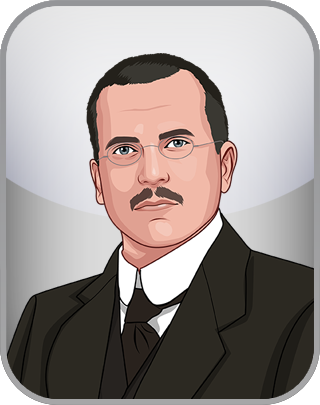
C.G. 荣格(分析心理学):荣格(1875-1961)是一位瑞士精神病学家和精神分析学家,创立了分析心理学,最初与弗洛伊德合作,但两人后来因观点分歧而分道扬镳。荣格的童年以对灵性的着迷为特征,这深刻影响了他后来的理论。他相信集体无意识的概念,即全人类共享的经验和原型象征的储存库。荣格提出,个体成长(他称之为个体化的过程)涉及将意识与潜意识元素整合。他强调心理内部对立力量之间平衡的重要性,以及超越心理中纯粹理性元素的必要性。他的研究深入探讨了东方哲学、炼金术和梦的分析。荣格将灵性视为人类经验的关键组成部分,认为它提供了一条通往自我实现的路径。他重视内省和个人成长,鼓励接纳自己的阴影(被压抑的特质)以实现完整。
基础心理学家测验的灵感来自对相关文献和方法学实践的研究。尽管基础心理学家测验受到研究领域的启发,但它不能用于提供临床评估或对你人格的准确评价。临床评估应始终与心理健康专业人士合作进行。如需了解有关我们任何在线测试和测验的更多信息,请参阅我们的服务条款。
常见问题
基础心理学家测试实际测量什么?
它是一个实验性的复合模型,将你的心理态度和人格特质与七位著名心理学家中的一位相匹配。
测试可以将我与哪些心理学家匹配?
测试会报告与七位奠基性人物之一的匹配结果;公开描述中给出的例子包括 B.F. 斯金纳、西格蒙德·弗洛伊德和维克多·E. 弗兰克尔。
像 B.F. 斯金纳这样的结果意味着什么?
它表明你的回答与斯金纳对操作性条件作用、强化和可观察行为的强调最为一致,而非内在心理状态。
像西格蒙德·弗洛伊德这样的结果意味着什么?
它显示你的回答与弗洛伊德关于潜意识驱力、早期生活影响以及本我、自我和超我结构的观点最为契合。
基础心理学家测试是谁制作的?
该测试由IDRlabs创建。
为什么使用本测试?
1. 免费。 基础心理学家测试免费向你提供,并让你获得与心理学人物相关的分数。
2. 统计控制。 测试分数记录在匿名数据库中。对测试进行统计分析,以确保测试分数的最大准确性和有效性。
3. 专业制作。 本测试由在心理学和个体差异研究领域专业工作的人员参与制作。