
 English
  Español
  Português
  Deutsch
  Français
  Italiano
  Polski
  Română
  Українська
  Русский
  Türkçe
  العربية
  日本語
日本語  한국어
한국어  ไทย
ไทย  汉语
汉语  Tiếng Việt
  Filipino
  हिन्दी
  Bahasa
 Social Red Flag Test
You are here because one of your friends linked you to their Social Red Flag Test result:
Take the TestResults:
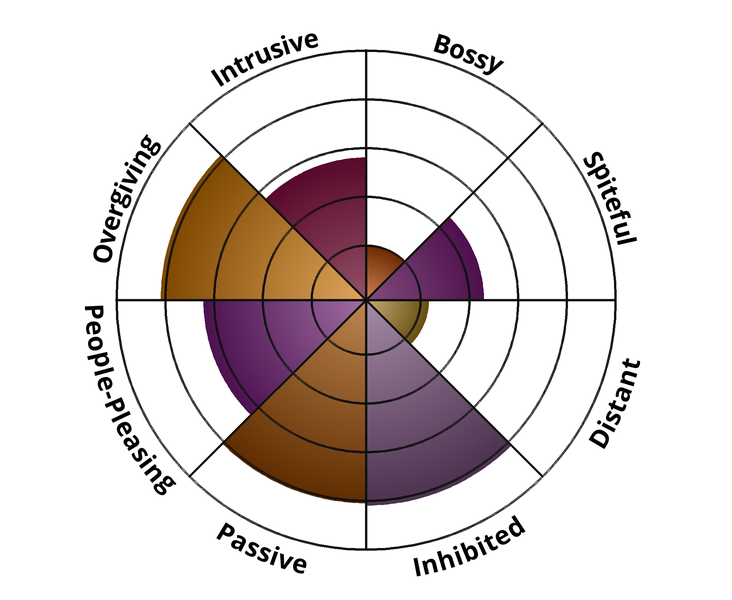
Your friend is a slight red flag; 17.63% more difficult than the average person.
Take the TestExplanation of Elements:
Bossy
Bossy refers to a tendency to control, manipulate, or overpower others in social interactions. High scorers frequently try to control relationships, dictate decisions, fight with others, or impose their authority, often struggling to follow instructions or step back. Low scorers comfortably yield influence, collaborate without needing control, and accept guidance from others without feeling threatened. This orientation often stems from a drive to protect oneself from powerlessness or external control, though it can create tension and hostility. Within the broader framework of interpersonal difficulty, domineering behavior contributes to interpersonal friction by generating power struggles, disrupting mutual cooperation, and driving away people who resist rigid control.
Spiteful
Spiteful refers to a pattern of interpersonal distrust, hostility, and self-centered suspiciousness toward others. High scorers find it hard to trust people, get along with peers, or understand alternative perspectives, often holding grudges or anticipating exploitation. Low scorers readily extend trust, build warm rapport, and empathize with the viewpoints of those around them. This defense mechanism frequently arises from a deep-seated desire to avoid emotional vulnerability and betrayal, prioritizing self-preservation over social connection. Within the broader domain of interpersonal difficulty, vindictiveness creates systemic strain by alienating potential allies, preventing resolution of conflicts, and fostering persistent paranoia that isolates the individual from meaningful social support networks.
Distant
Distant is characterized by emotional detachment, distance, and difficulty experiencing or expressing affection toward others. High scorers struggle to show love, form long-term romantic or personal commitments, or display warmth, keeping others at an emotional arm's length. Low scorers open their hearts easily, express genuine care, and form deeply attached personal relationships. This emotional guard often stems from a self-protective strategy to avoid emotional pain, rejection, or dependency on others. Within the general construct of interpersonal difficulty, coldness generates significant relational barriers by restricting intimacy, making companions feel unappreciated or emotionally unfulfilled, and leading to persistent feelings of interpersonal emptiness and isolation.
Inhibited
Inhibited refers to a pattern of social avoidance, shyness, and discomfort in public or group settings. High scorers find it challenging to introduce themselves to strangers, join group activities, or socialize comfortably, often feeling anxious when noticed. Low scorers navigate social gatherings with ease, initiate conversations readily, and enjoy participating in collective events. This self-conscious tendency usually reflects a desire to protect oneself from social judgment, embarrassment, or awkwardness, prioritizing safety over engagement. As a dimension of overall interpersonal difficulty, social inhibition impedes the creation of new relationships, limits social opportunities, and leaves individuals feeling disconnected from group belonging.
Passive
Passive is characterized by difficulty setting boundaries, stating personal desires, and confronting bothersome behavior from others. High scorers struggle to say no, express what they want, or ask people to stop bothering them, frequently letting others take precedence. Low scorers speak up directly, articulate their needs clearly, and protect their personal boundaries without hesitation. This passive dynamic typically stems from a fear of social conflict, rejection, or causing offense, opting for compliance to preserve harmony. Within the spectrum of interpersonal difficulty, nonassertiveness contributes to personal frustration and resentment, as unstated needs remain unaddressed and boundaries are repeatedly crossed.
People-Pleasing
People-Pleasing refers to excessive compliance, submissiveness, and reluctance to exercise authority or assert firmness. High scorers struggle to take charge, act aggressively when necessary, or hold a firm stance during disagreements, routinely yielding to the preferences of others. Low scorers comfortably exercise authority, enforce rules, and stand firm when circumstances demand leadership or firmness. This yielding behavior often arises from a strong motivation to be liked and accepted, seeking peace by surrendering personal agency. As a component of interpersonal difficulty, being overly accommodating leads to imbalance in relationships, where individuals feel exploited, powerless, or unable to advocate for their own interests.
Overgiving
Overgiving is characterized by an excessive tendency to put the needs of others above one's own and feel overly responsible for solving external problems. High scorers neglect their own well-being when someone else is upset and struggle to act assertively without worrying about hurting feelings. Low scorers maintain a healthy boundary between their responsibilities and those of others, prioritizing self-care without guilt. This self-effacing tendency is usually driven by a deep need to feel valuable or indispensable through caretaking, even at high personal cost. Within overall interpersonal difficulty, self-sacrifice creates burnout and relational distortion, where genuine mutual support is replaced by one-sided burden-bearing.
Intrusive
Intrusive refers to difficulty respecting personal boundaries, spending time alone, or staying out of other people's affairs. High scorers struggle to keep things private, feel uncomfortable in solitude, and frequently meddle in the lives of others. Low scorers respect individual privacy, enjoy independent solitary time, and maintain appropriate interpersonal distance. This intrusive behavior often stems from an intense need for connection or validation, seeking closeness by overstepping healthy boundaries. As an element of interpersonal difficulty, intrusiveness causes social friction by overwhelming others, invading personal boundaries, and triggering defensive reactions that ultimately push loved ones away.
Total Difficulty
The total interpersonal difficulty score reflects the overall level of distress, friction, and difficulty an individual experiences in social and personal relationships. A higher overall score indicates pervasive challenges across multiple interpersonal domains, ranging from asserting boundaries and managing conflict to forming close emotional bonds and maintaining personal space. Conversely, a lower total score signifies smooth relational functioning, adaptive communication habits, and comfort with both intimacy and autonomy. Evaluating overall interpersonal difficulty provides a comprehensive view of how individual behavioral tendencies combine to shape social interactions, relationship stability, and subjective well-being in personal and professional environments.
References
- Horowitz, L. M., Rosenberg, S. E., Baer, B. A., Ureño, G., & Villaseñor, V. S. (1988). Inventory of interpersonal problems: Psychometric properties and clinical applications. Journal of Consulting and Clinical Psychology, 56(6), 885-892.
- Horowitz, L. M., Alden, L. E., Wiggins, J. S., & Pincus, A. L. (2000). IIP-64/IIP-32 professional manual. The Psychological Corporation.
Take Next










GET THE FULL STORY
Become a lifetime member with a one-time payment

$11.99
WHAT YOU GET
Access to members-only tests
Ability to track and save test results
Access to all of our eBooks (value $44.94)
Access to premium type assessments and infographics
Become a memberSave and monitor your results over time
Become a member today
Sign Up