English
  Español
  Português
  Deutsch
  Français
  Italiano
  Polski
  Română
  Українська
  Русский
  Türkçe
  العربية
  فارسی
فارسی  日本語
日本語  한국어
한국어  ไทย
ไทย  汉语
汉语  Tiếng Việt
  Filipino
  हिन्दी
  Bahasa
“A tongue-in-cheek statistical look at taste and intelligence.”— Wall Street Journal
Book IQ Test
This test estimates your intelligence level based on your favorite books and authors. Using Virgil Griffith’s famous data project, it matches your reading preferences against scores from thousands of college students and converts them into IQ. Find out where you rank based on your taste in books.
To take the test, enter your input below.
Question 1 of 34
How much do you like...
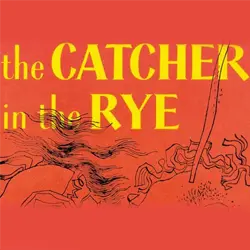
The Catcher in the Rye
BACK NEXT
The Book IQ Test is a widely known informal online assessment inspired by Virgil Griffith’s 2009 viral data project, “Books That Make You Dumb.” Originally intended as a humorous and exploratory social experiment, the project quickly captured public attention by suggesting a connection between reading preferences and intelligence. By combining self-reported favorite books with academic data, it offered an entertaining way to compare literary tastes against estimated IQ levels.
The foundation of the project lies in data Griffith collected from thousands of Facebook profiles belonging to students across more than 1,300 colleges and universities in the United States. Users often listed their favorite books on their profiles, providing a large dataset of preferences. Griffith then matched these literary interests with the average SAT scores of the institutions those students attended. The results were plotted on a chart, where books and authors were positioned along a scale ranging from approximately 850 to 1,400 SAT points. In this framework, schools with higher average SAT scores were treated as proxies for more academically selective or higher-performing student populations.
To make the findings more accessible and engaging, the project introduced a method for converting SAT scores into estimated IQ values. This was done using a simple linear approximation formula: IQ ≈ (0.0724 × SAT) + 36.34. Based on historical percentile comparisons from the pre-2016 SAT, this conversion allowed each book or author to be associated with an approximate IQ score. As a result, users could look up their favorite reading material and derive a playful estimate of their own “Book IQ.”
The project’s popularity surged after coverage from major media outlets such as The Wall Street Journal and FlowingData. It resonated with audiences because it touched on a long-standing cultural question: does reading taste reflect intelligence? The chart appeared to suggest that certain authors—such as literary classics, philosophy, and complex fiction—were associated with higher average IQ scores, while more mainstream or genre fiction tended to cluster closer to average ranges.
Despite its widespread appeal, the Book IQ Test has significant limitations. Most importantly, it is not a scientifically valid measure of intelligence. The data is purely correlational, meaning it only shows patterns between variables rather than proving any cause-and-effect relationship. Reading a particular type of book does not increase or decrease a person’s intelligence. Additionally, the dataset relies on self-reported information from social media, which can be incomplete or biased.
Other factors further complicate the interpretation of the results. Socioeconomic background, cultural exposure, and college selectivity all influence both reading preferences and SAT scores. These underlying variables make it difficult to draw meaningful conclusions about intelligence based solely on book choices.
Ultimately, the Book IQ Test endures as a cultural curiosity rather than a serious assessment tool. It remains popular as a lighthearted quiz, conversation starter, and nostalgic internet artifact. While it offers an intriguing visualization of data, its true value lies in entertainment, reminding users that reading taste is highly personal and only loosely connected to measures of intelligence.
Virgil Griffith’s (2009) “Music/Books That Make You Dumb” project analyzed self-reported favorite music and books from Facebook profiles of students at more than 1,300 U.S. colleges. He calculated the average SAT score for each college and plotted the most commonly listed books against those institutional averages. Higher SAT averages along the x-axis were interpreted as representing “smarter” schools.
SAT scores were then converted into estimated IQ values using the formula: IQ ≈ (0.0724 × SAT) + 36.34.
The project is a humorous, tongue-in-cheek internet visualization and not a scientific study or a valid measure of individual IQ.
Legacy and Modern Use
Over time, the Book IQ Test has lived on as:
- A party game
- A social media quiz
- A nostalgic internet meme
Although updated versions occasionally appear, the original 2009 chart remains the most widely recognized version.
The Book IQ Test offers an entertaining way to explore the relationship between reading preferences and academic data. While scientifically limited, it remains one of the internet’s most famous humorous “IQ tests,” highlighting that literary taste is deeply personal and only loosely connected to intelligence.
References
- Frey, M. C., & Detterman, D. K. (2004). Scholastic assessment or g? The relationship between the Scholastic Assessment Test and general cognitive ability. Psychological Science, 15(6), 373–378. https://doi.org/10.1111/j.0956-7976.2004.00688.x
- Griffith, V. (2009). Music that makes you dumb. http://musicthatmakesyoudumb.virgil.gr/
- Griffith, V. (n.d.). Books that make you dumb. http://booksthatmakeyoudumb.virgil.gr/
- IQ Comparison Site. (n.d.). SAT I to IQ estimator. https://www.iqcomparisonsite.com/satiq.aspx
- Taylor, M. (2009, February 27). Books and music that make you dumb. The Wall Street Journal. https://www.wsj.com/articles/BL-DGB-992
- Yau, N. (2009, April 3). Music that makes you dumb. FlowingData. https://flowingdata.com/2009/04/03/music-that-makes-you-dumb/
Frequently Asked Questions
What does the Book IQ Test estimate?
It estimates your intelligence level by matching the books and authors you list with average scores from thousands of college students.
What data source does the Book IQ Test use?
The test uses the original 2009 data project by Virgil Griffith that linked favorite books on Facebook profiles to average SAT scores from over 1,300 U.S. colleges.
How is the Book IQ Test different from a real IQ test?
The Book IQ Test is an informal, entertainment-based assessment that produces an estimated score; it is not a standardized intelligence test.
Should I treat the Book IQ estimate as a measured IQ?
No. It is an informal estimate based on book preferences and group-level data, not a standardized assessment of your intelligence.
Why might the Book IQ Test’s estimated score vary over time?
The test is updated through ongoing anonymous statistical analysis of submitted answers, which refines score accuracy as new reading preferences are recorded.
Why Use This Test?
1. Free. This Book IQ Test is completely free and instantly shows your estimated Book IQ based on your favorite books and authors, using the original 2009 research data from Virgil Griffith’s landmark project.
2. Statistical controls. All submitted answers are recorded anonymously. Ongoing statistical analysis is performed to refine score accuracy and maintain the validity of the rankings across different reading preferences.
3. Made by professionals. This test was developed with input from psychologists and researchers specializing in individual differences, psychometrics, and cultural studies to ensure a meaningful and engaging experience.