English
  Español
  Português
  Deutsch
  Français
  Italiano
  Polski
  Română
  Українська
  Русский
  Türkçe
  العربية
  فارسی
فارسی  日本語
日本語  한국어
한국어  ไทย
ไทย  汉语
汉语  Tiếng Việt
  Filipino
  हिन्दी
  Bahasa
Based on the research of J. C. Raven (1938).
Figure Reasoning Test
Can you find the pattern in each figure?
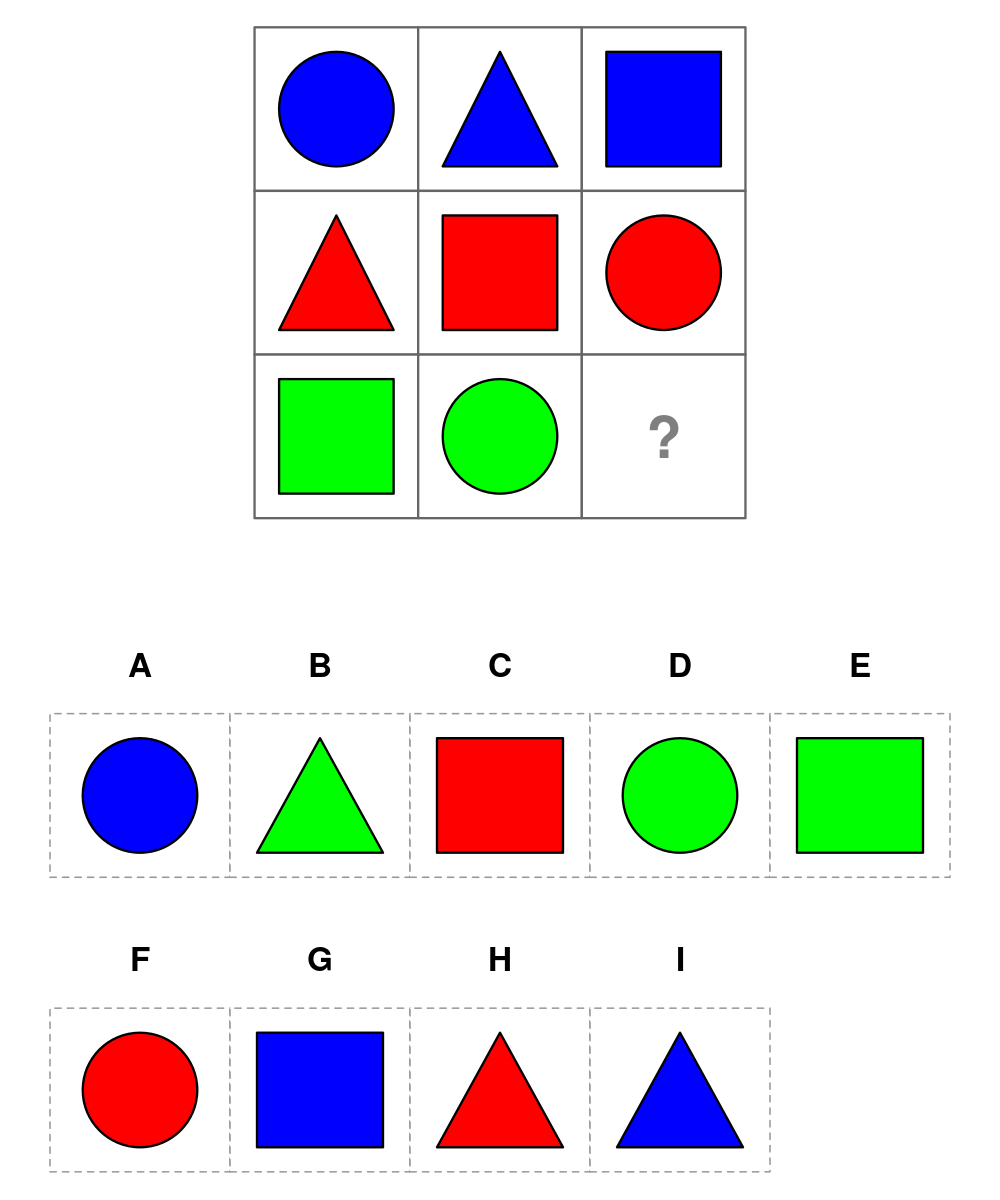
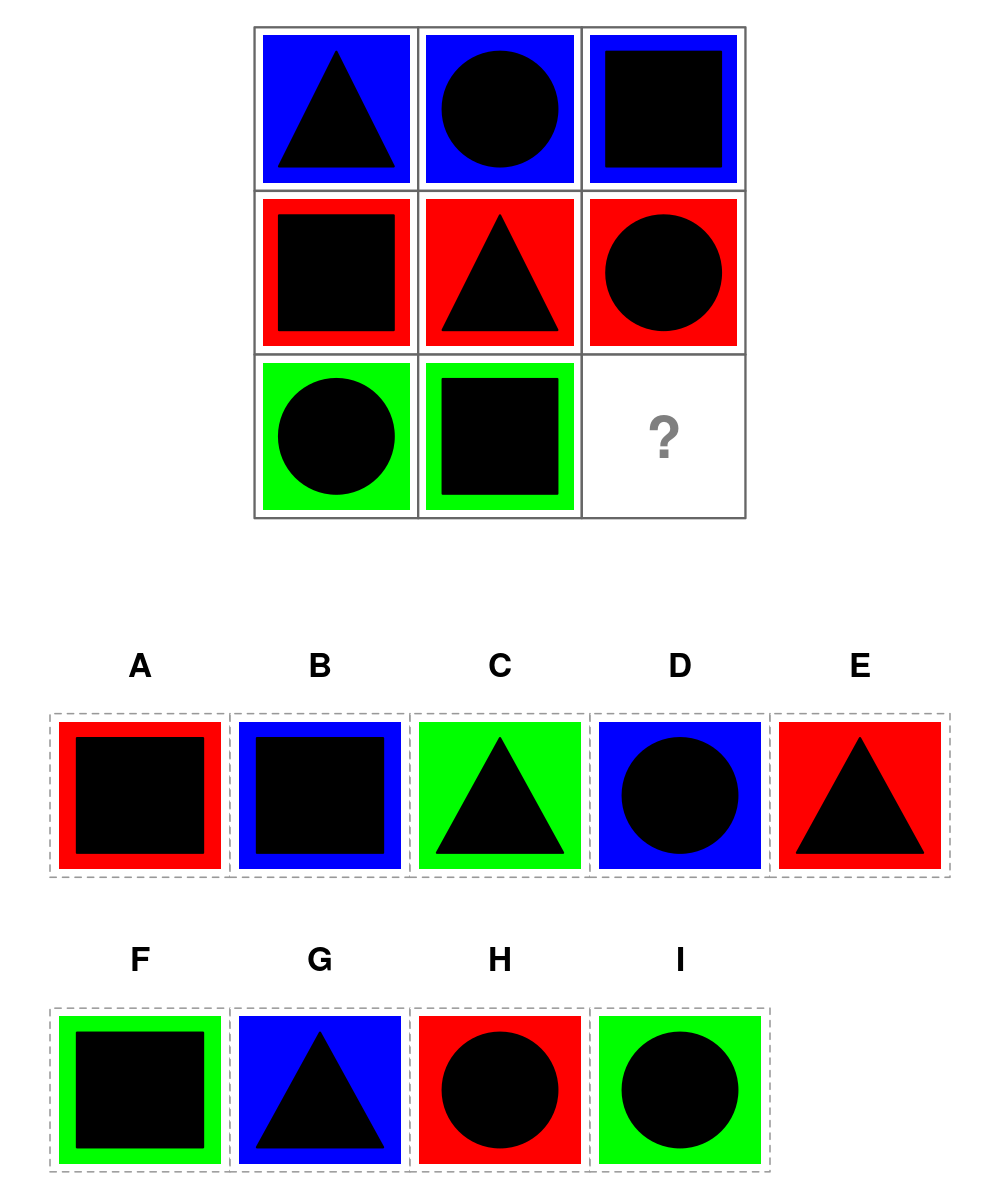
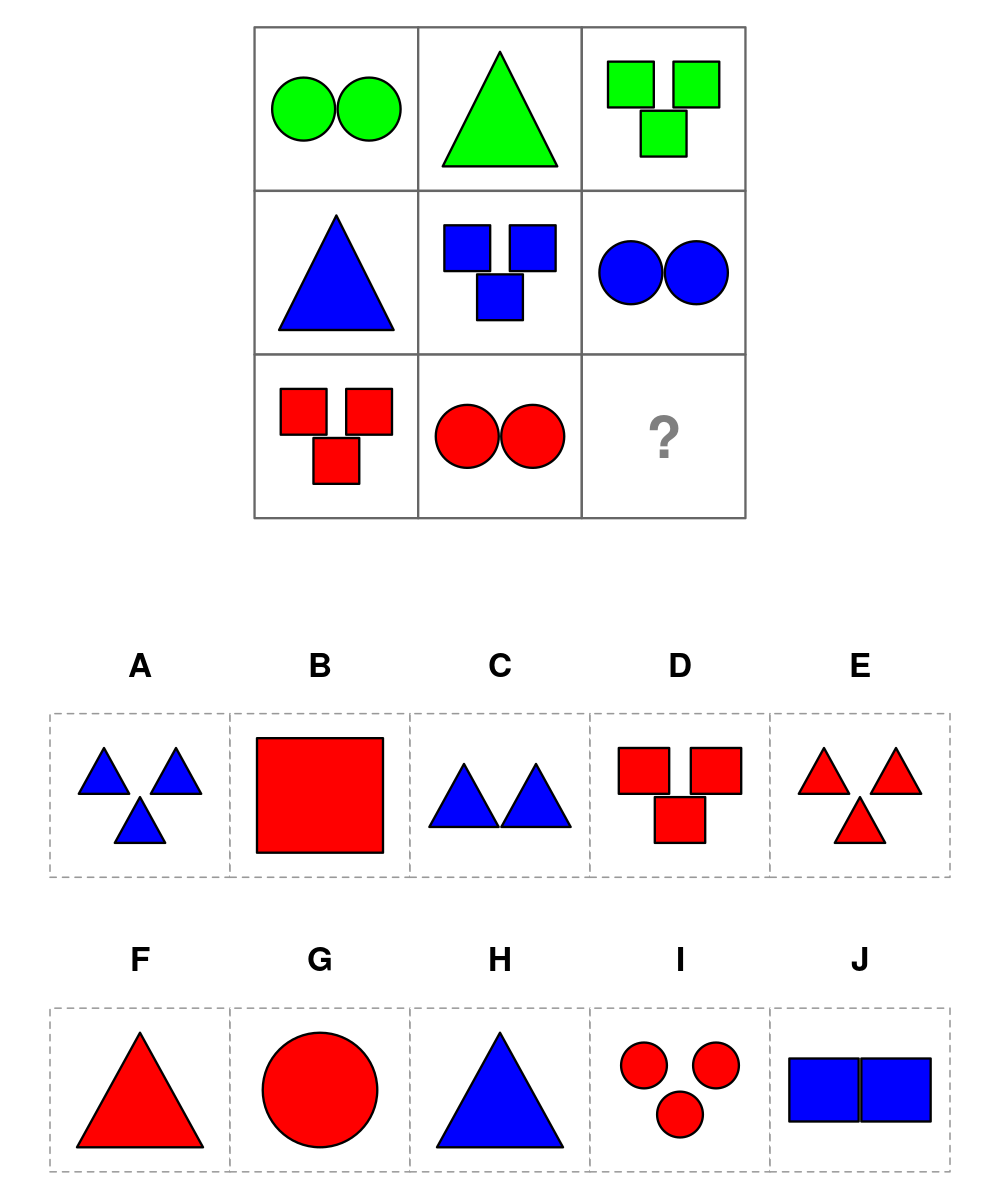
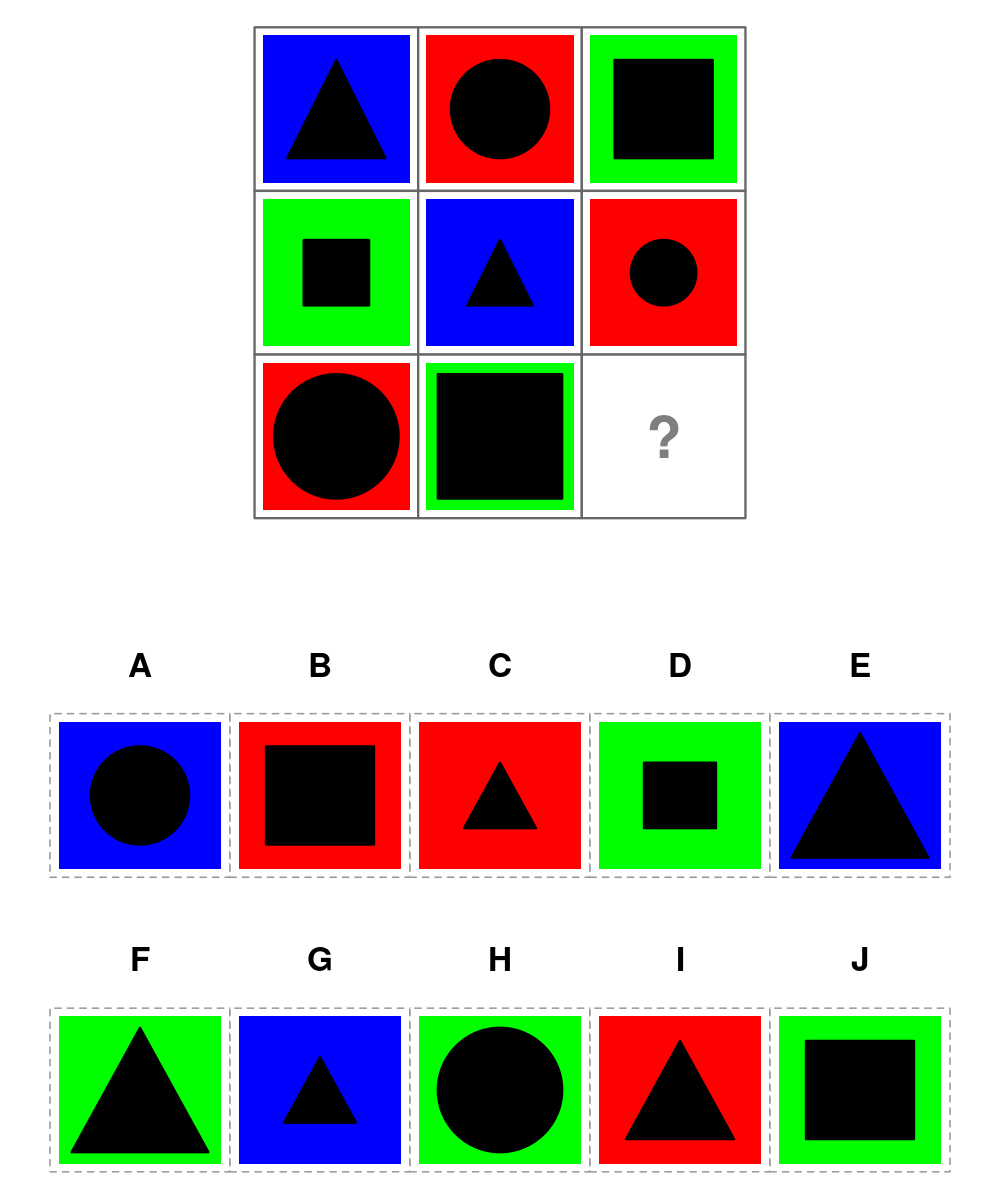
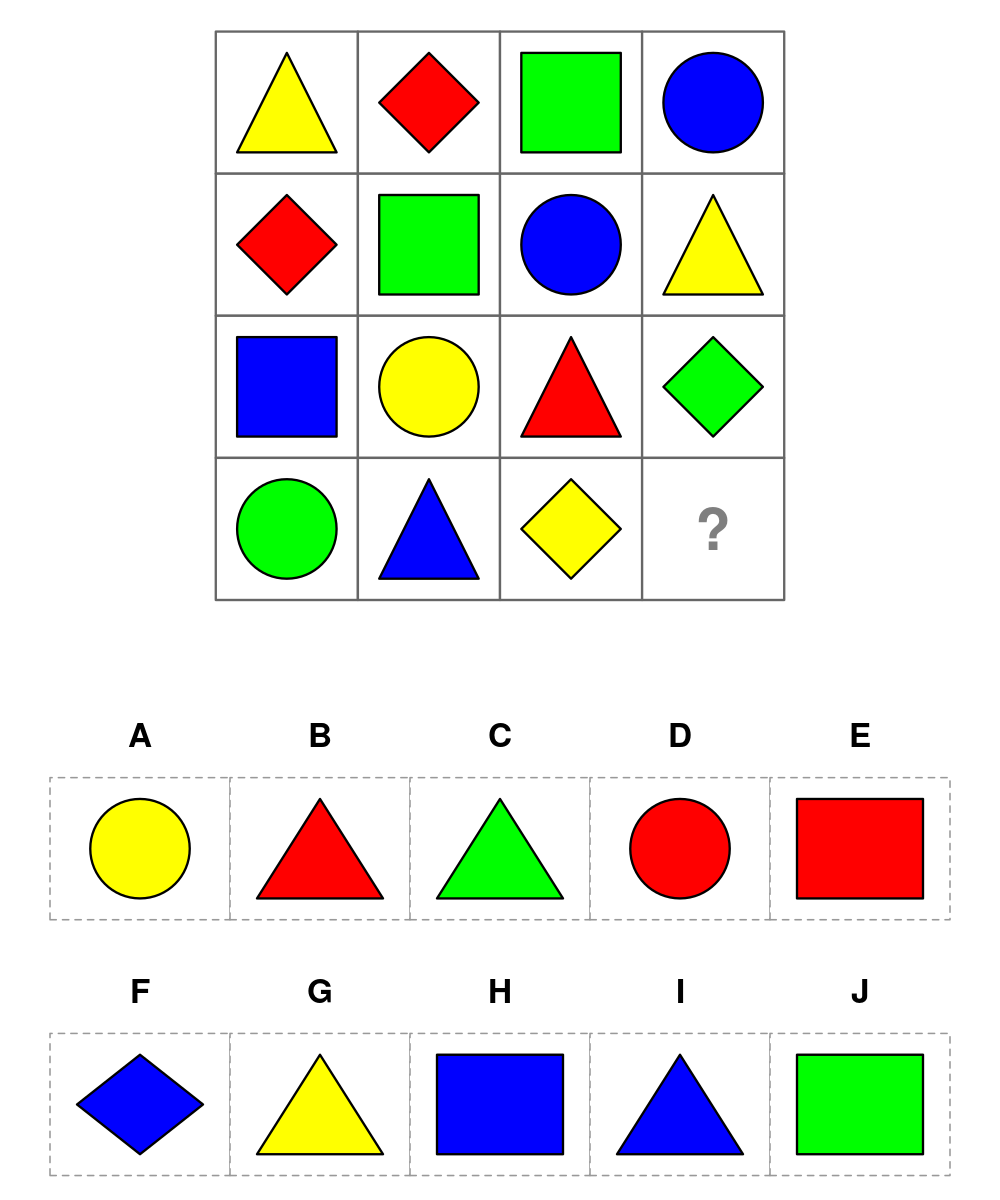
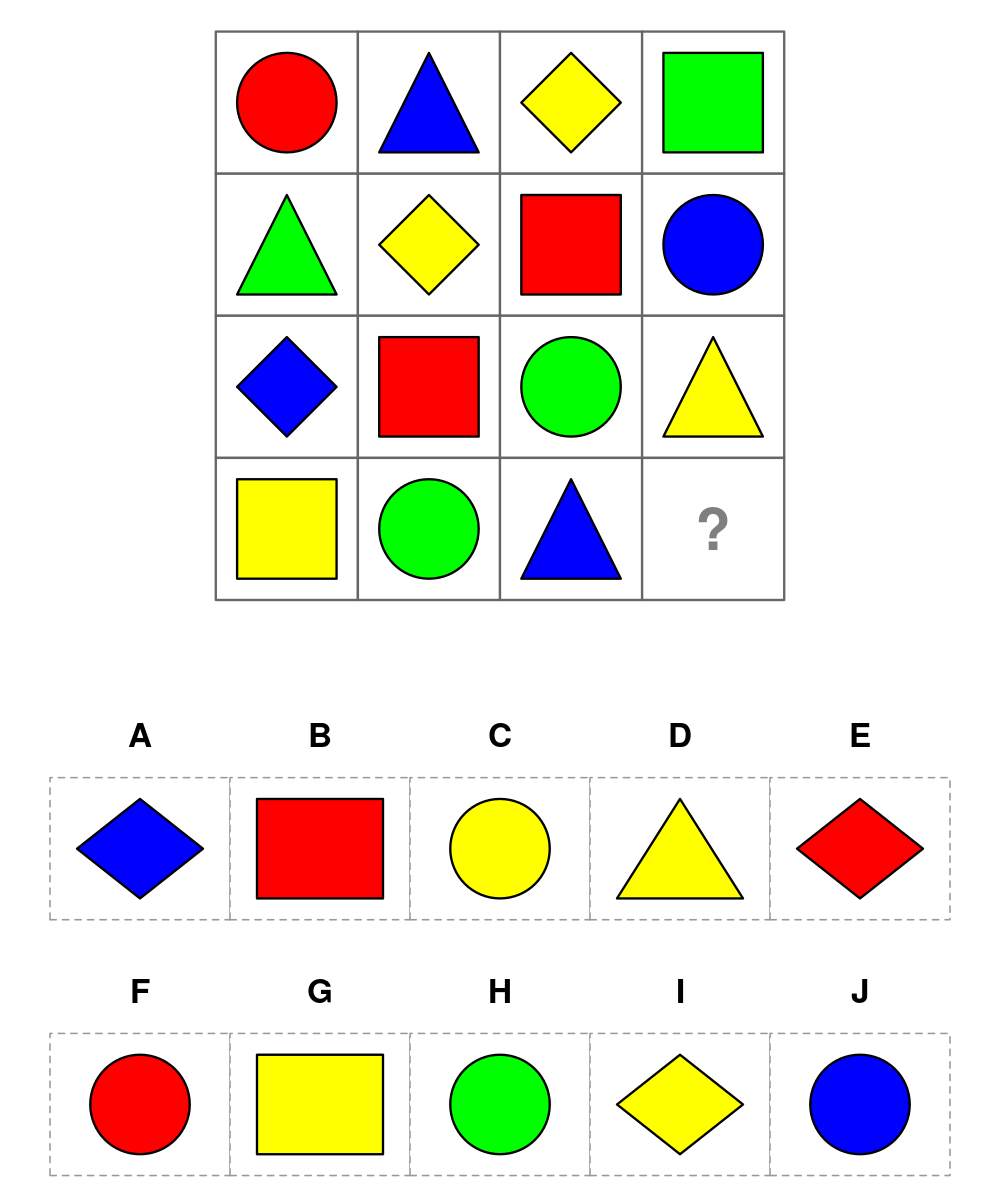
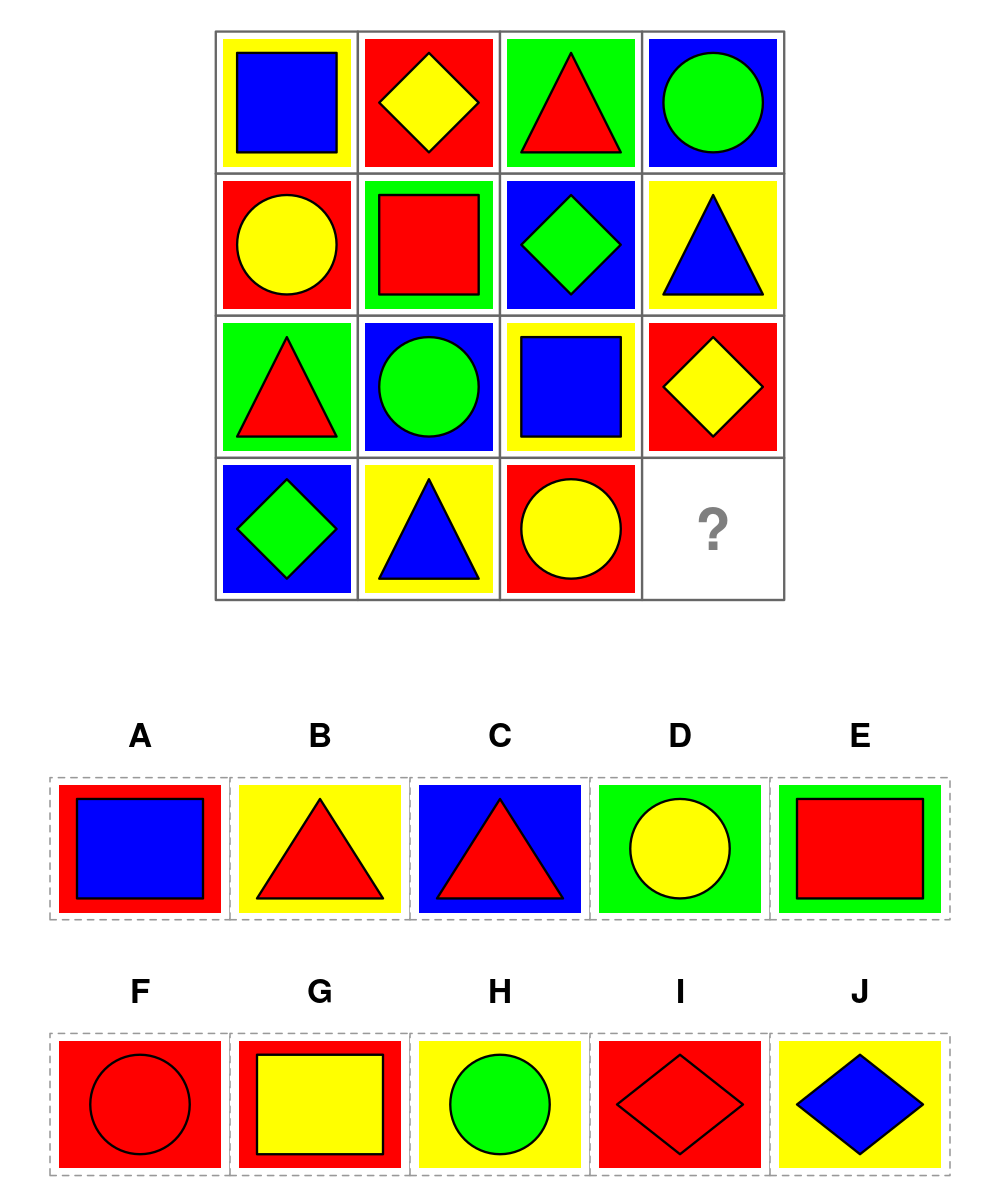
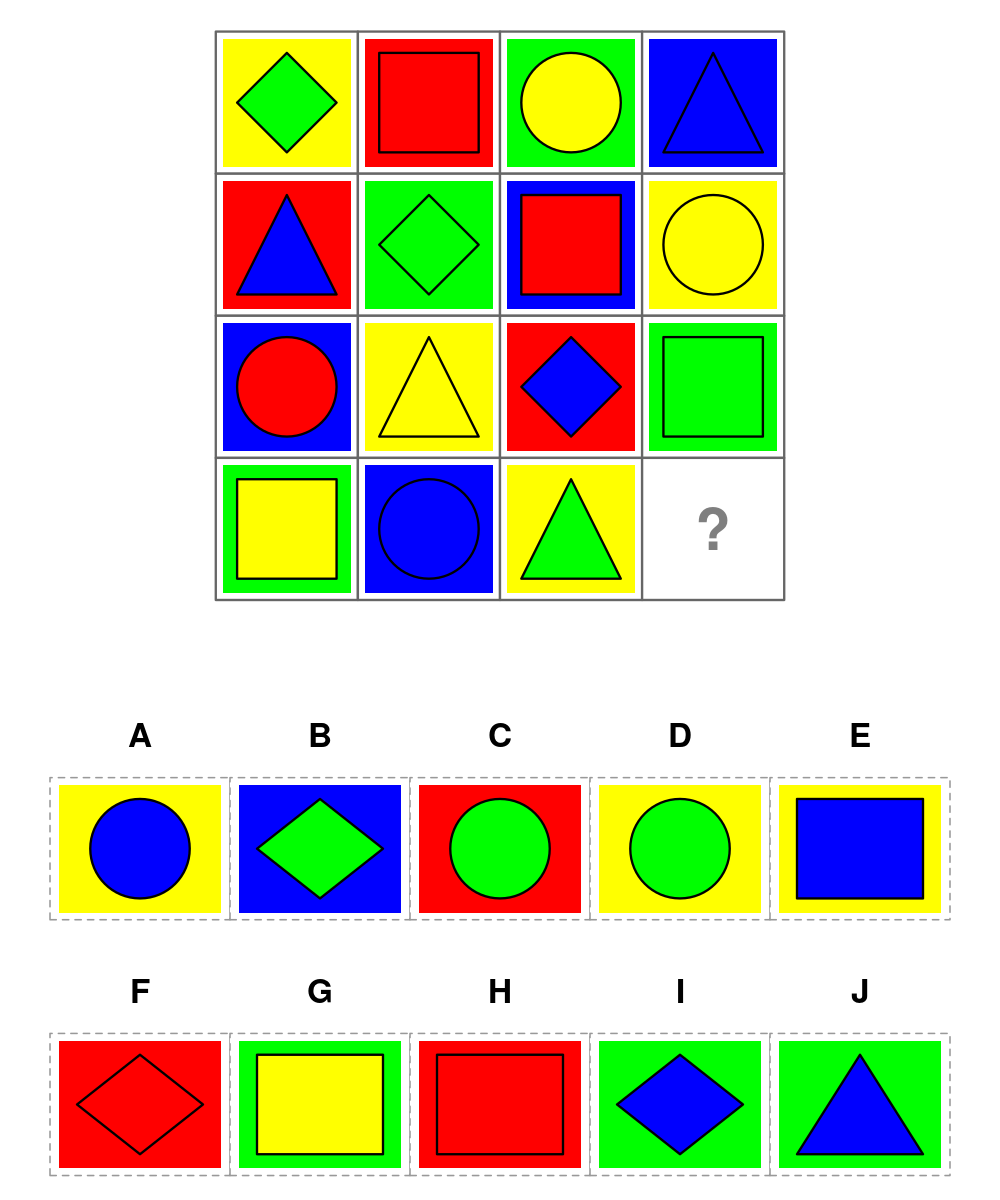
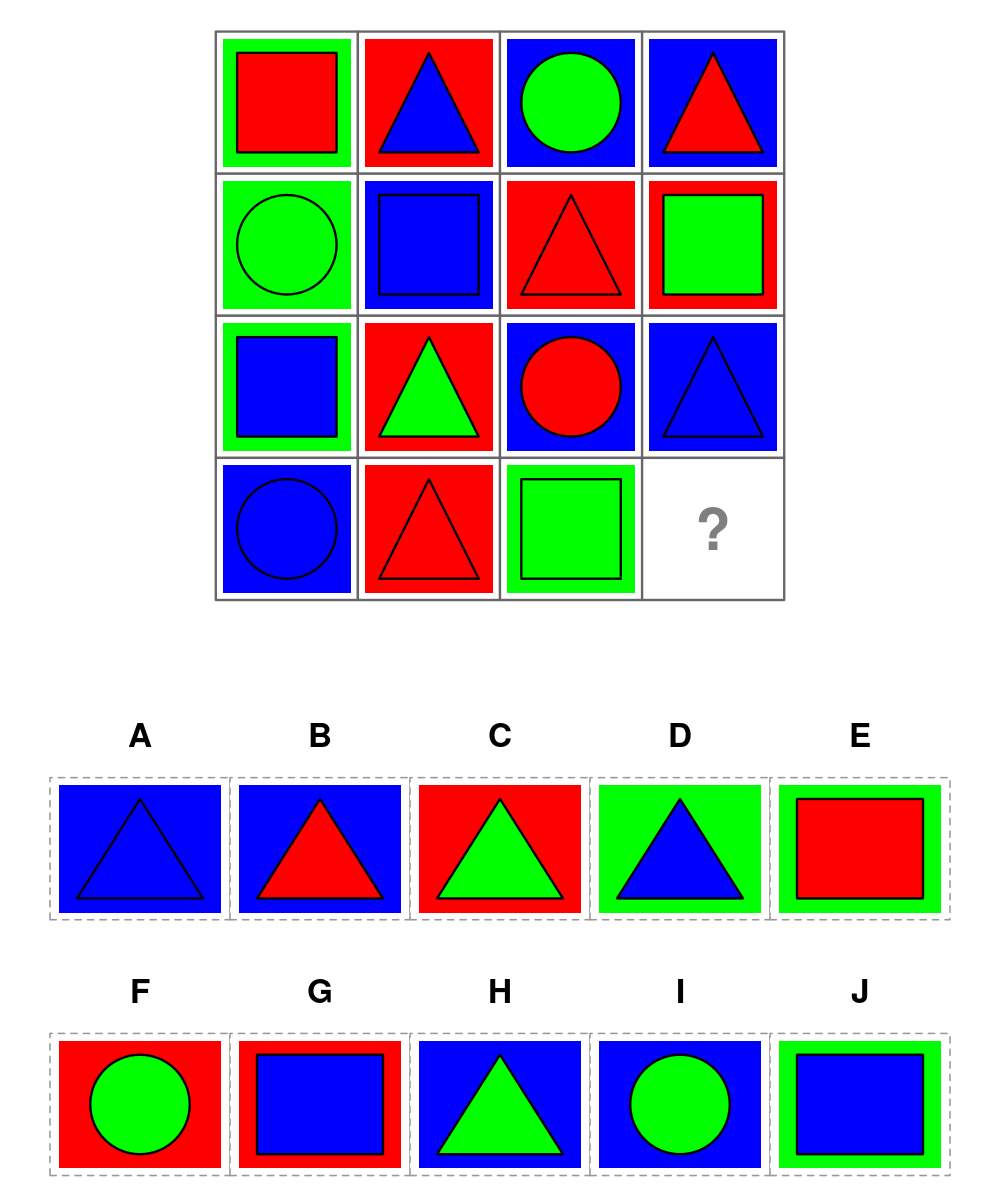
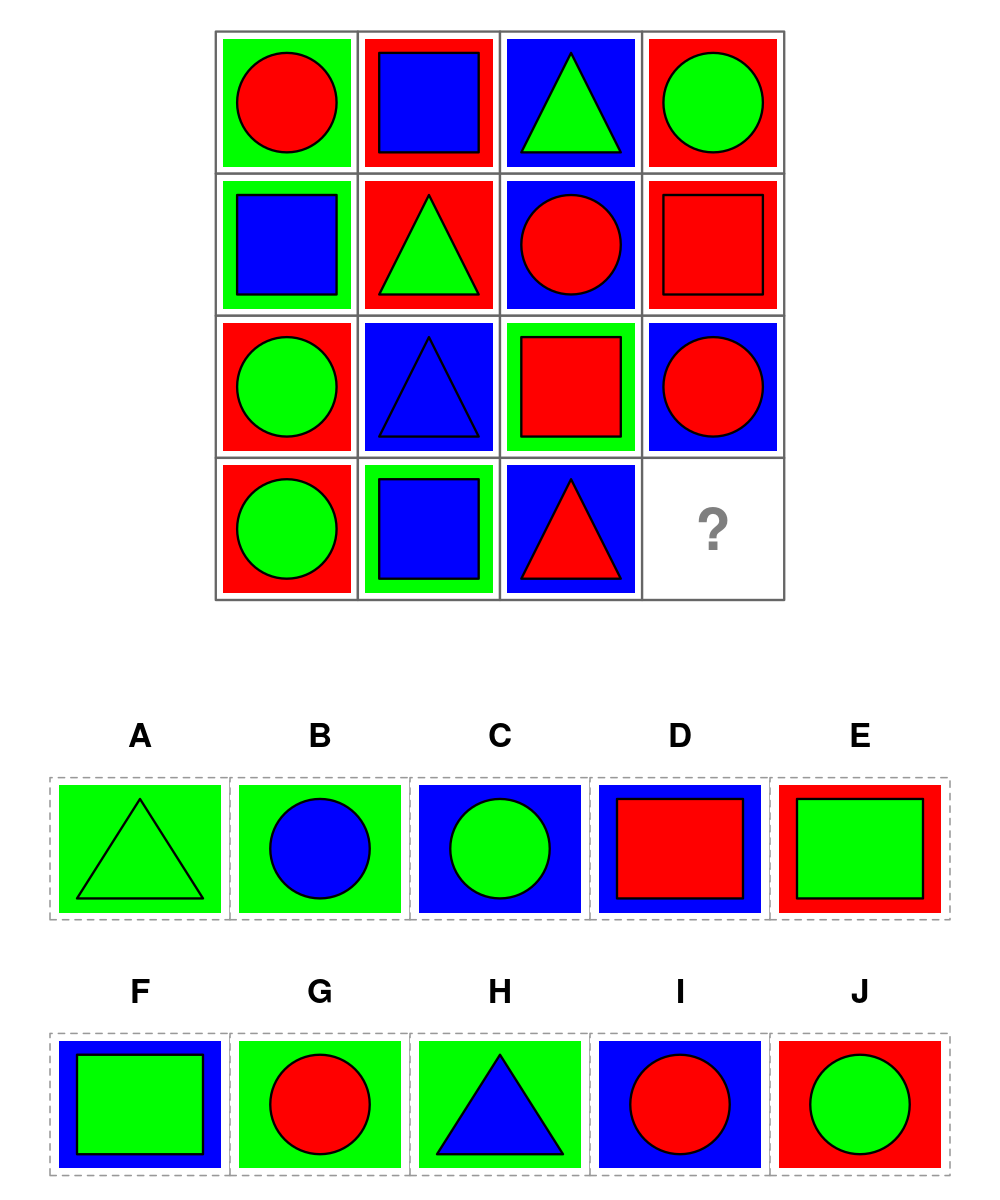
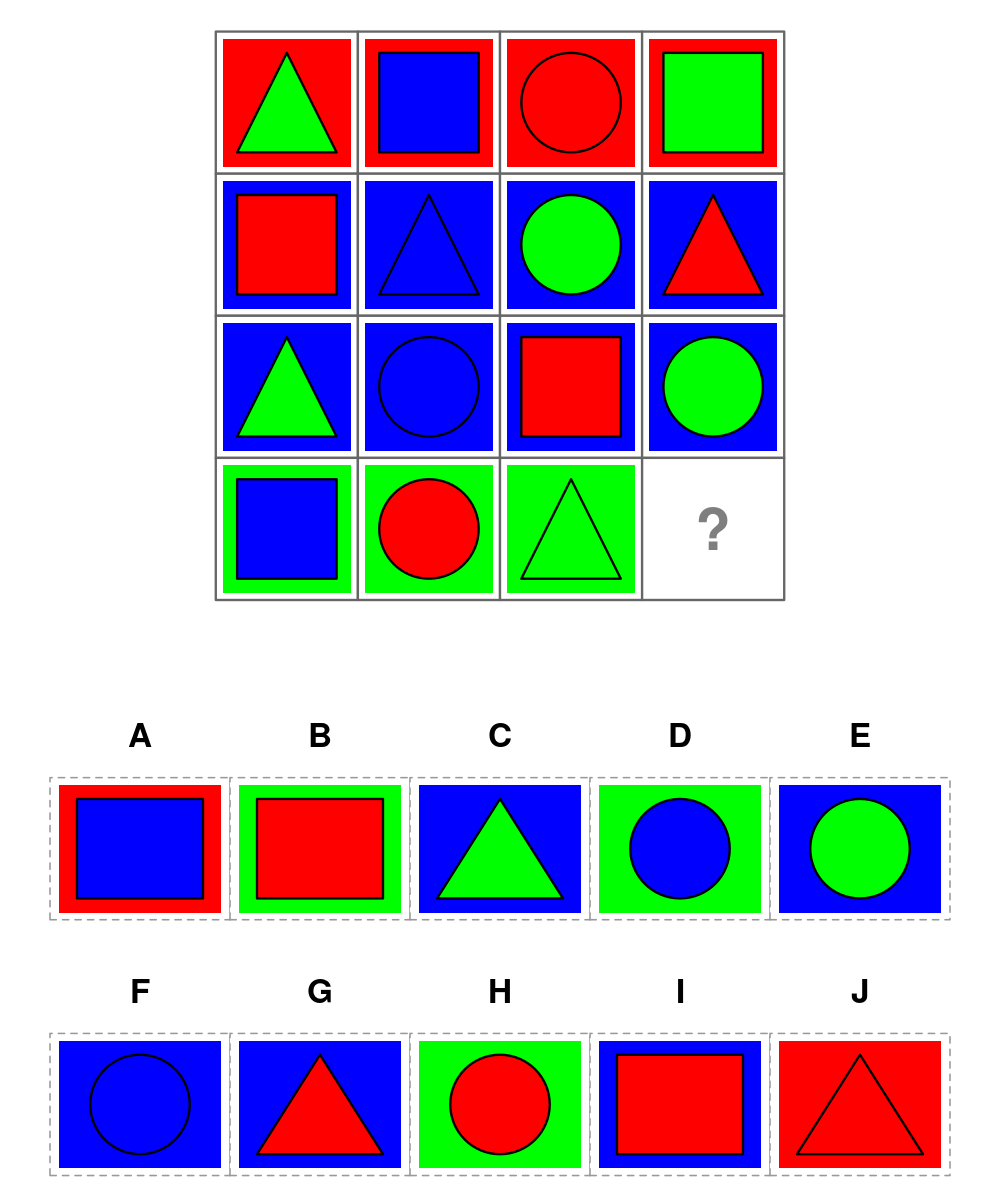
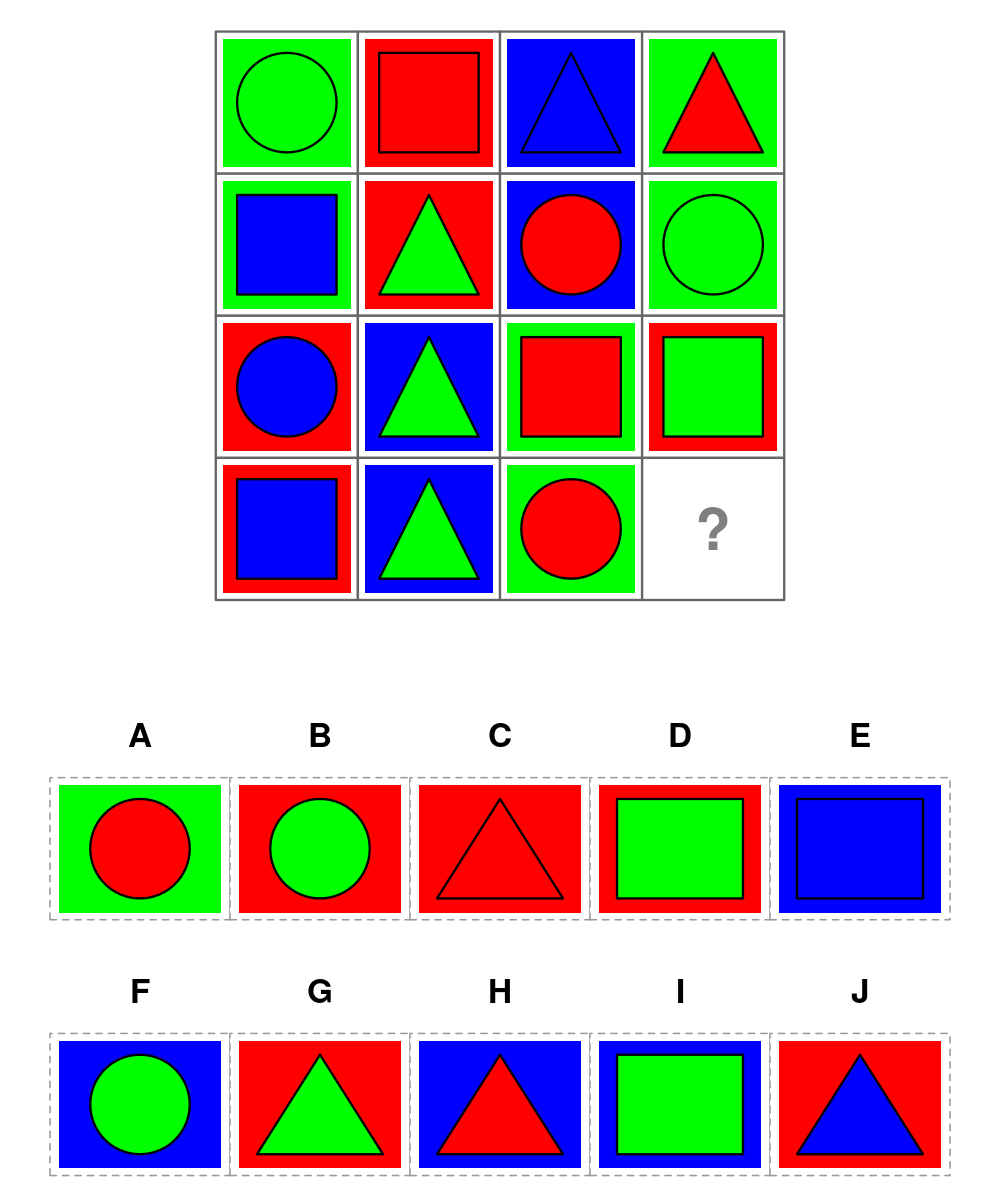
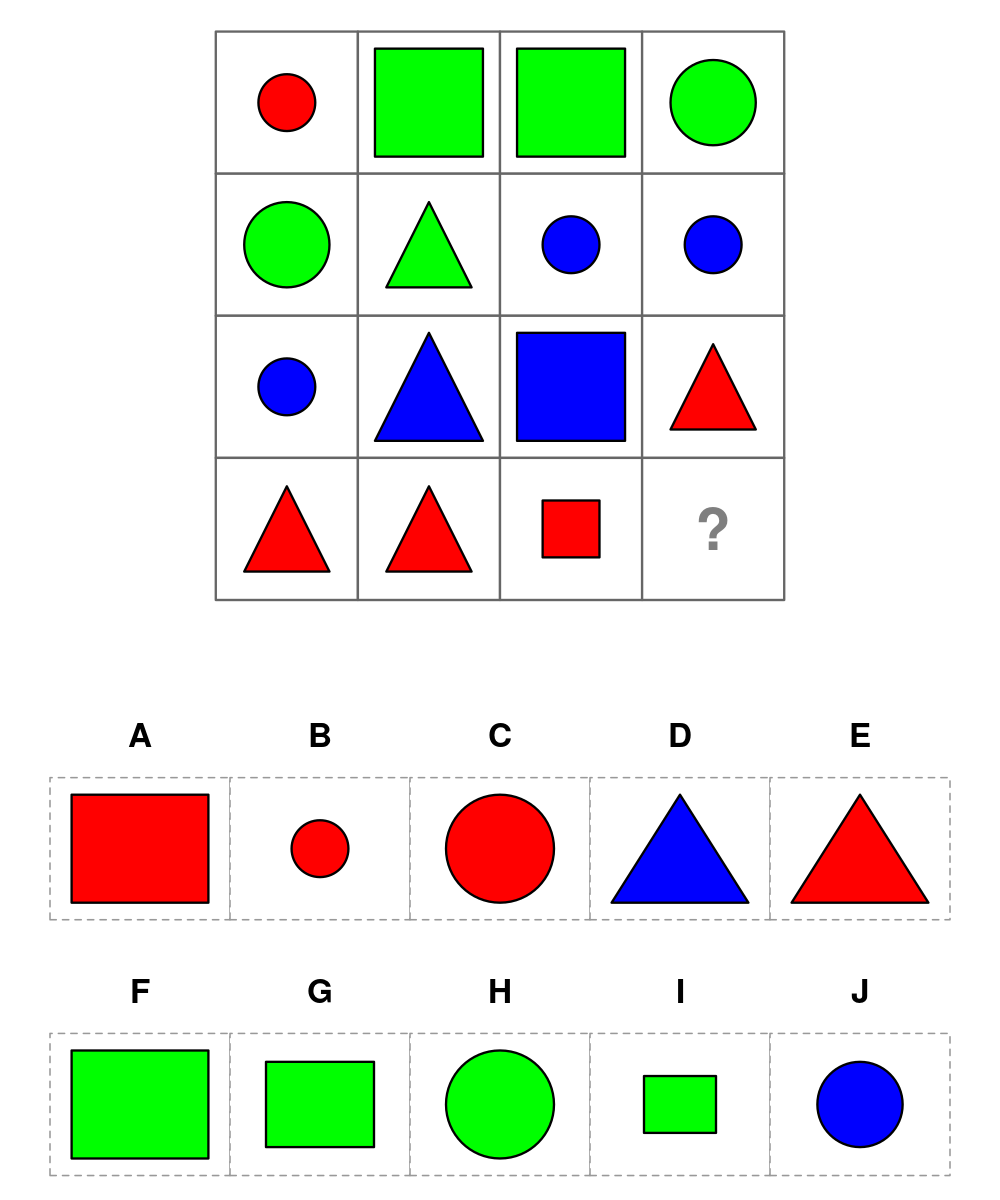
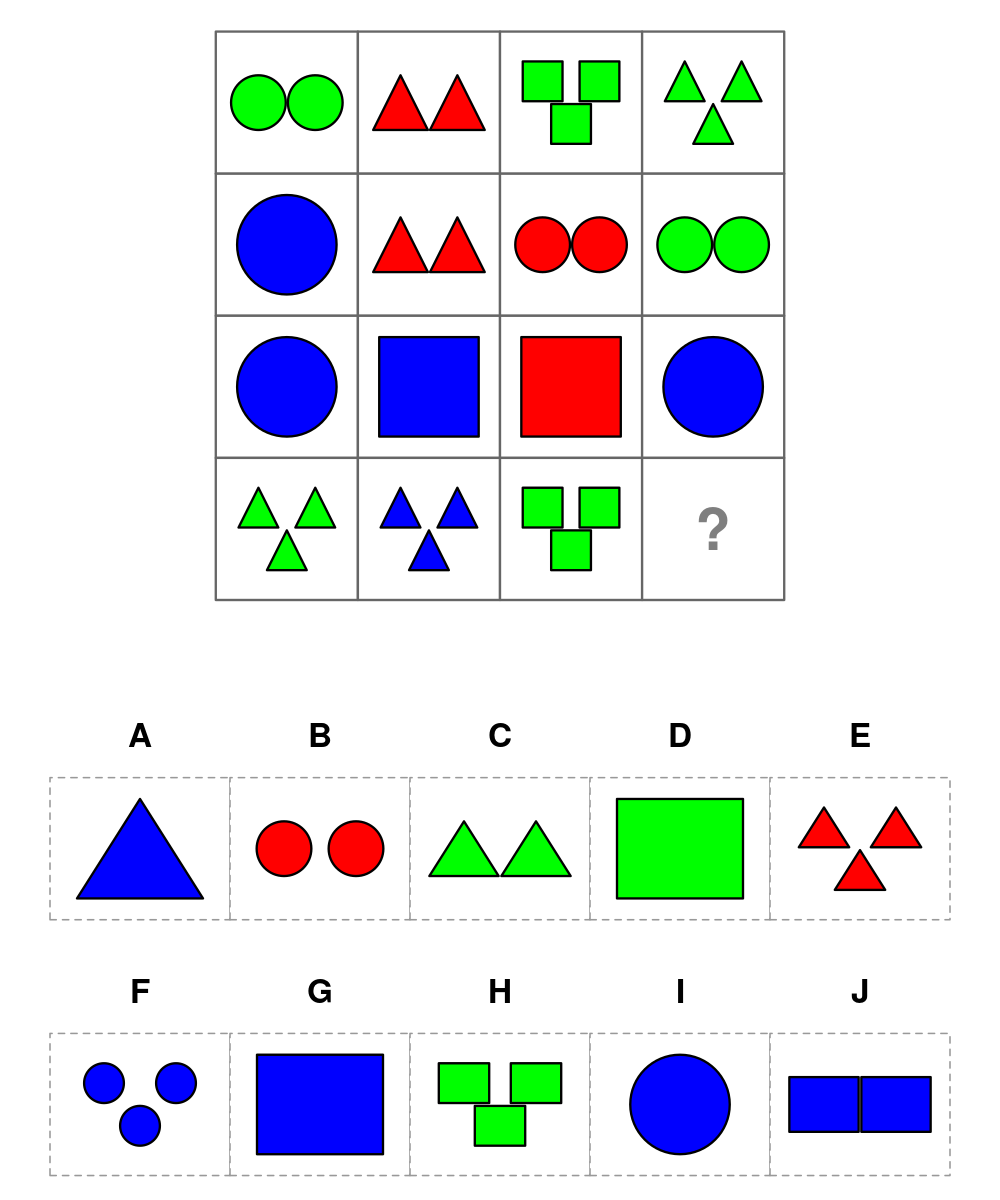
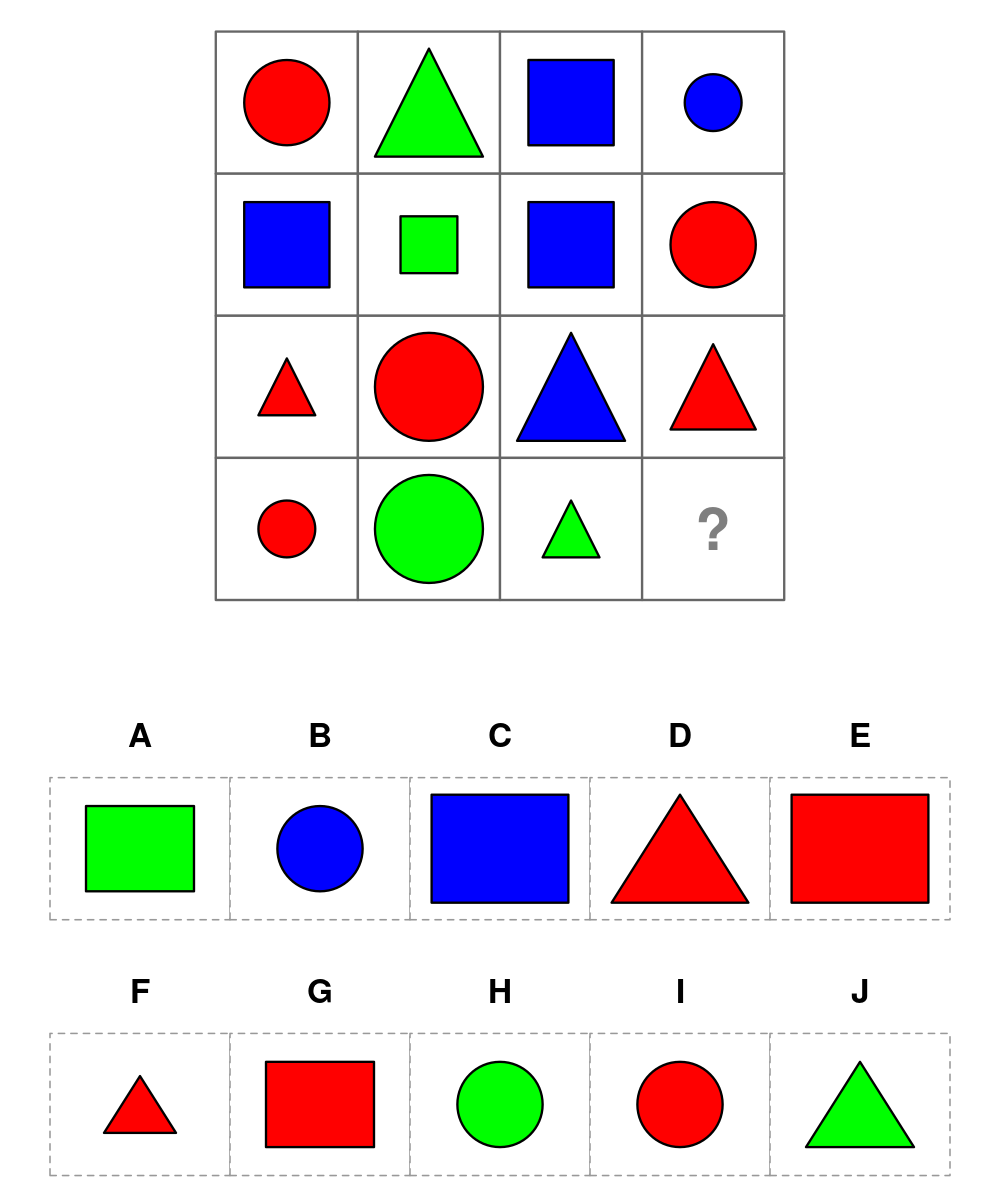
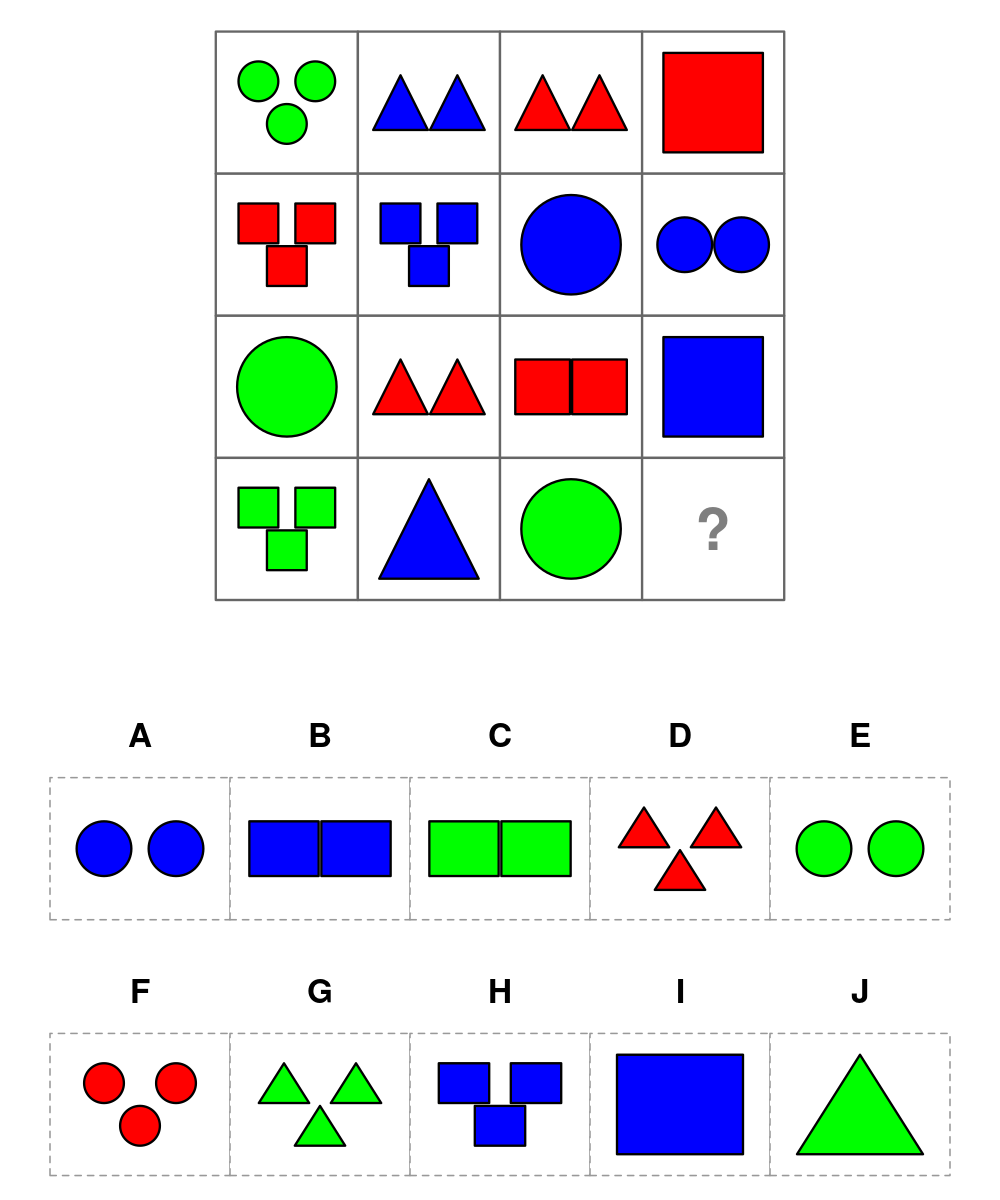
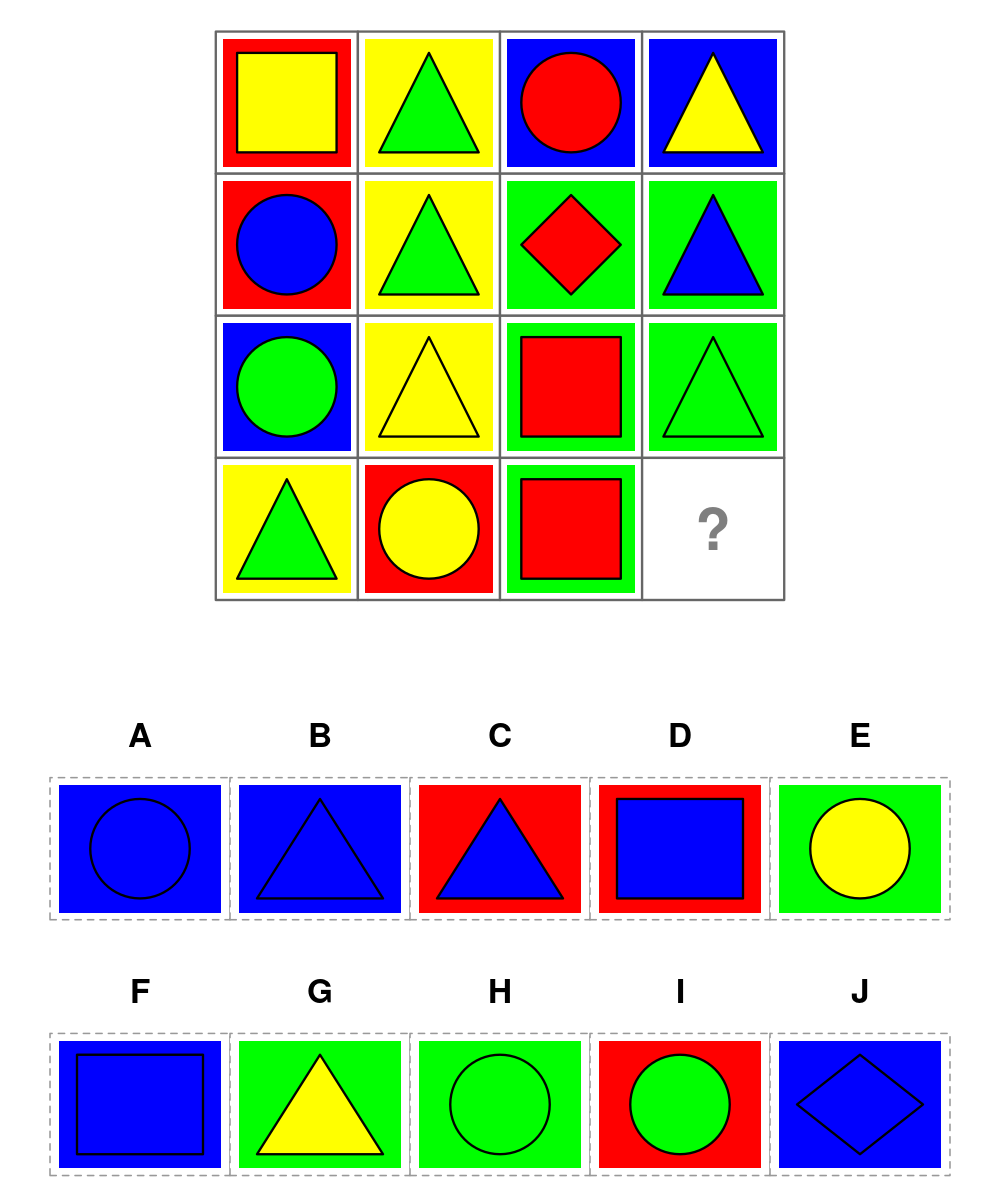
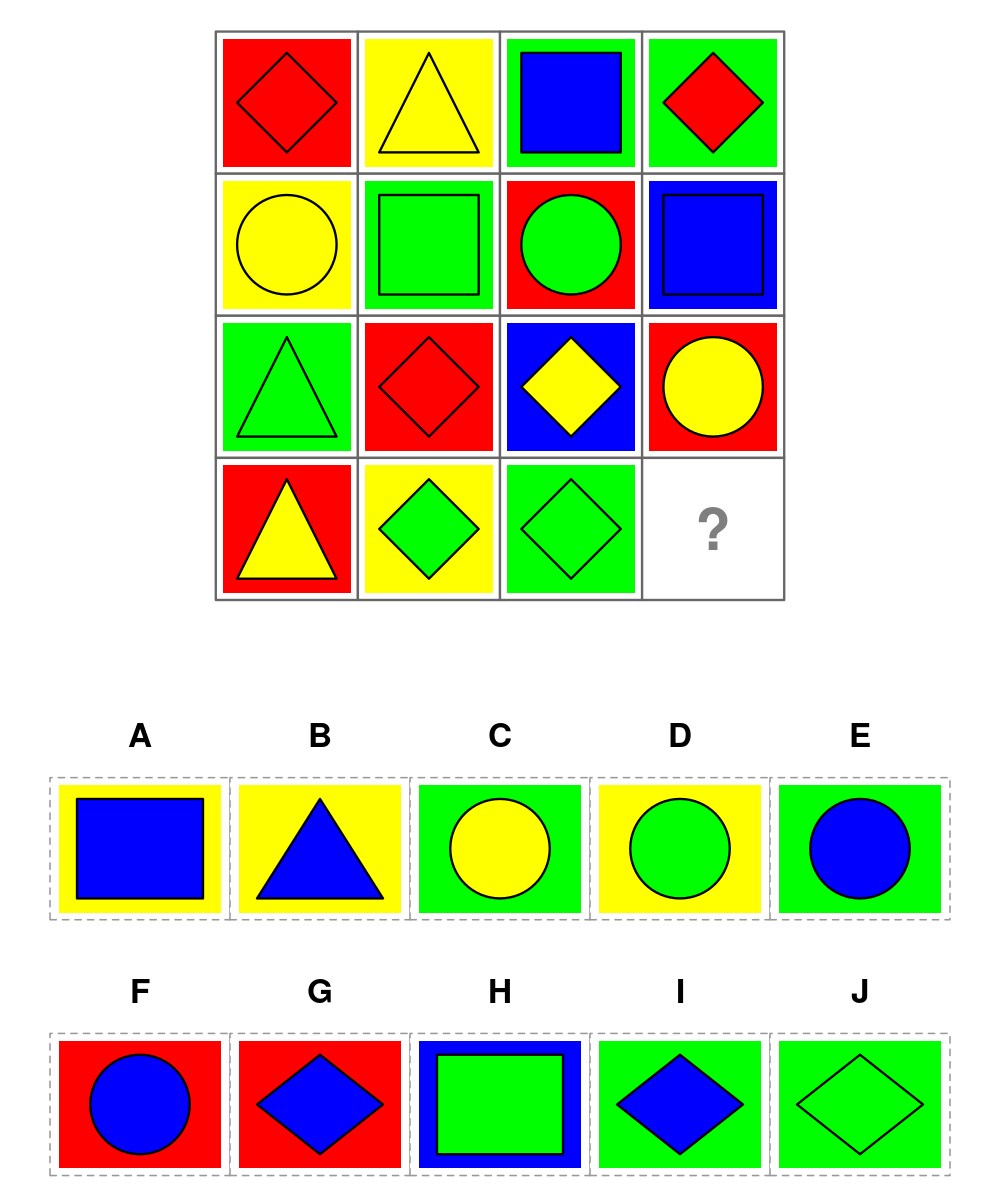
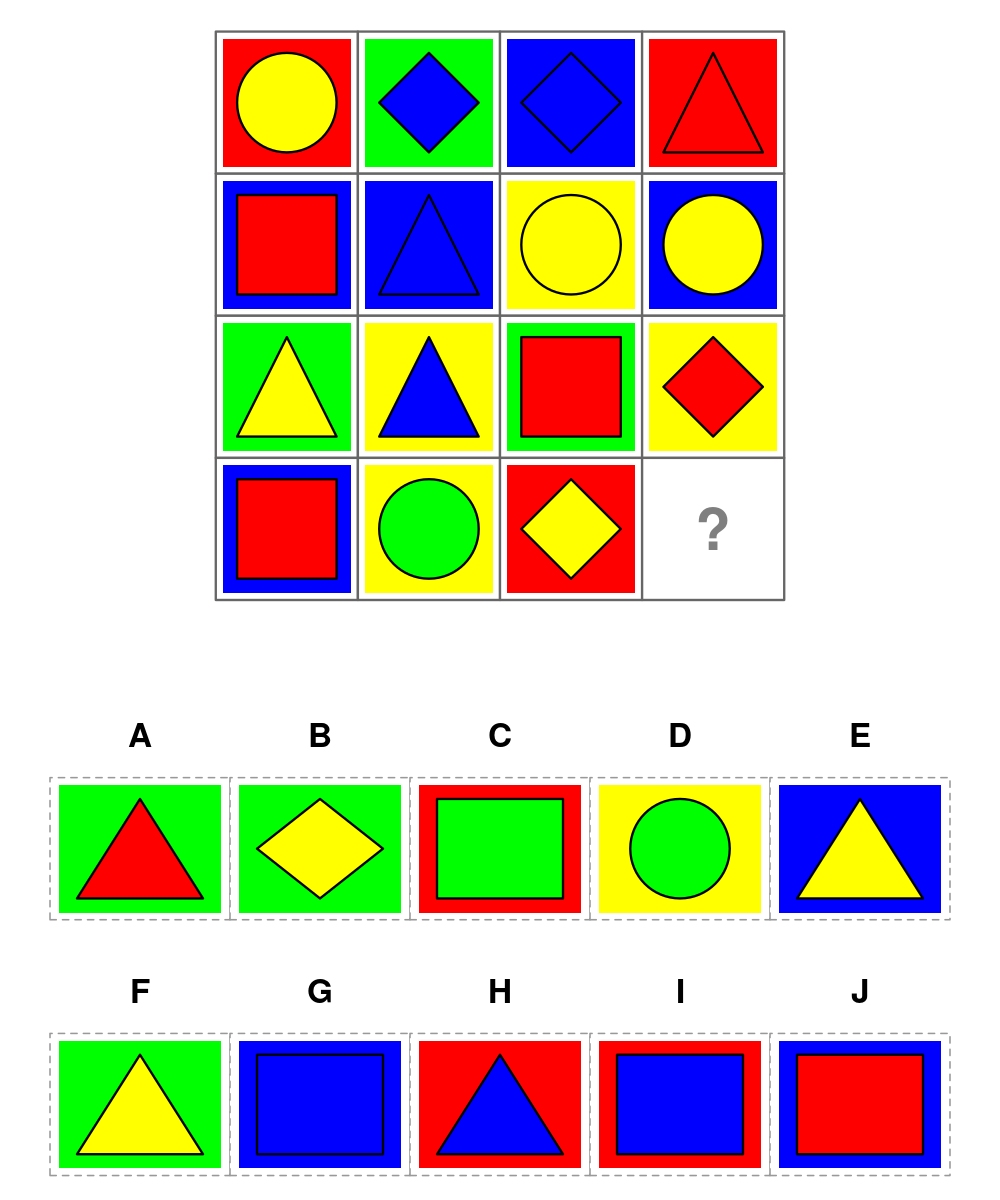
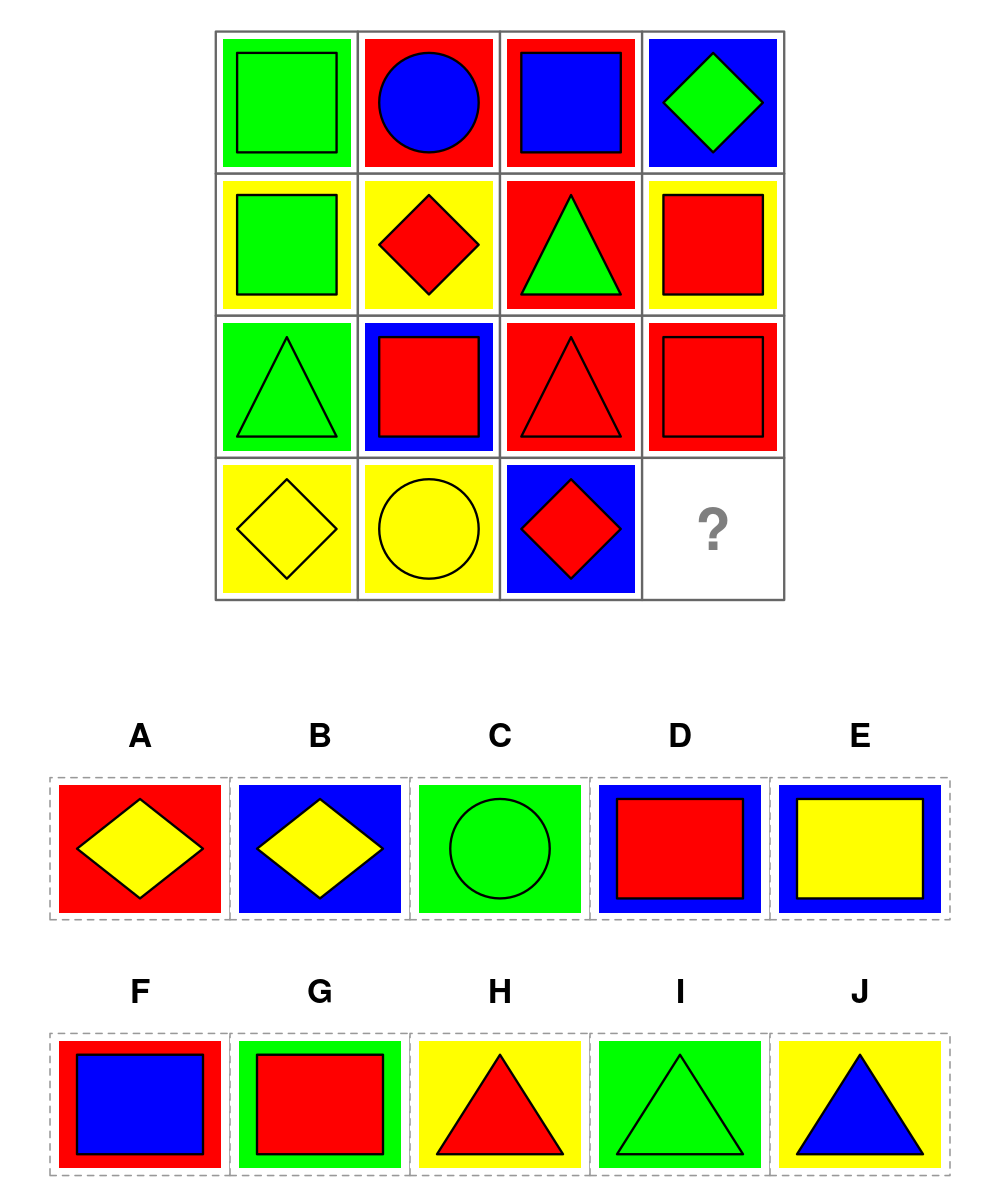
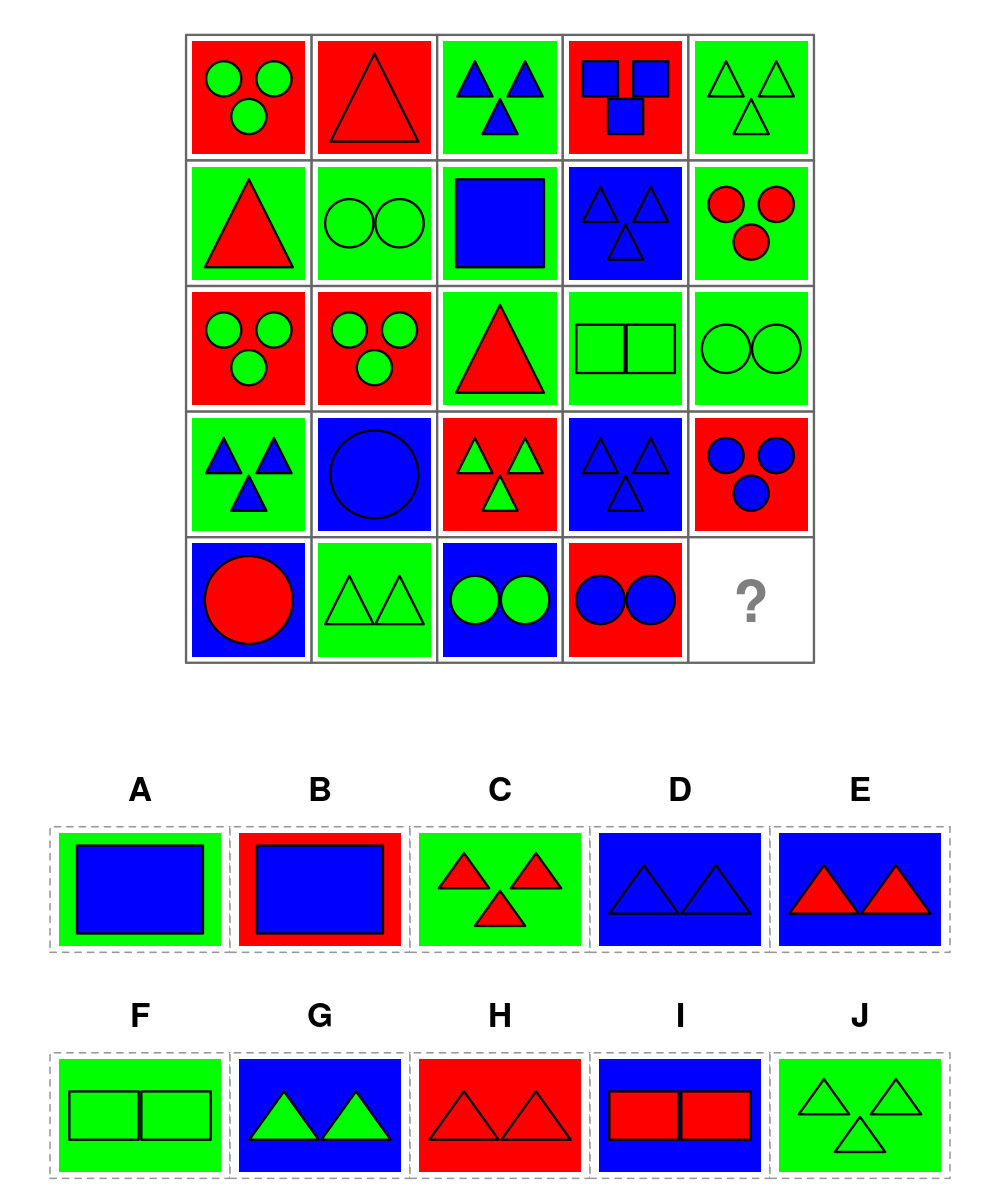
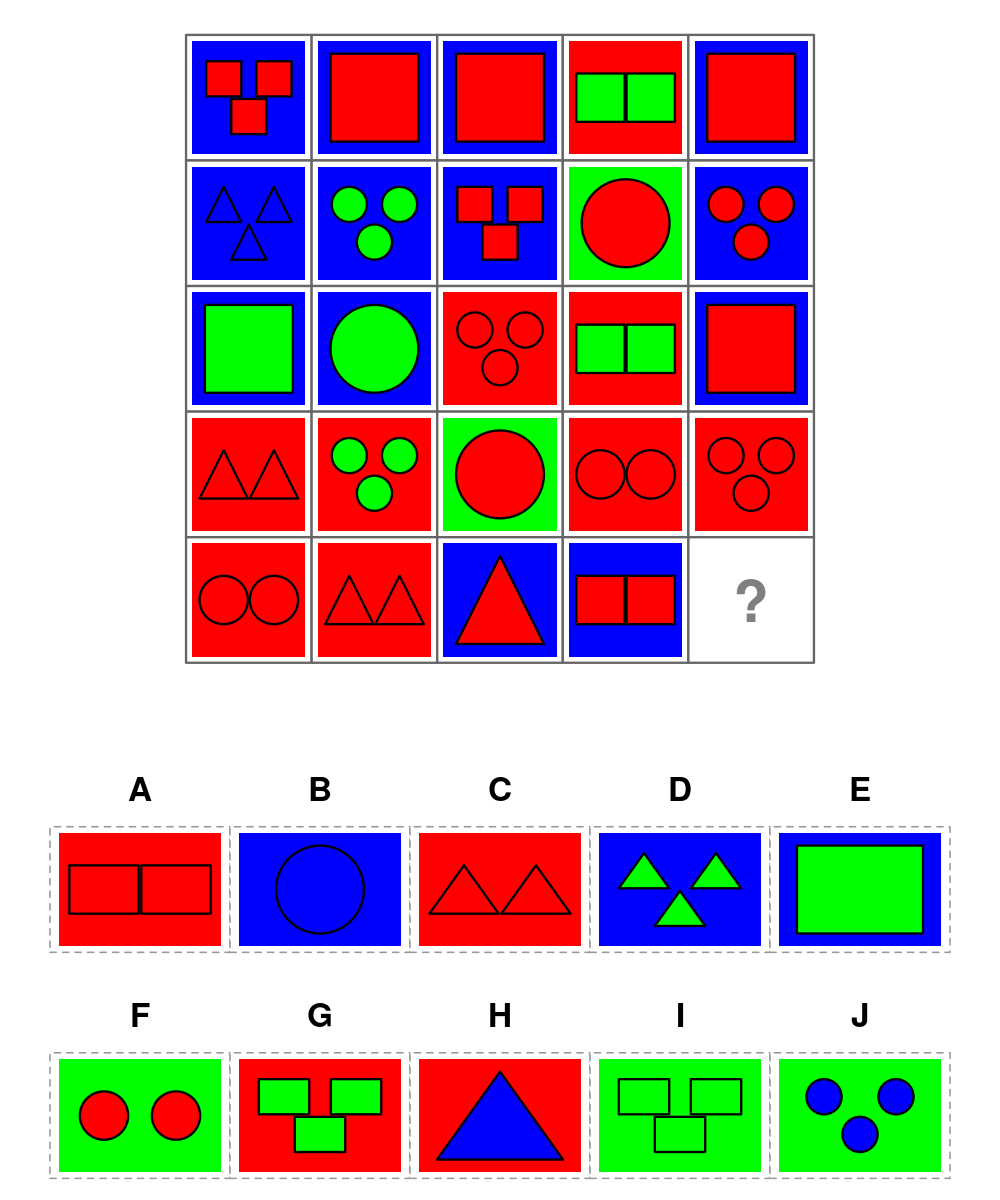
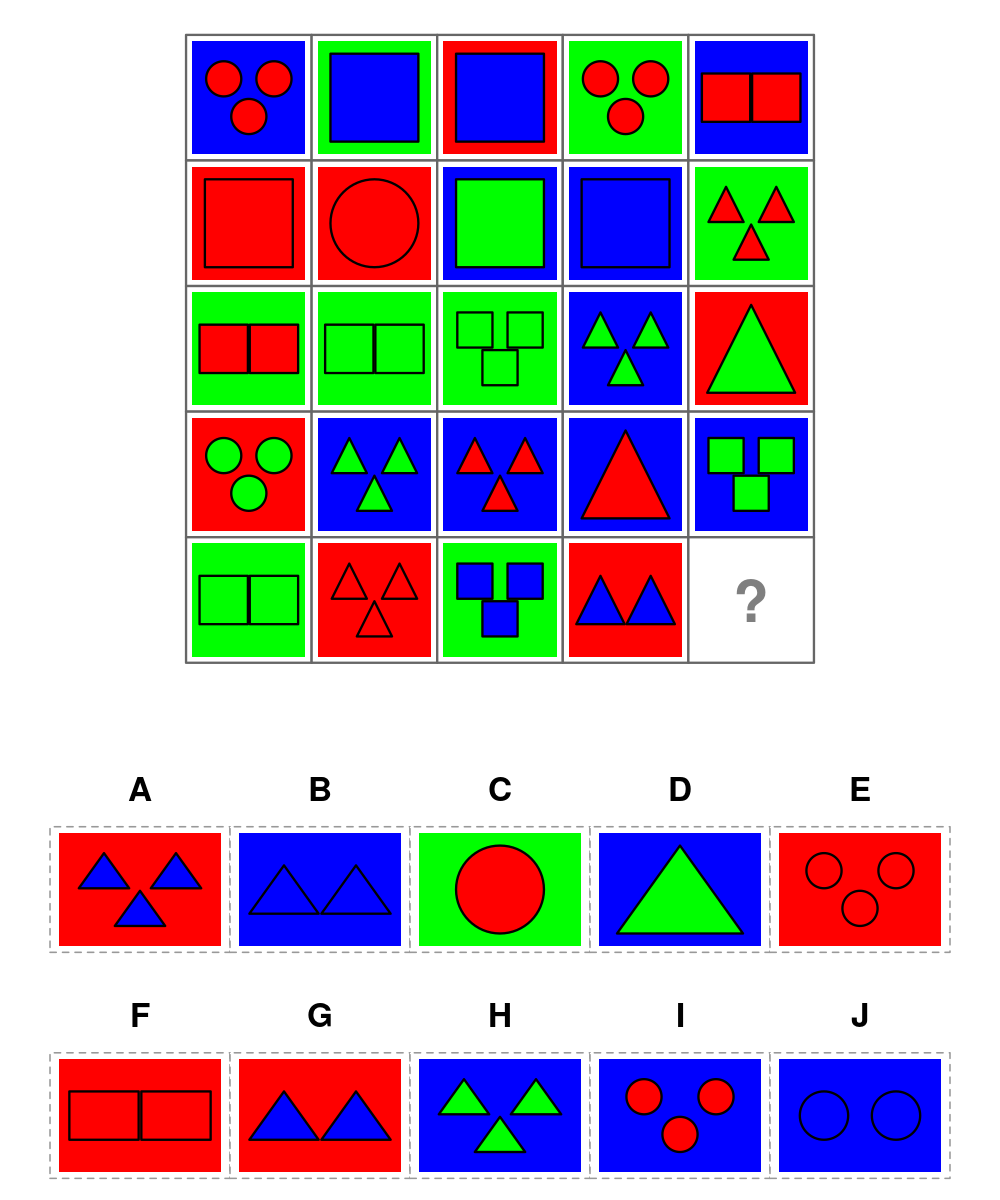
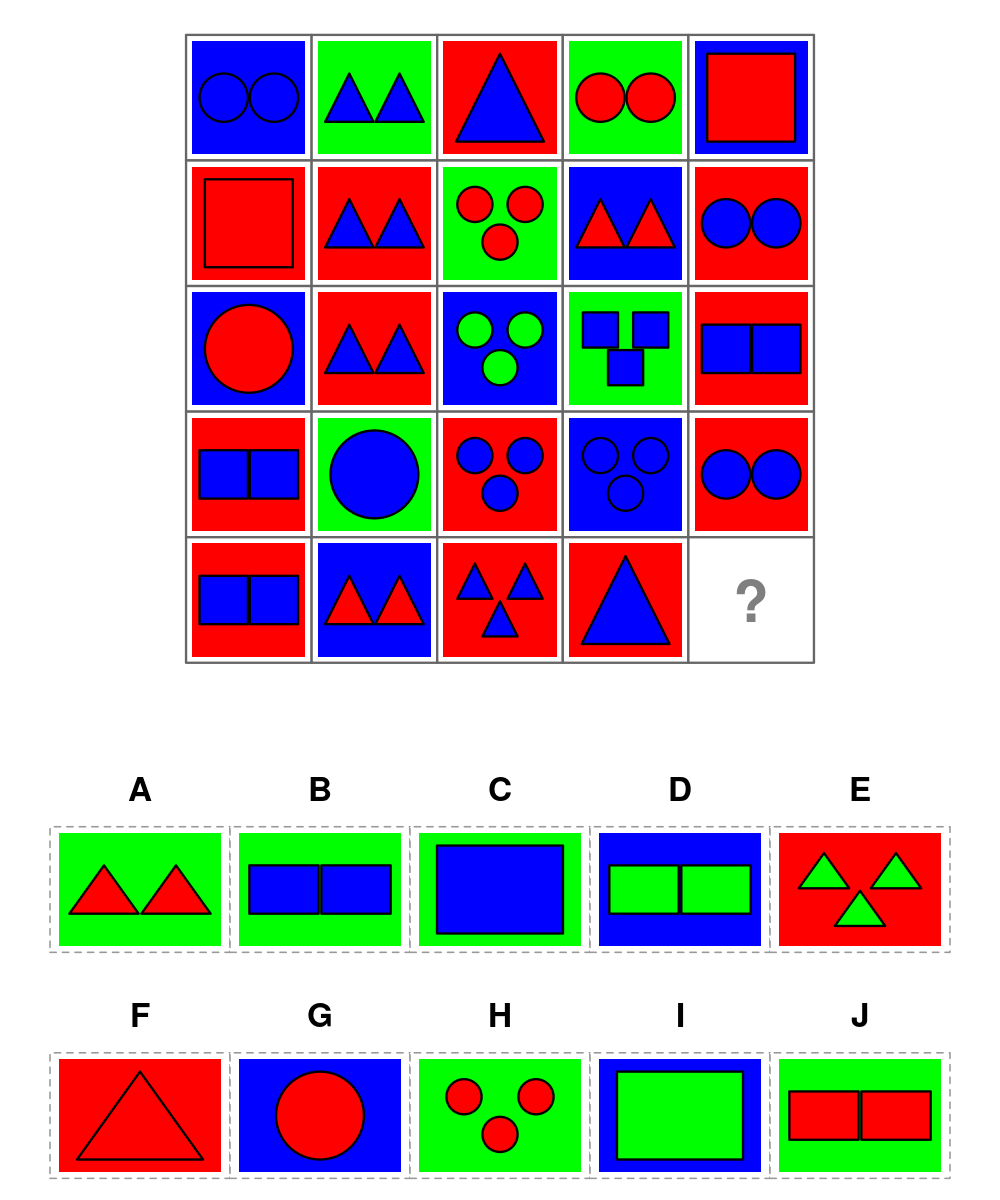
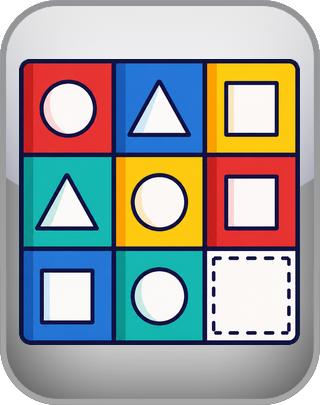
This assessment presents 44 figure reasoning puzzles of steadily increasing difficulty. Each puzzle shows a matrix of shapes with one piece missing: your task is to work out the rule that governs the pattern and pick the option that completes it. Puzzles of this kind are the classic format for measuring abstract, nonverbal reasoning — the ability to solve novel problems without relying on language or learned knowledge.
You will have 45 minutes to work through the puzzles — enough to give each one real thought. How far up the difficulty curve can you get? To take the test, enter your input below.
This test is in timed mode.
You will have 45 minutes to finish the test. Once you are ready, click Start Test.
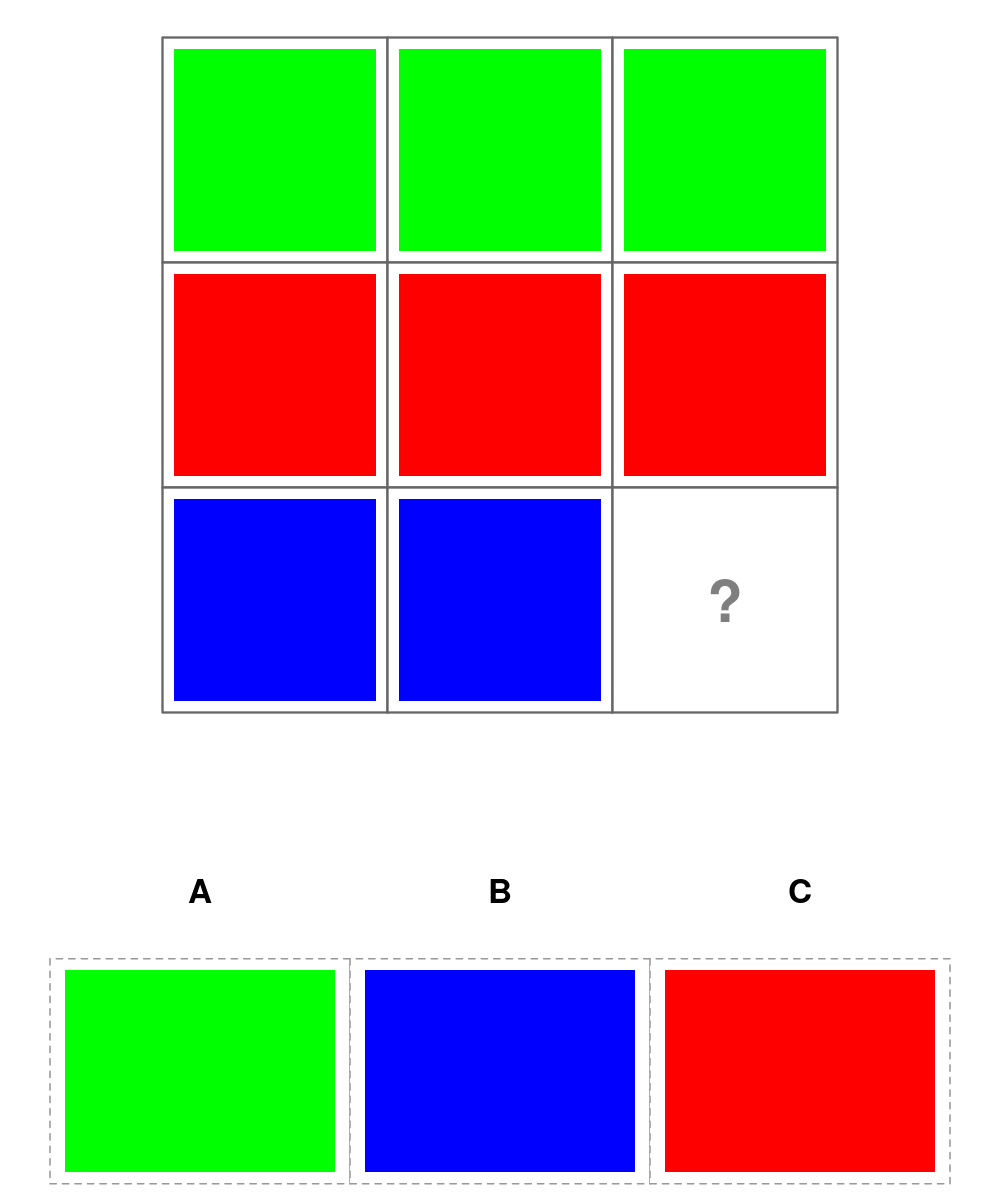
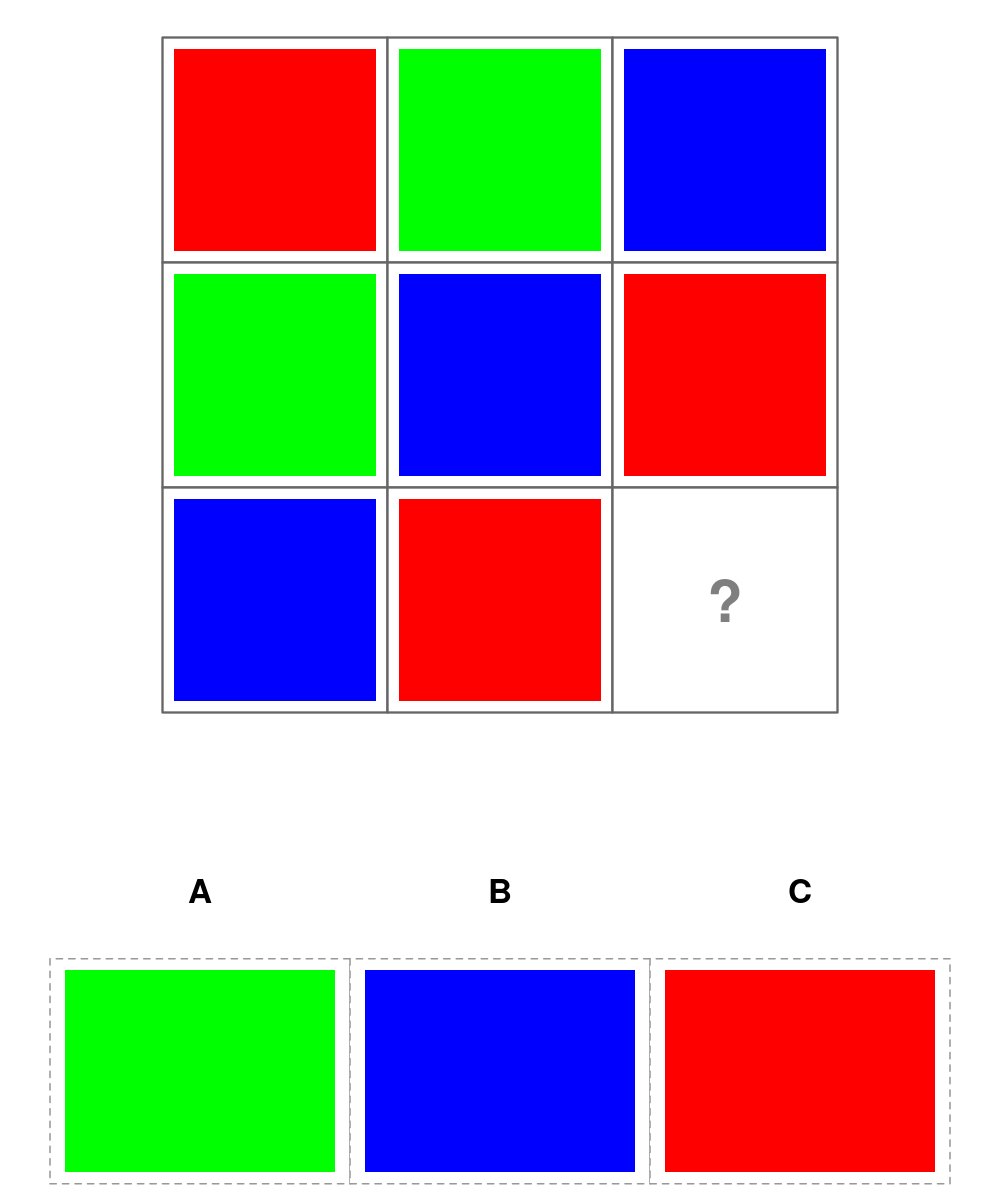
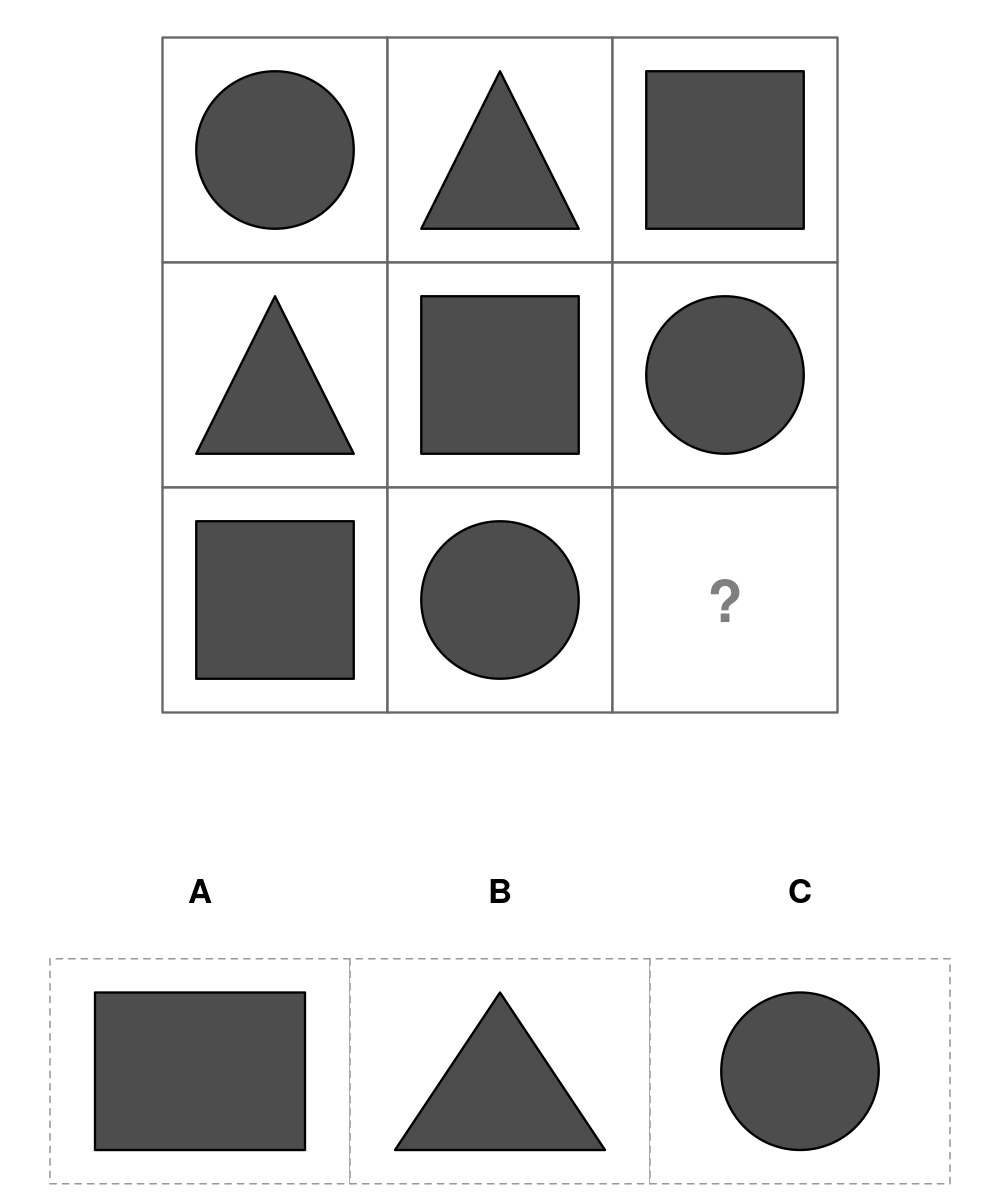
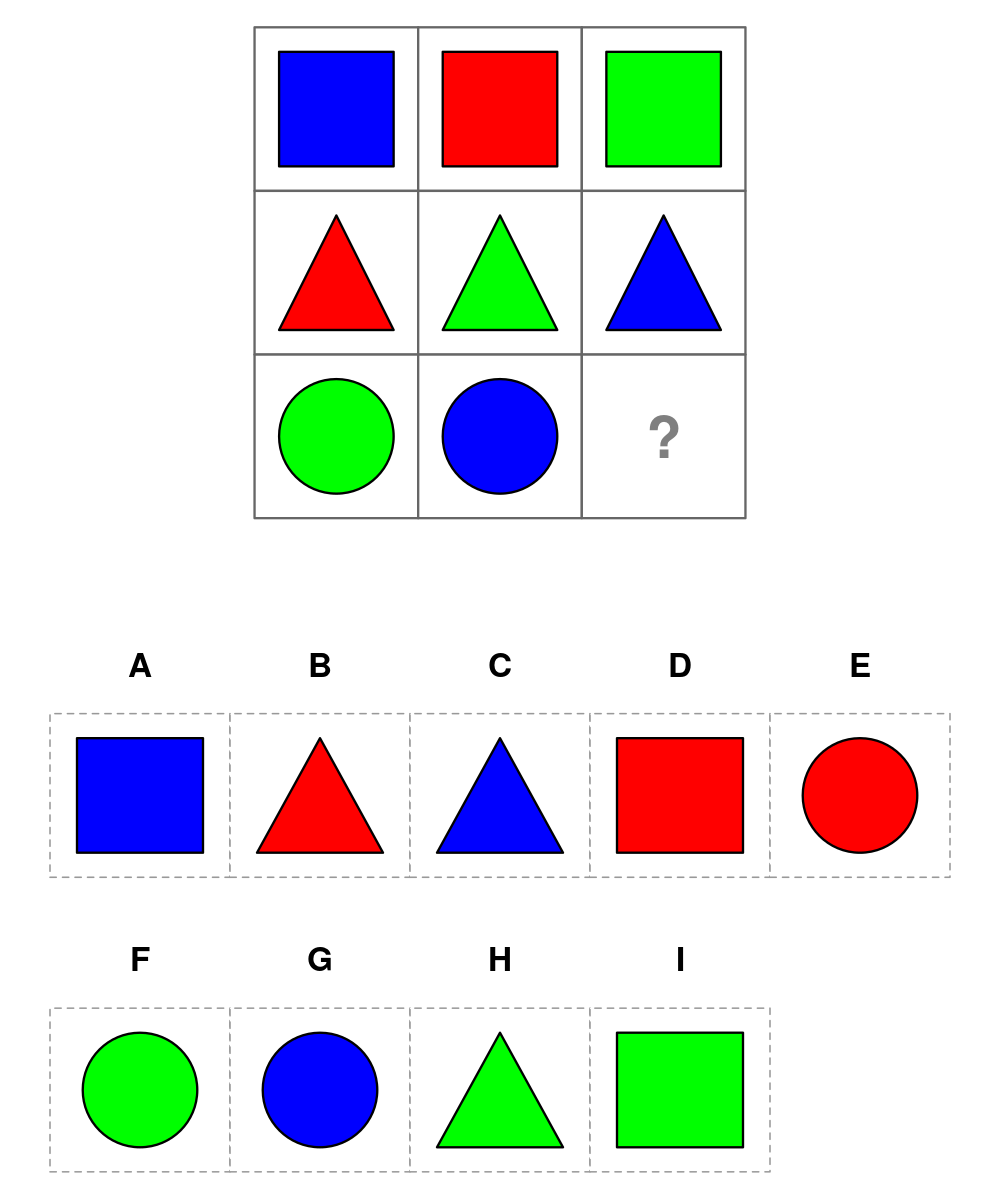
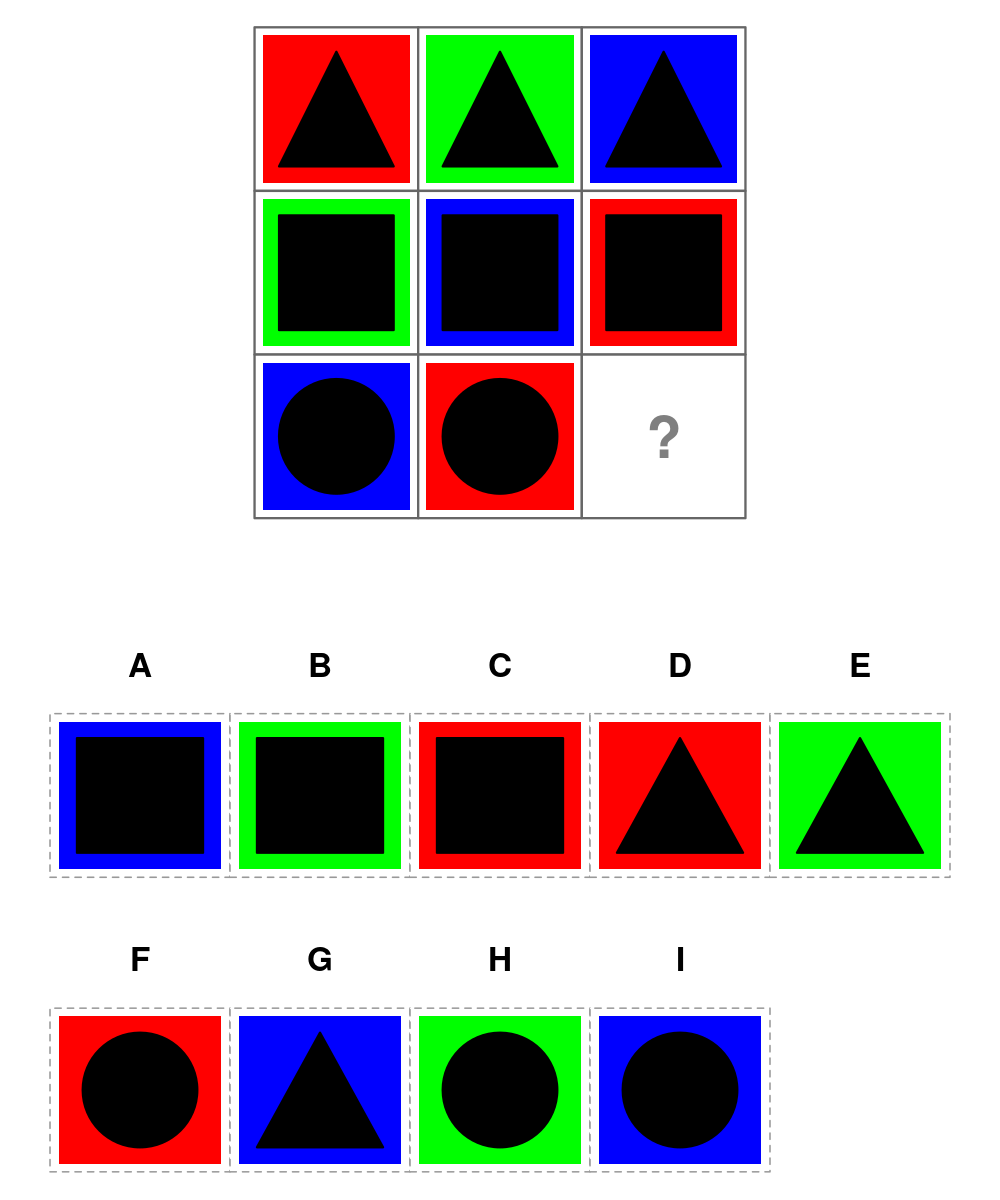
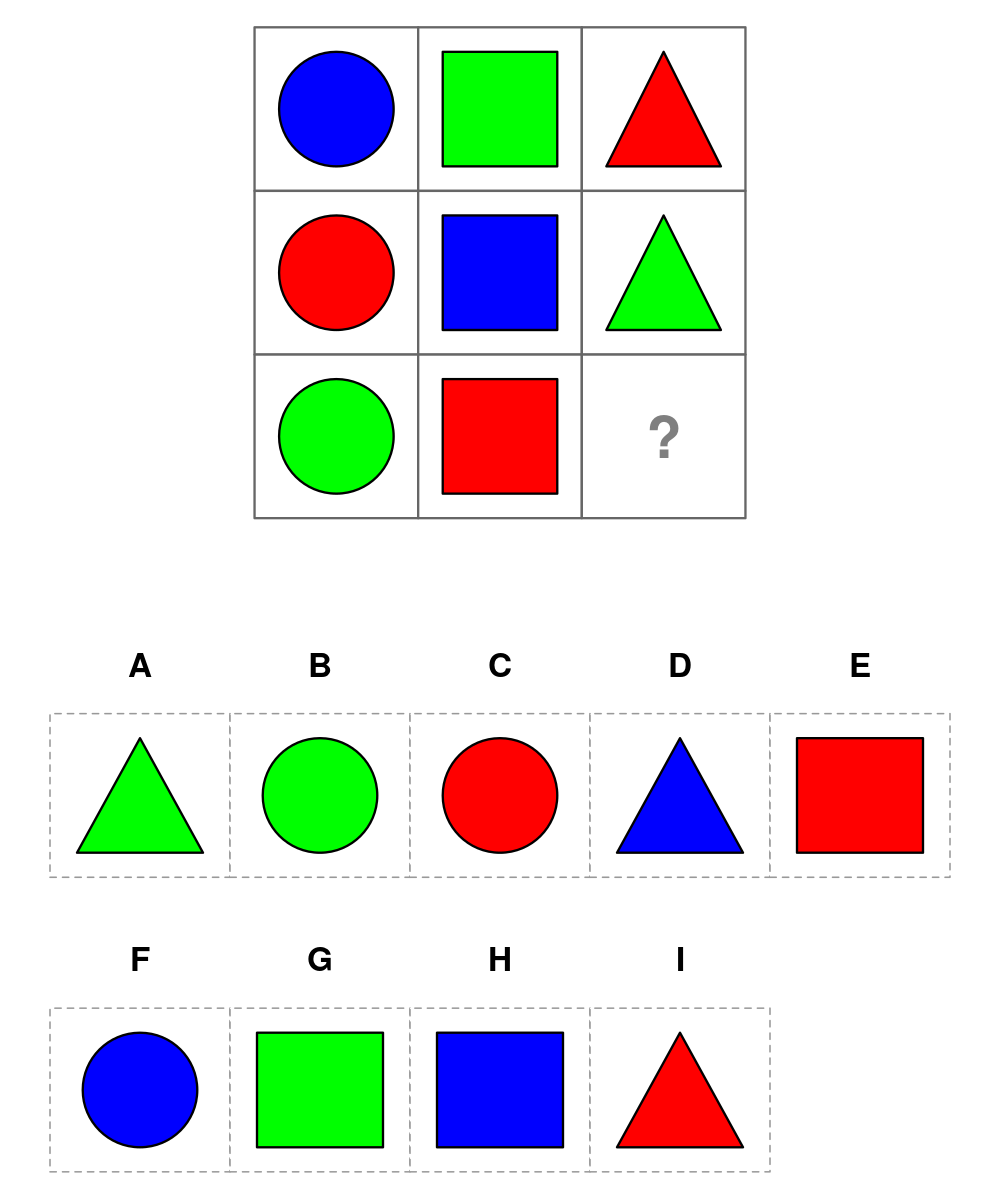
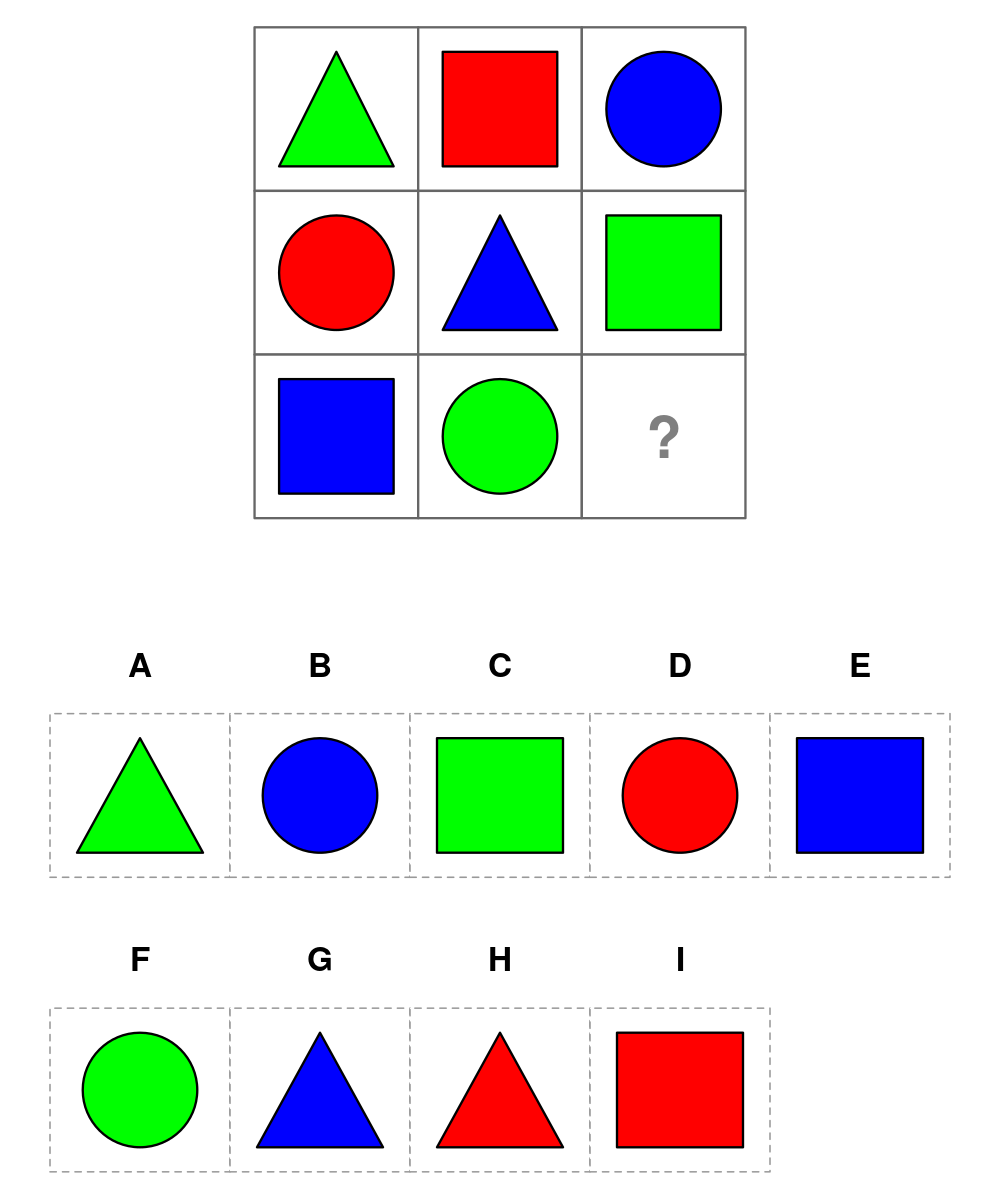
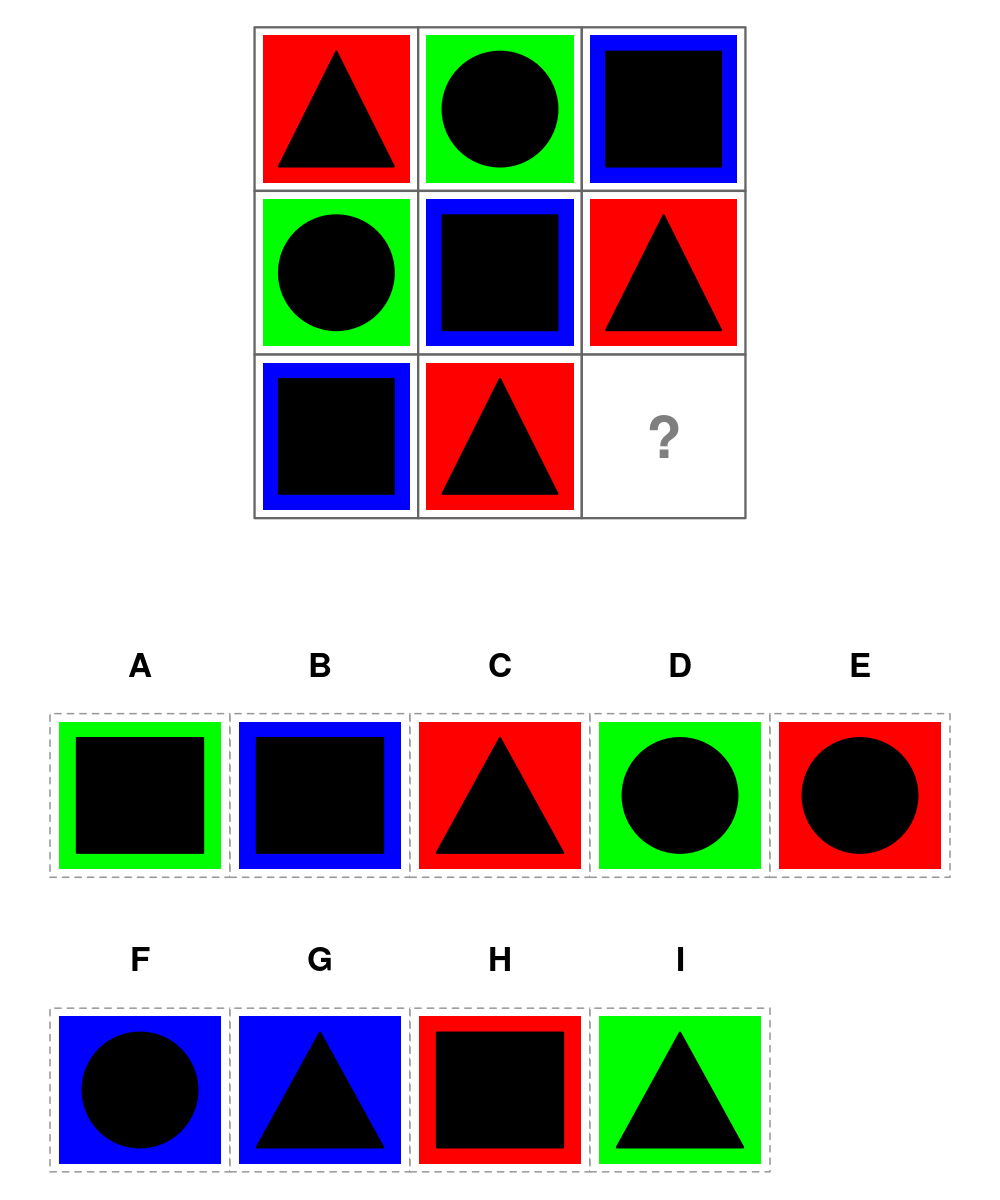
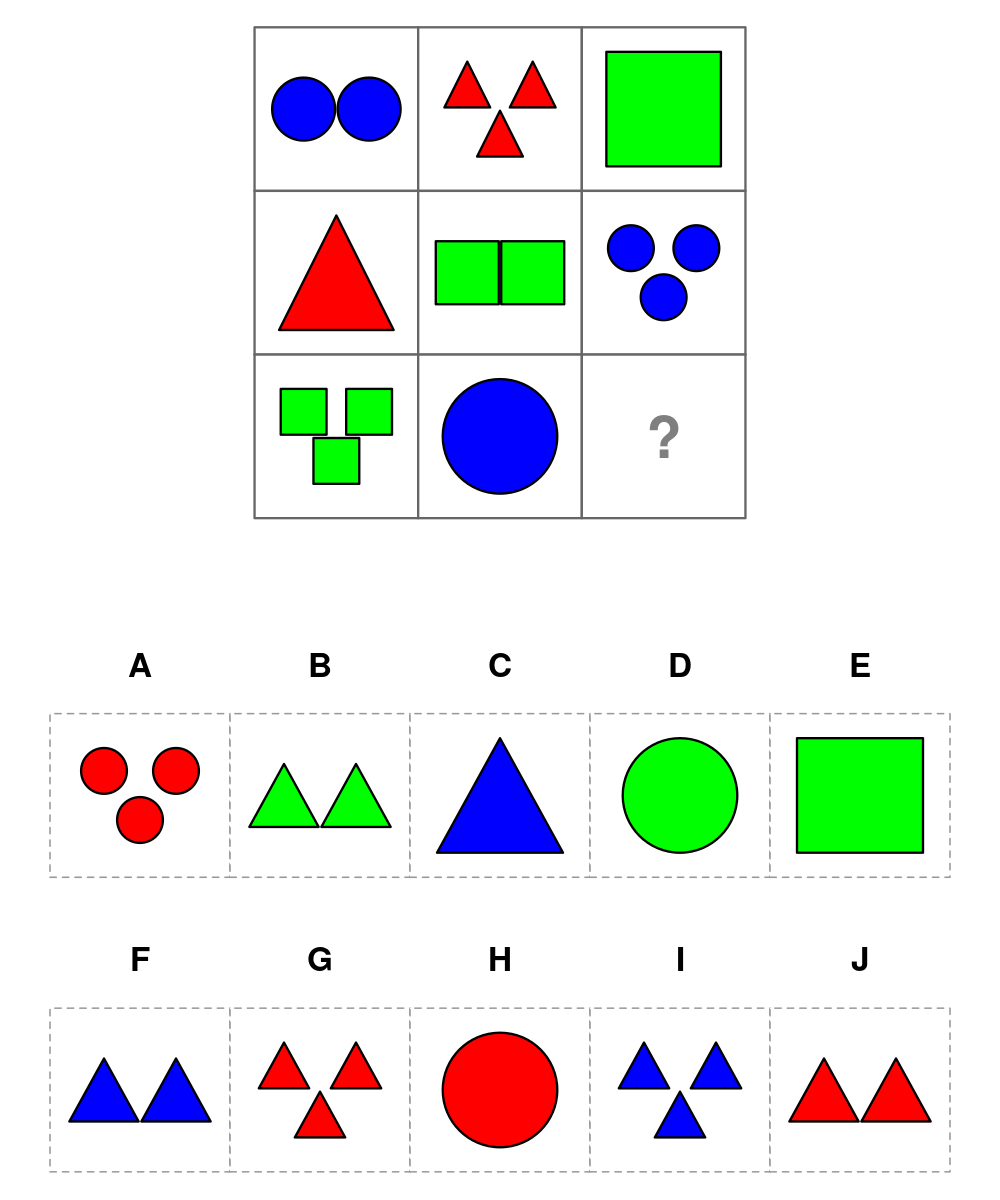
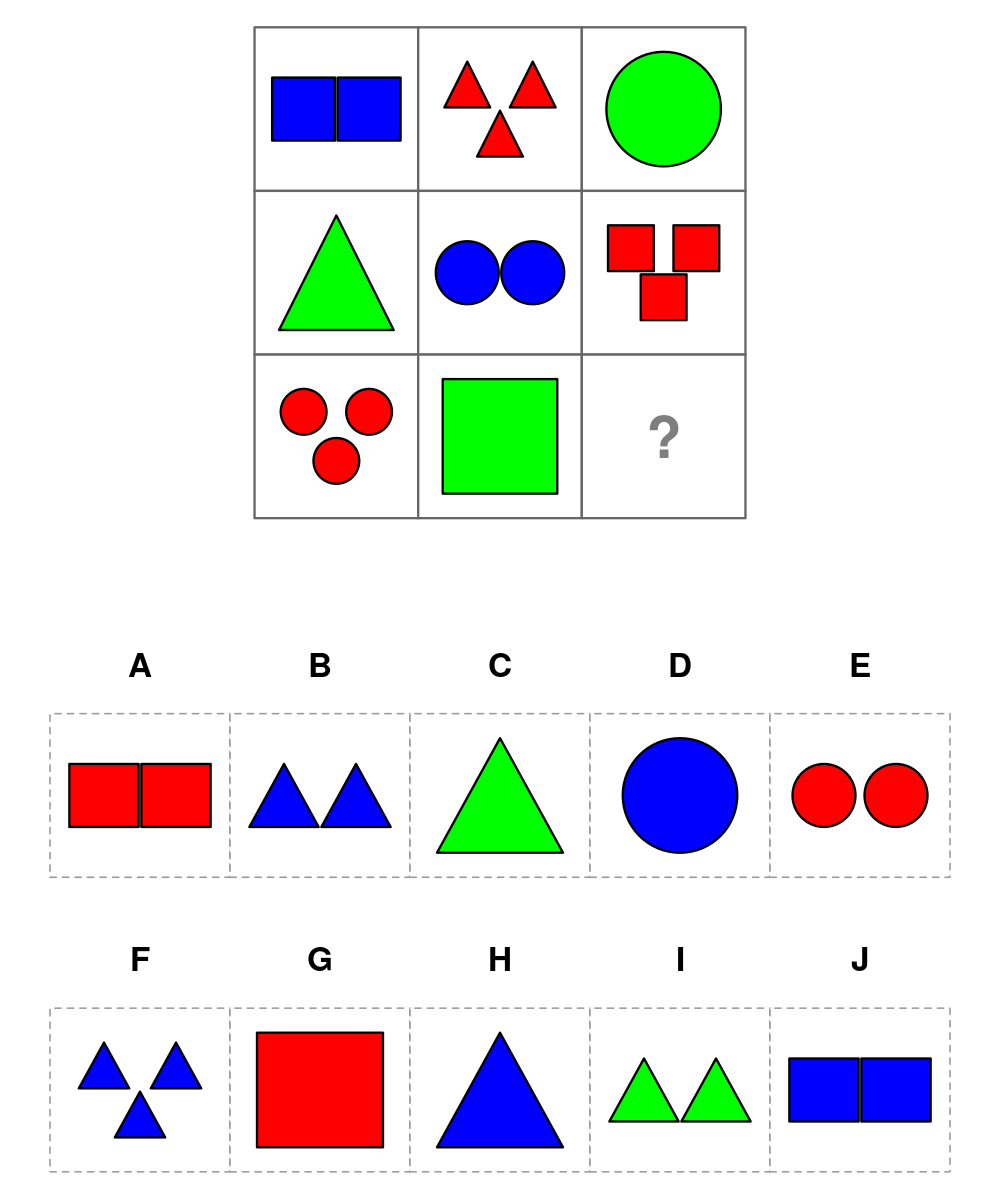
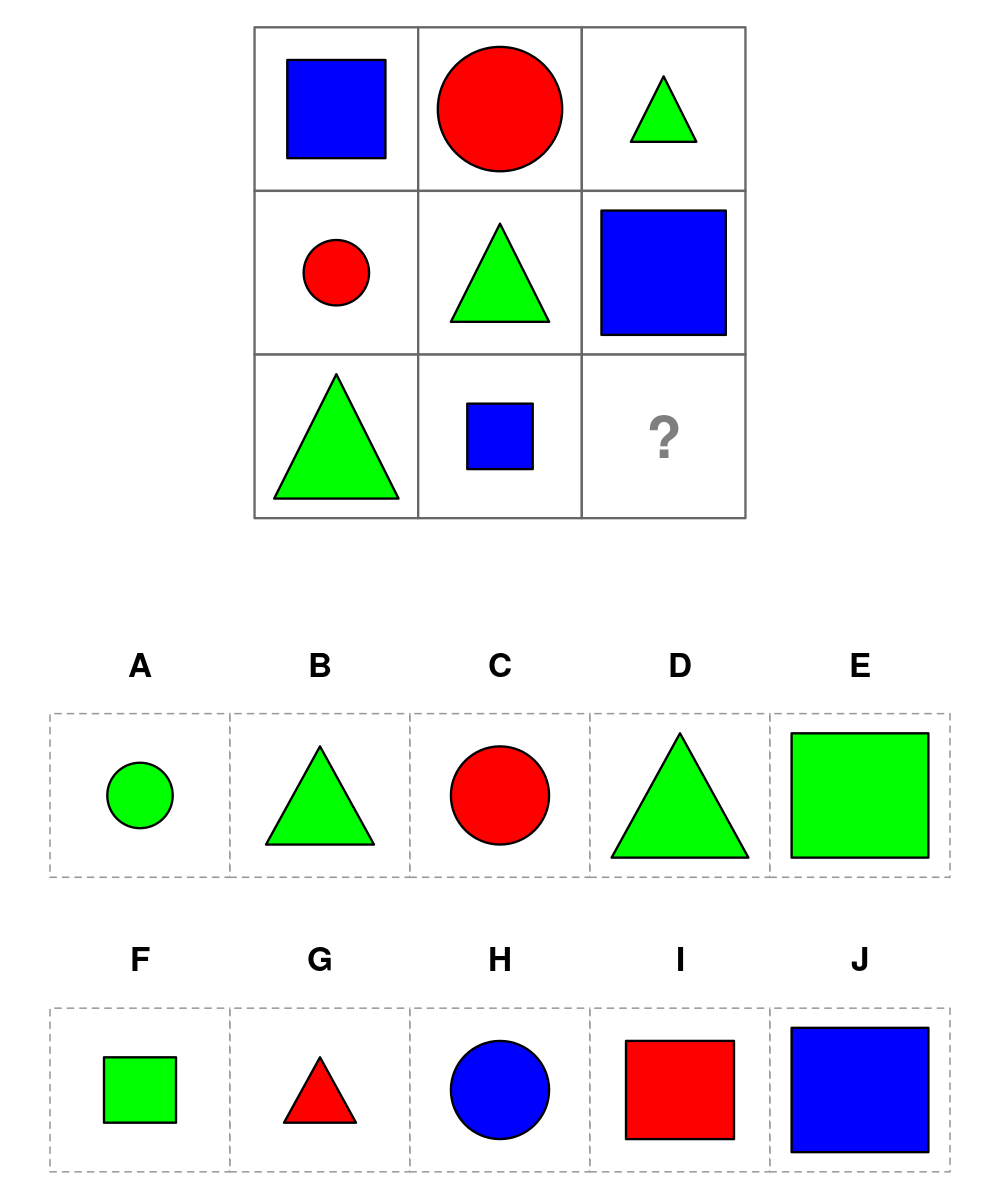
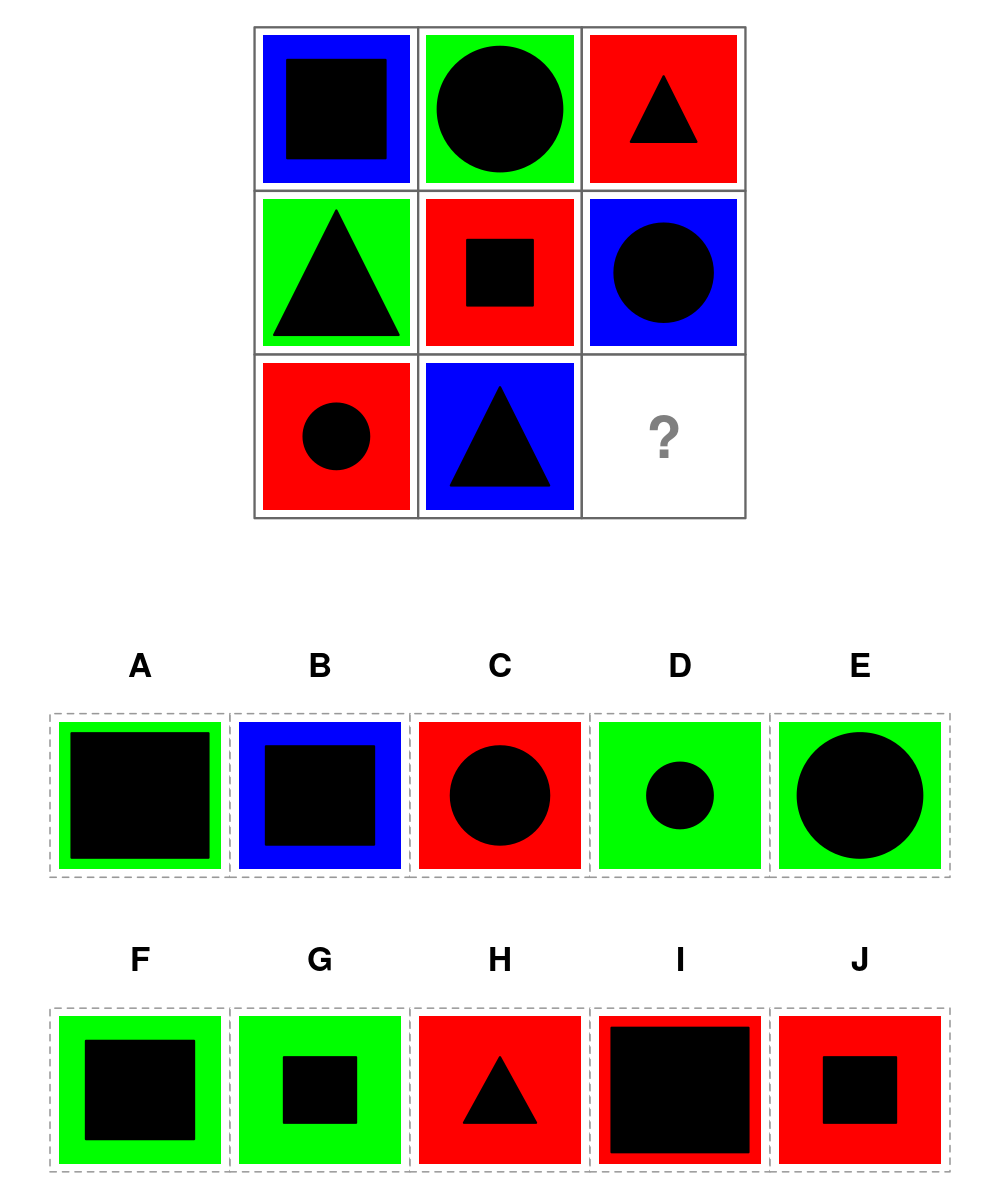
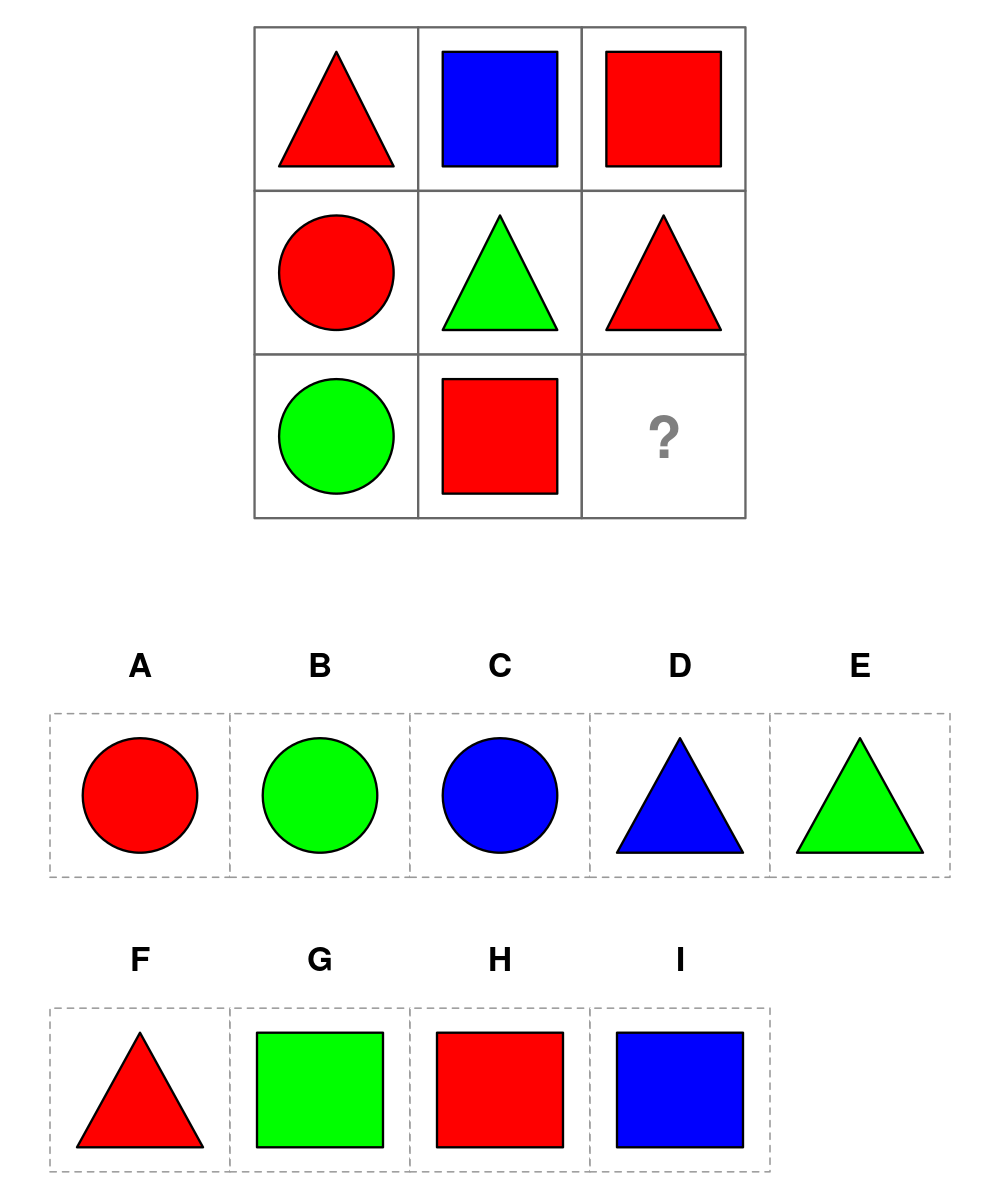
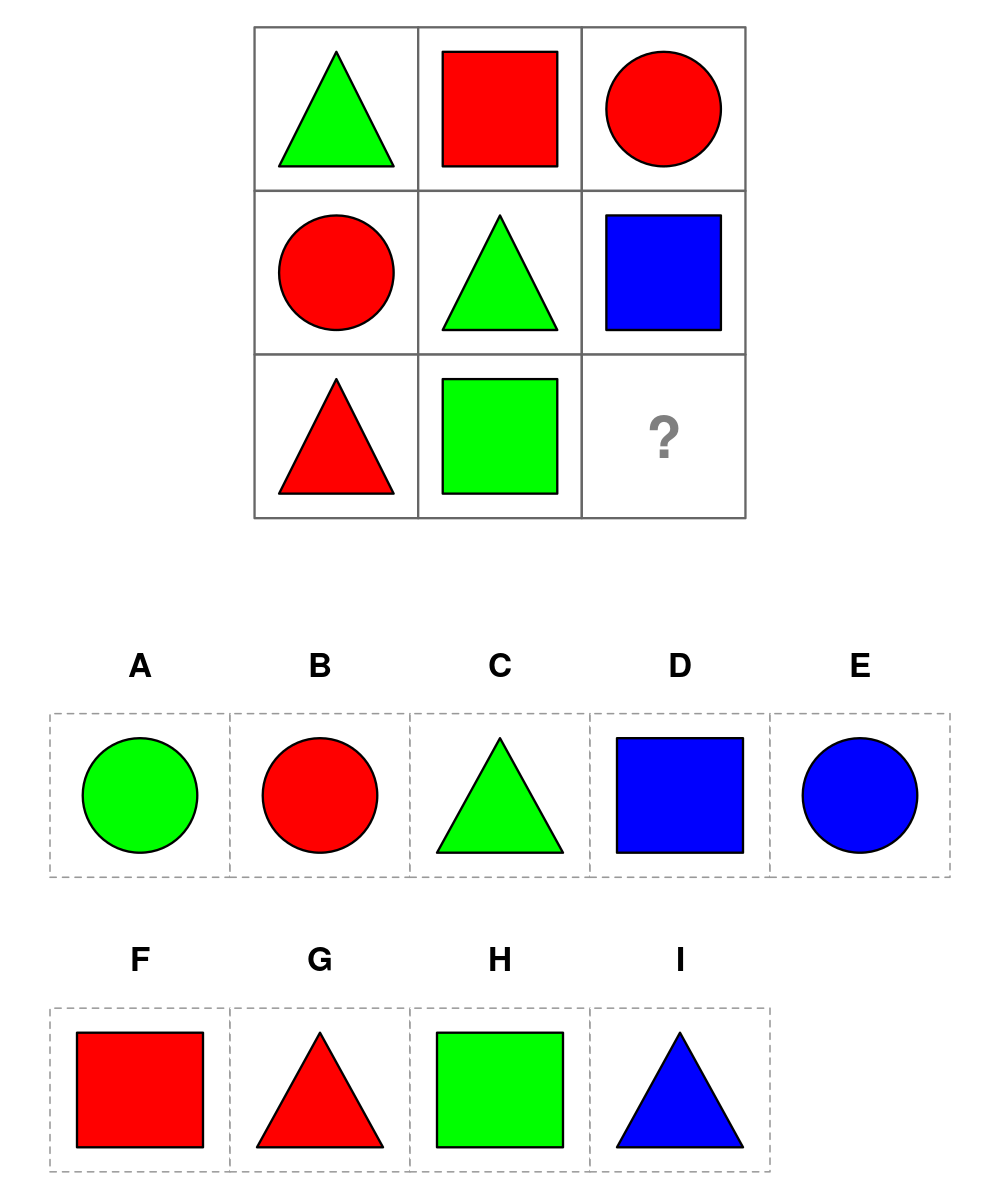
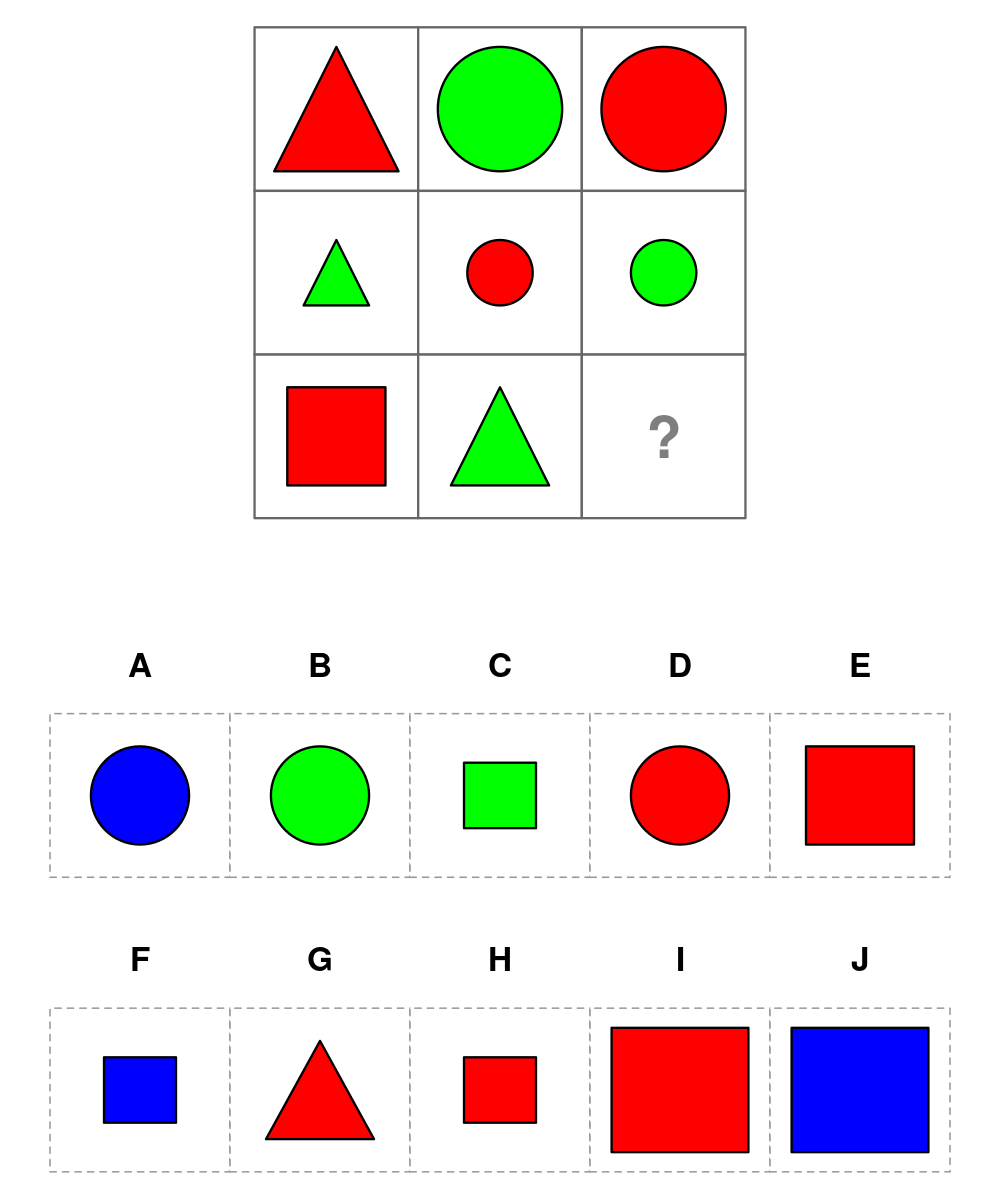
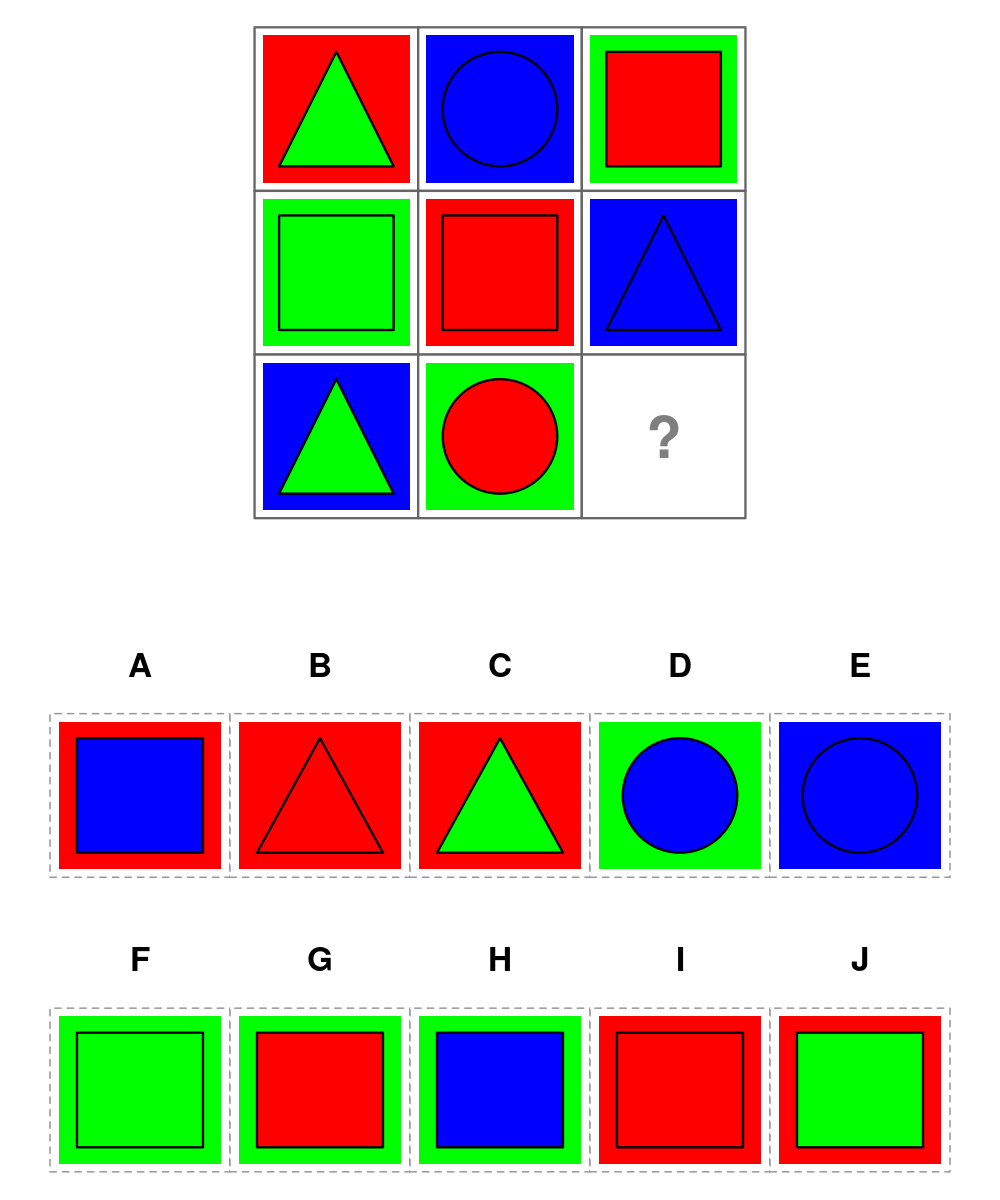
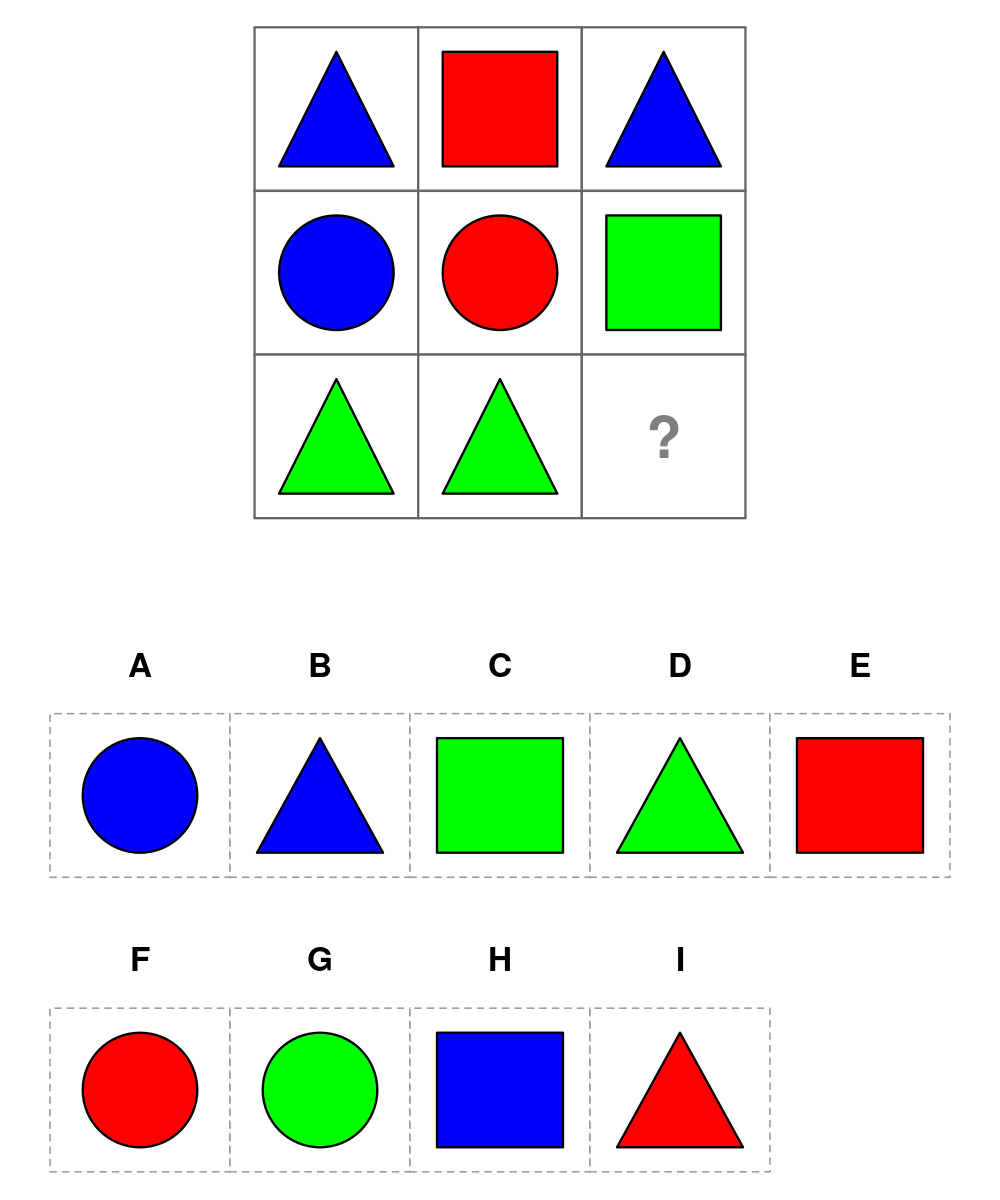
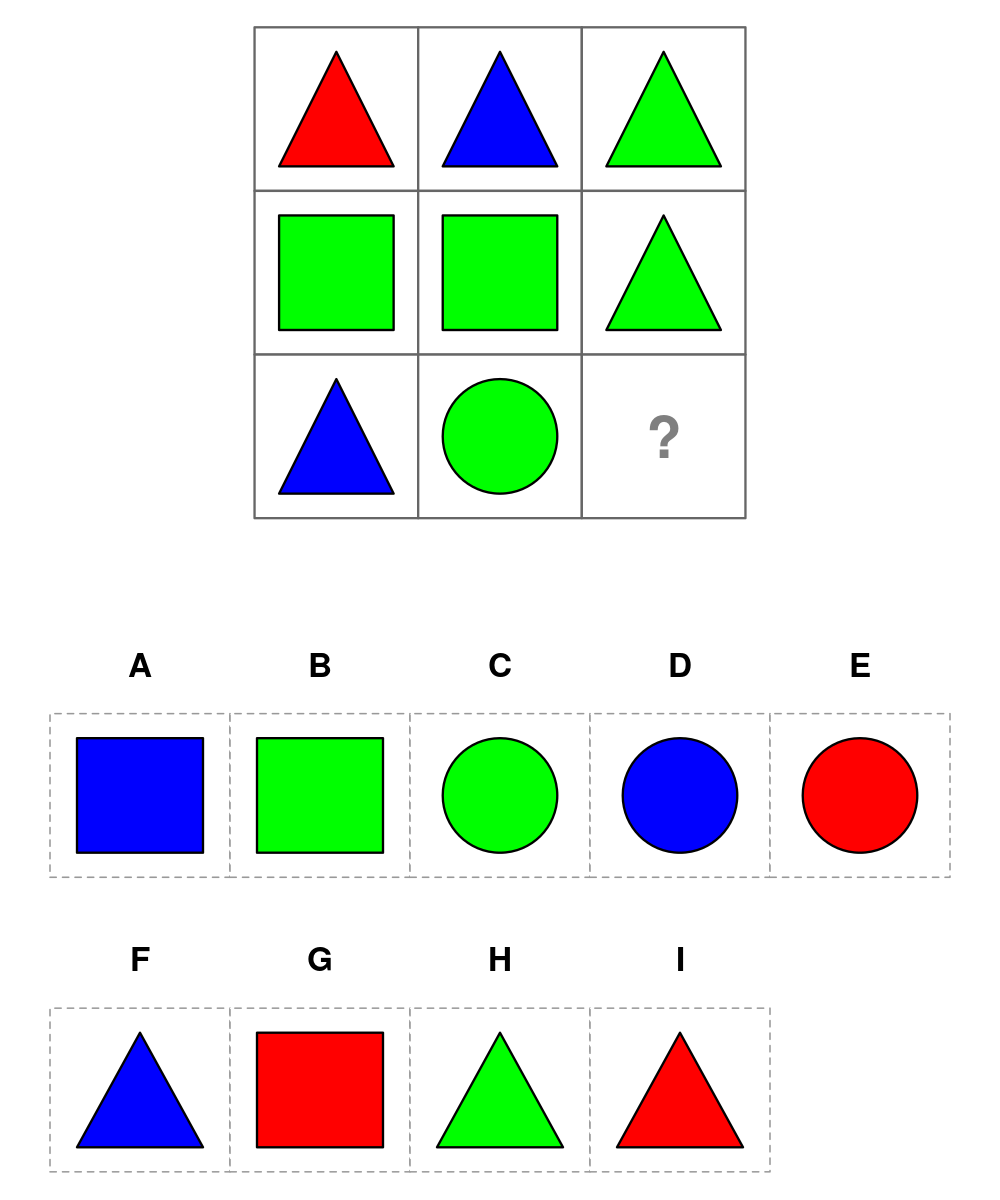
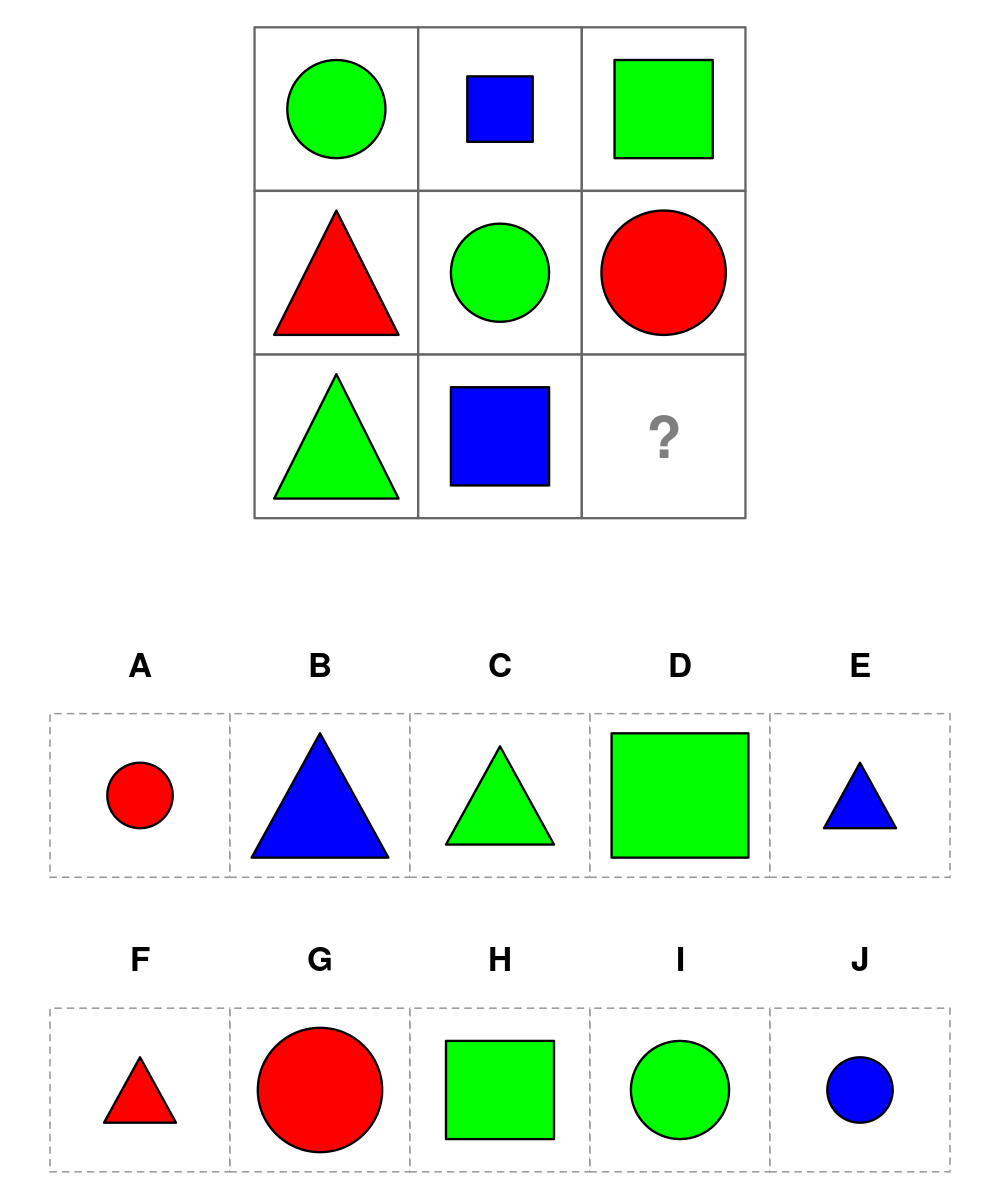
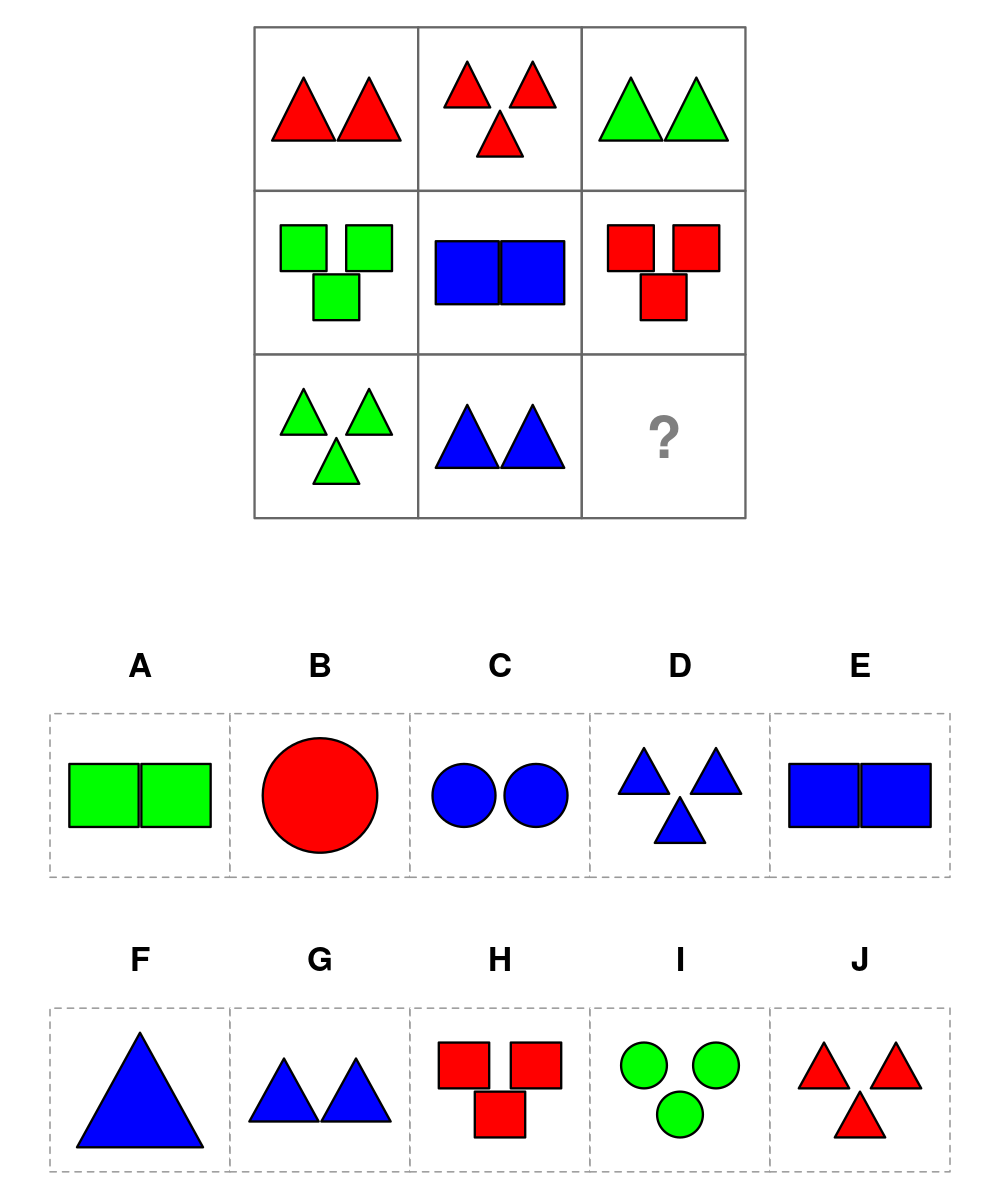
This test consists of 44 original figure reasoning puzzles arranged in order of increasing difficulty. The early items ask you to complete simple 3x3 grids governed by a single rule — a color repeated along each row, a shape alternating down each column — while the later items move to larger matrices in which several rules operate at once: shapes rotate, colors cycle, sizes progress, and features combine or cancel across rows and columns. Each puzzle offers between three and ten candidate answers, exactly one of which completes the pattern.
The format follows the matrix-reasoning tradition that runs from Raven's Progressive Matrices, introduced in 1938, through the matrix sections of virtually every modern intelligence battery. Decades of research have made clear why the format endures: performance on matrix puzzles is among the purest available measures of fluid intelligence — the capacity to induce rules and solve problems that are new to you — and because the puzzles contain no words or facts, they travel across languages and educational backgrounds better than almost any other kind of test item. Classic analyses of matrix tests showed that what separates strong from weak performers is the ability to manage several rules simultaneously and to break a complex pattern into manageable sub-goals.
Working through the test, you will likely notice the rules becoming harder to name. That is by design. In the early puzzles the rule announces itself at a glance; in the later ones you must actively generate and discard hypotheses — testing whether the pattern runs by rows or by columns, whether two features move together or independently, whether what looks like rotation is actually reflection. This hypothesis-testing process, more than visual sharpness, is what the test measures. A wrong answer on a late item usually means the rule was never found, not that it was found and misapplied.
Scoring is one point per correct answer, for a total from 0 to 44. Your score is compared against the distribution of previous test-takers of this item set: an online sample in which the average score was about 22, the median respondent solved 24 puzzles, and a score of 33 or more placed a test-taker in roughly the top tenth. That comparison group is a self-selected pool of online respondents rather than a standardized norming sample, and it includes people who abandoned the test partway, so the averages shown are reference points, not validated percentiles. The item set itself is an original series in the matrix-reasoning format; it is not one of the standardized published instruments, and your result should be read as a reasoning exercise, not as a formal IQ measurement.
The 45-minute window is generous by design: your score should reflect reasoning power more than raw speed. If you enjoy this style of problem and want a formal assessment, the standardized instruments in this tradition (Raven's Standard and Advanced Progressive Matrices, and the matrix subtests of professional IQ batteries) are administered under controlled conditions with validated norms.
This test is provided for educational and entertainment purposes only. It is not a clinical instrument, and a single sitting on any reasoning test — timed or not — is influenced by concentration, motivation, and familiarity with puzzle formats.
References
- Raven, J. C. (1938). Progressive Matrices: A perceptual test of intelligence. H.K. Lewis.
- Carpenter, P. A., Just, M. A., & Shell, P. (1990). What one intelligence test measures: A theoretical account of the processing in the Raven Progressive Matrices Test. Psychological Review, 97(3), 404-431.
- Raven, J. (2000). The Raven's Progressive Matrices: Change and stability over culture and time. Cognitive Psychology, 41(1), 1-48.
Why Use This Test?
1. Free. This Figure Reasoning Test is delivered to you free of charge. You will have 45 minutes to complete it.
2. Language-free reasoning. The puzzles are purely visual, in the classic matrix-reasoning format used by nonverbal intelligence tests, so vocabulary and general knowledge play no role in your score.
3. Comparison included. Your score is compared against the distribution of previous online test-takers, so you can see how your pattern-finding stacks up.