
 English
  Español
  Português
  Deutsch
  Français
  Italiano
  Polski
  Română
  Українська
  Русский
  Türkçe
  العربية
  فارسی
فارسی  日本語
日本語  한국어
한국어  ไทย
ไทย  汉语
汉语  Tiếng Việt
  Filipino
  हिन्दी
  Bahasa

When talking of typology and theories of personality I find it can be very easy to get caught up in the four letters signifying personality type or the varied definitions of the cognitive functions. It can be even harder to reconcile all the definitions and facts with how people actually behave in real life and what a certain function, say Fi, looks like when expressed or manifested in an individual. This is made harder still when most of the MBTI and other psychological literature tends to be rather dry or abstract. It essentially talks about certain aspects of psychology and people, without actually talking about people.
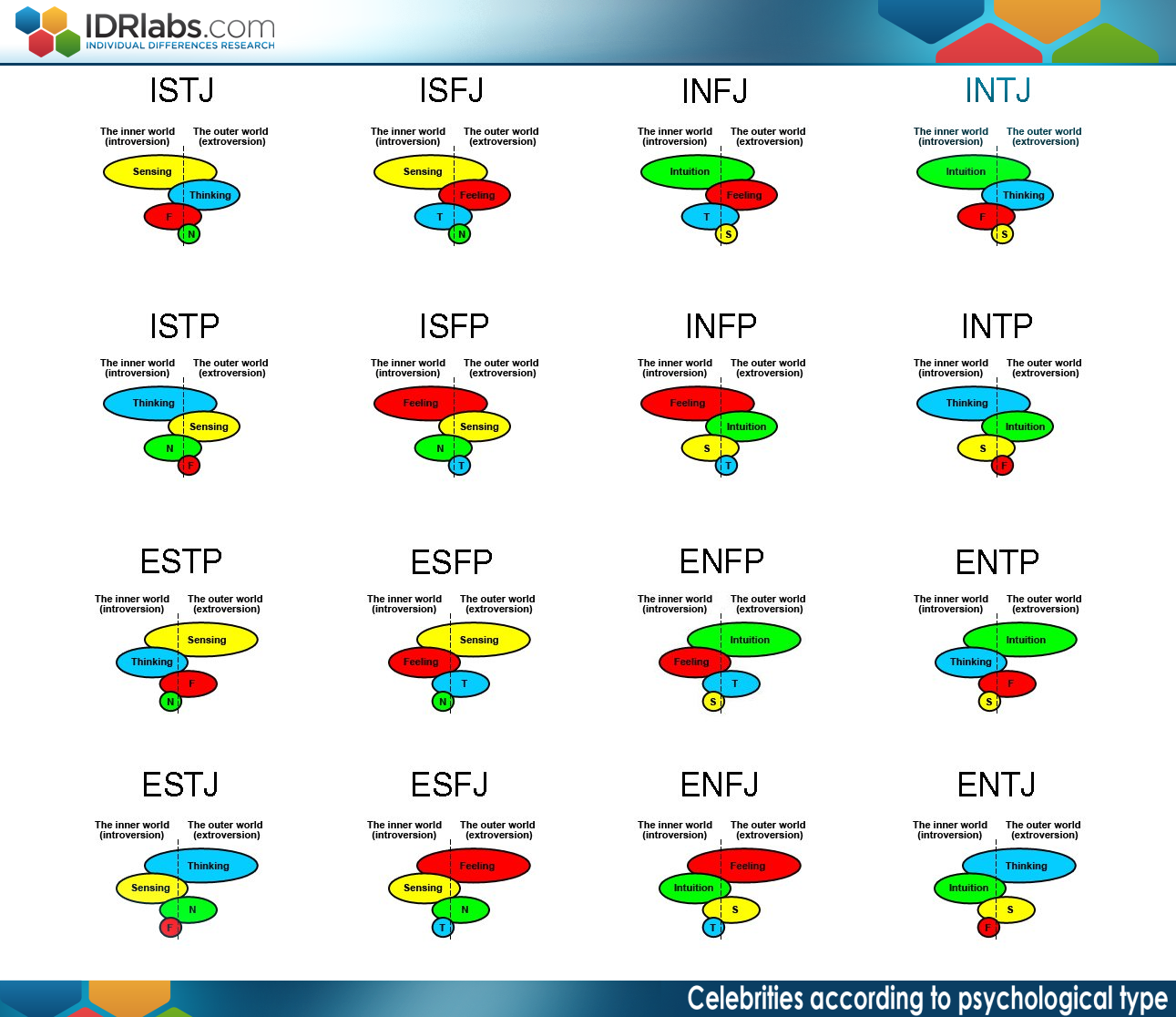
To this end I would like to offer my perspective on ESTJs. My aim is not to give a full overview of ESTJs from a clinical abstracted standpoint. Instead, I would like to give a perspective of what I have noticed about them in the wild.
One of the first things I notice when I interact with ESTJs is their wonderful sense of humor. Indeed it is in their elegantly straight-faced sense of humor that I find one of the sharpest contrasts between the well-developed ESTJs I know and the archetypal drill sergeant stereotype that they are often made out to be. Although some ESTJs do resemble the drill sergeant archetype in superficial ways, it tends to miss out on the fact that ESTJs also have conscious use of Ne, besides their Te and Si.
When analyzing their humor, I find that ESTJs are especially proficient with quick and concise quips that tend to really "put things in their place." They also like to be a bit offensive at times and, once dissected, their humor will often be found to contain traces of that duality that is inherent to all Ne. In this way, the Ne of ESTJs is like the pressure valve that counterbalances the forceful and assertive elements of their interpersonal style. ESTJs also use their humor to poke fun at Fe.
"Everyone else is just contributing to the downfall of America"
To give two recent examples, let's look at Hillary Clinton, the U.S. Secretary of State, and Amy Chua, the Yale Law Professor and "Tiger Mother" who rose to fame with her 2011 book on strict parenting Battle Hymn of the Tiger Mother and who is now releasing a new book called The Triple Package where she purports to separate the minorities whom she thinks contributes to American greatness from the minorities whom she flags as idlers who simply "contribute to the downfall of America."
As I said above, I find that ESTJs like to play with offensive themes in their humor. The Triple Package has yet to be published, but the mere mention of the book's thesis has already whipped up a frenzy of allegations against Chua, accusing her of being racist. In reality, though, Chua is not racist or bigoted, but simply trolling the public. As she openly states on her website, much of what she writes is actually self-parody.
Personally, I found the outrage over Chua's thesis redeeming. In your typical literature on Jungian typology you will often find STJs described as bigoted people of a narrow-minded outlook who don't understand the full wealth and elegance of the N type's outlook. But in Chua's case, a lot of her critics are N types who fail to appreciate the humorous elements of her delivery. They fail to understand that Chua is being funny, serious, and offensive at the same time. Granted, some people may feel that this type of humor is not to their taste, and that is fine, but to want to stigmatize such musings as racist, and to want them to remain taboo, is also a form of bigotry. It would appear, then, that this ESTJ is far more multifaceted in her outlook than those of her N critics who simply cry ‘racism!' at the first sight of her thesis.
ESTJ vs. ENTP Humor
Because of their humorous flirt with offensive themes, ESTJs can sometimes remind me of ENTPs who are also drawn to the politically incorrect, the offensive, and the "unsayable." However, the ENTP type of humor is typically more improvisational, pointing out how meaningless and irrational it all is, whereas the ESTJ humor is often dark and deprecating but nevertheless serves a purpose.
In the case of ENTPs, their humor appeals to us through Ne, Ti, and Fe. They appeal for us to embody the values of the Enlightenment more fully than most of us are able to. To be a child of the Enlightenment means to be willing to give up everything that is dear to us at whim, as explained by the ENTP philosopher Karl Popper:
"We can learn through criticism of our mistakes and errors. ... [Be] someone for whom it is more important to learn than to be proved right. ... [Do] not think that [you] or anyone else is in possession of the truth. ... [Be aware] that only critical discussion can give us the maturity to see an idea from more and more sides and to make a correct judgment of it."1
In their own way, ENTPs will often put some offensive fact on the table and then start working us through Fe and Ne. For example, in his book The Blank Slate, Harvard professor Steven Pinker first treats the reader to a barrage of controversial statements, but then does his best to appeal to us in a mild-mannered and palatable way. He woos us over by appealing to a bond of mutual approval with Fe. He softens the blow by circumventing our immediate perspective with Ne.
However, while the appeals of ENTPs may indeed be sweeping in scope, they can often be separated from the appeals of ESTJs by the fact that ENTPs merely want us to realize the truth. In the ENTP didactic, which relies on Ti, simply realizing the truth is often thought to be enough. Once a controversial truth has been gleaned and accepted, everything else is thought to follow by itself.
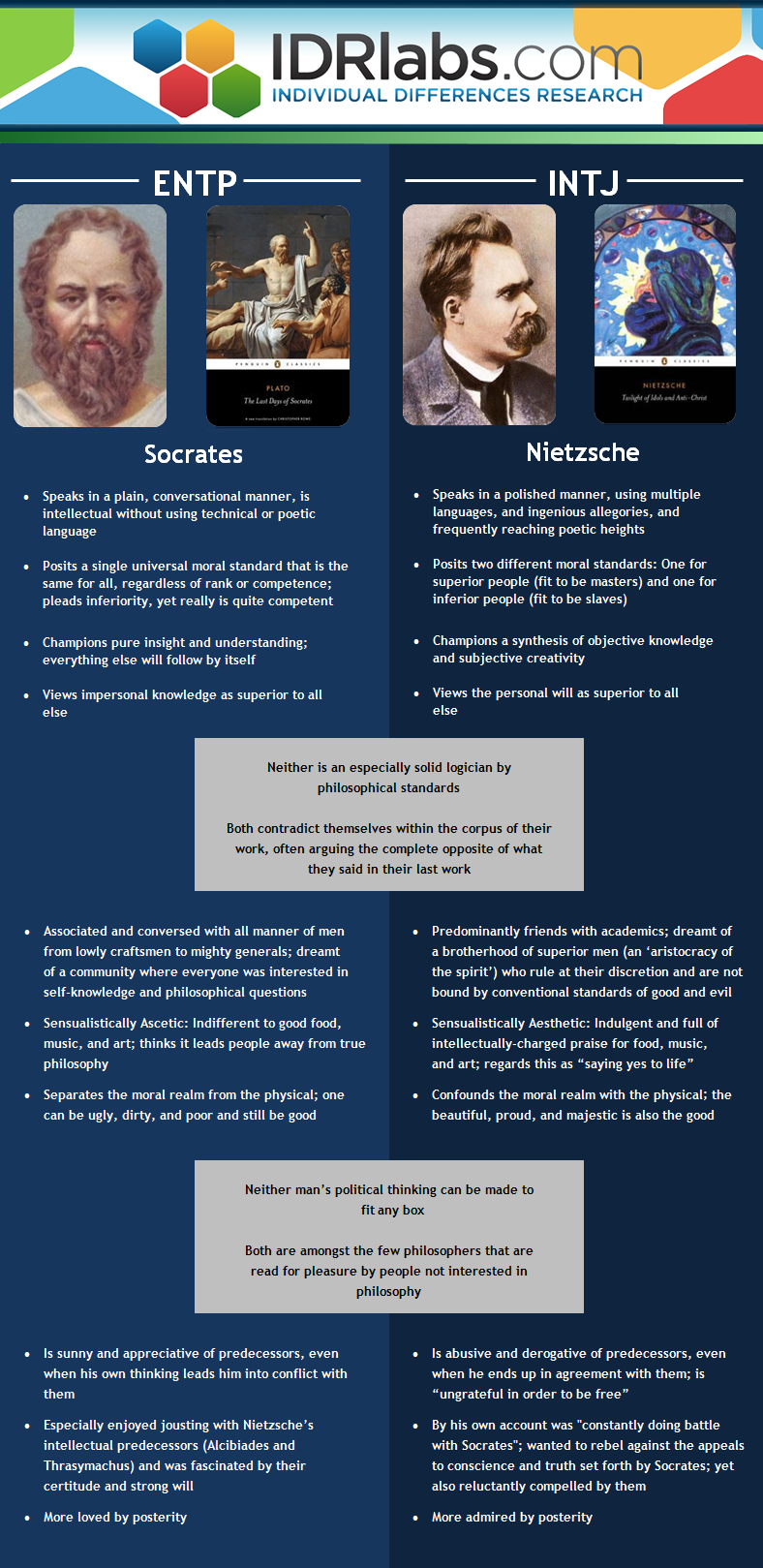
By contrast, ESTJs appeal to us through Te, Si, and Ne. Helped along by the realism of Te and Si, ESTJs know that people can't be changed overnight by fluffy-dreamy talk. Somewhere deep down, many ESTJs have probably felt a longing to apply a stricter standard across the board of human affairs. But they also know that should they do that, they will come to be seen as tyrannical (and that it won't change the fact that most people are blasé slackers anyway). Therefore, the humor of ESTJs tends to be more modest and level-headed in the scope of its appeals. Yet at the same time, when analyzed, it will often be found to contain a firm and fully rational instruction for improvement. For example, when Amy Chua was criticized for championing strict parenting, this was her response:
"I'm not holding myself out as a model, but I do believe that we in America can ask more of children than we typically do, and they will not only respond to the challenge, but thrive."2
In other words: Even though Chua did have a longing to apply a stricter standard across the board of human affairs, she was (is) actually quite restrained about forcing her objectives on others once the layers of humorous trolling are stripped away.
ESTJs and Fe mores
We have already mentioned how ESTJs can poke fun at Fe with their humor and our next example shows Hillary Clinton doing just that. In a humorous interview for Australian television, Clinton is presented with a bag of gravy-flavored potato chips, which serves as a parody of the many gifts that foreign ministers have to accept when they go on foreign visits. Clinton's reaction:
Clinton: "I am thrilled. I cannot tell you how much this means to me."
Interviewers: "Are you a collector of chips, an eater of chips; is this your first...?"
Clinton: "I am an eater of chips."
Interviewers: "We recommend not, though."
[Laughter.]
...
Interviewers: "With a lot of foreign travelling in your job, you must get very good at accepting gifts."
Clinton: "I do, yes."
Interviewers: "And making [people] believe that you love them. So what's it like?"
Clinton: "Usually it is a very happy expression on one's face. Now sometimes the gifts are really hard to do that with..."
Interviewers: "Have you ever left one behind? Because, it's possible..."
Clinton: "No, no, we take them all. We take them all. We do thank you notes. You will get a thank you note. [Raises bag of chips to the camera.]"
Interviewers: "It's not necessary. Consider us thanked."
[Laughter.]3
The exchange revolves around the affected good manners that are mandatory when a foreign minister has to accept a gift - any gift - in the name of state diplomacy. Simply put, Fe types engage in an emotional give and take where each party tries to reshape itself for the sake of the other in the name of harmony. Yet these non-essential gestures are often experienced as trying by Te users. If they could have their way, they'd prefer to cut to the chase and have each party state his terms quickly and succinctly so that the optimal solution could be arrived at as quickly as possible.
In her role as a gracious receiver of ceremonial but irrelevant gifts, Clinton is at odds with her natural preference. It is something that she endures but does not enjoy. When presented with the opportunity to make fun of these superfluous customs, Clinton participates with delight.
Psychologically we may say that when ESTJs use their humor to deprecate and poke fun of the delicate but not-directly-productive social mores that are traditionally the domain of Fe, they are relieving themselves of aggression in an innocuous and self-affirming way. The aggression that arises from having to follow these Fe-style social mores is seldom voiced by the ESTJ, but it is of a similar nature to the deprecation of Fe that is often visible in, or even overtly expressed, INTJs.
That is why humor is such a key ingredient in the development of ESTJs: If they can't relieve themselves of aggression by adopting a loose and easygoing attitude towards themselves and the Te-style longing to apply a strict standard across the board of human affairs, they may turn their aggression on the outward environment and develop sadistic traits instead.
Another way to put it is this: Outside of firmly hierarchical organizations like a corporate environment or the military, the nature of human interaction is generally such that your typical Fe-style agreeableness and tolerance will generally get you further than your typical Te style of organizing everything around you to conform to rational criteria. Consequently, many Te types learn to adopt Fe-style mores when interacting with people because doing so will generally serve them better (though they are in fact still using Te and still have a preference for it). This process of having to "fake Fe" leads to the gradual build-up of frustration in the ESTJ, and it is here that ESTJs with a well-developed sense of humor can use that humor to counterbalance the frustration and prevent it from getting the better of them.
It is when ESTJs have not been able to develop their sense of humor in this way that we find instances of the brazen, loudmouthed ESTJ drill sergeants who "tell it like it is!" and who are quite proud and vocal about the fact that their lives are organized according to logic and well-run while everyone else is wallowing around in Fe-style nonsense.
Badly-developed ESTJs like that are rare, though. But the few bad apples that are out there are very visible and loud and that tends to blind people to all the other ESTJs out there who do not conform to the negative stereotype.
Remember, contrary to what you read on most sites, ESTJ means having Te and Si as your two most developed functions. It doesn't mean being pushy, loud, or any of those other things that ESTJs are commonly taken to be. In reality, most ESTJs are well-developed and understand how they come across.
Existential Alienation
By highlighting how ESTJs can find themselves at odds with the dominant social mores, I have already hinted at a fact which has hitherto never been described in the literature on Jungian type: That it is actually somewhat common for ESTJs to feel alienated from the world, just like the intuitive types are often said to do.
However, the alienation of ESTJs is not, like with the intuitive types, an estrangement that springs from being so stuck in one's own head that one is not really noticing what goes on in the real world. With the ESTJ, their typical form of alienation rather stems from the fact that they don't like irrationality and ambiguity in their affairs, and that they would prefer the interpersonal domain to be more straightforward than it typically is.
For example, a female ESTJ I talked to once confided in me that she was genuinely estranged by the way her female friends were acting around the men that they dated. In her view, these women made themselves more helpless and vulnerable around men than they actually were. The way she saw it, her friends were also prone to accept expensive dinners and gifts from men that they dated, even while knowing full well that they were not interested in escalating the dating trajectory. This left the ESTJ feeling alienated, and even beset by self-doubt: "Why am I the only one who thinks that this behavior is silly and morally wrong? Why can't I just go along with this, the way my girlfriends do? Is there something wrong with me?"
From here, there were two ways she could go: One would be to take the Aristotelian, Laura Schlessinger-like approach of trying to force the outside world to conform to objective and rational criteria. As Schlessinger instructs:
"On the first date, I would say: 'The reason I am dating is to find a husband. If you're not dating to find a wife, we don't have to have a second date.'"4
This is the path that is likely to lead to frustration, aggression, and the development of sadistic elements in the personality as explained above.
The other path would be to try and work on finding the humorous side of these phenomena, which was what she did. Once she started seeing the comical side of the situation, she saw both the humorous side of her girlfriends' disingenuous behavior and feigned frailty, as well as the comical side of her own wish to treat dating and romance as an artifact of corporate governance.
Seeing the humorous side of the situation did not magically dissolve her feelings of alienation and estrangement. But once she started approaching the issue with humor, she found that she could actually express her genuine sentiments without seeming bossy and controlling to her friends.
Because she was not trying to judge or control them, her friends (who had otherwise come to resent her attempts to "bust them") could now admit some of the deceit in their behavior that they had previously denied. Once her observations were delivered in a humorous, hands-off manner, it was not so threatening for her friends to own up to the undesirable elements in their conduct. What's more, her friends also started respecting her more, because now she could laugh at the situation, instead of just venting her frustration at it.
ESTJ and the Personal Equation
Another perspective on the ESTJ that is not usually mentioned in the literature on type is that ESTJs are really very attuned to people. Not in a Feeling way, where they are closely tuned in to others' emotional needs, but in an objective way where they are keenly aware of the skills and abilities of the people around them. Indeed, in the way that ESTJs are typically attuned to people it is almost as if people are objects and the abilities that these people possess are the static properties of these objects.5
As Jung said, the ETJ types want to make everything in their environment dependent upon conclusions which can be drawn directly from objective data.6 And for this to be able to occur in the interpersonal domain, it follows that, in the mind of the ETJ type, people themselves will have to be converted to objects to some extent. This is one reason why ESTJs hate sob stories and bad excuses: They don't fit the objective data. When people plead extraordinary and special circumstances as reasons for their failure to do something that they should objectively have been able to do, they are circumventing their status as objects (and by doing so they are furthermore making it hard for the ESTJ to calculate their true level of effectiveness going forward).
At this point, readers who are not sympathetic to Te may feel that this whole mode of "treating people as objects" is awfully dehumanizing. But on the upside, there is a consummate advantage to introducing objective criteria as the ruling principle of human affairs. Namely that the ESTJ will always know exactly what they can get out of the people around them in terms of ability, production, and work and that they can thereby coordinate everyone's resources more effectively.
This is why ESTJs tend to make the best front line executives. They excel at handling the difficulties of organization at all levels. In their logical Thinking minds, the world is broken down into people and objectives and ESTJs excel at the task of matching the right people with the right objectives.
As we have already said, the nature of Te is such that, all other things being equal, the Te types will generally be the best organizers and managers of resources. As Te is an extroverted judging function that seeks to meet objective standards by depersonalizing the people involved in meeting those standards, Te-style instructions are always at risk of being too brutal for the people who have to follow them.
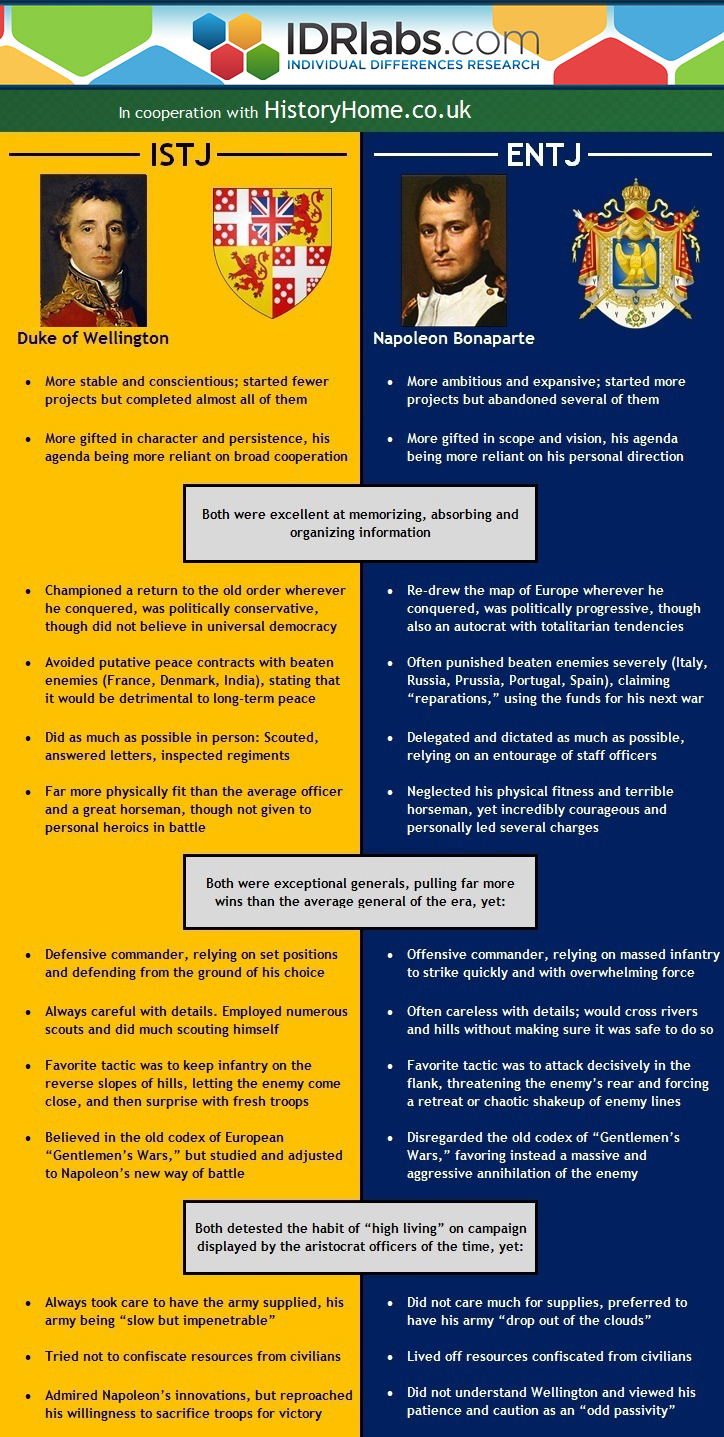
However, because ESTJs couple their Te with Si, this means that a well-developed ESTJ will usually have a personal sense of responsibility to the people and resources that he or she is managing. An ESTJ executive may seem unfeeling at first, but when more closely examined, he will often be found to be genuinely concerned with the best interest of his subordinates and the organization as a whole. By contrast, because ENTJs couple their Te with Ni (i.e. with internal perceptions of a goal on the horizon) this means that even a well-developed ENTJ will usually be more heartless and cold with regards to callously sacrificing resources in order to realize the goal.
A good example of this contrast is the difference between the British Field Marshal Montgomery and the French Emperor Napoleon: Where Napoleon wantonly and impatiently sacrificed troops for victory, Montgomery was always careful to avoid unnecessary losses.7 Indeed, Montgomery managed his way to victory more than he brawled his way to it.
Inferior Fi in ESTJs
Even though ESTJs are often attuned to people, as explained above, they nevertheless have Feeling as their inferior function. Because they have inferior Fi, ESTJs struggle with their interpersonal relations at times, and ESTJs can really have a hard time with the emotional or personal aspects of social situations or people.
Specifically, if there isn't a lot of structure to the social situation or there's no clear goal to be attained, Te types can easily feel ill at ease. For the same reason, most Te types have ‘work' modes, in which they are more directive, confident, and bold. But outside of the ‘work' mode, where there are usually clear objectives, there is also a ‘social' mode where people are just "hanging out" without a whole lot of structure or purpose to the situation. In such situations, the ESTJ may feel more out of place and unsure of what to do. Especially so if they feel like someone is trying to force them to change or to pay attention to their own emotional needs.
ESTJ are generally people of action. They don't like having to deal with lingering ambiguity. If there is ambiguity in a situation, they like to sort it out sooner rather than later. They like to take action, either directly through getting something done themselves, or indirectly through assigning tasks to others, so that the challenges at hand are dealt with successfully.
The Language of Te and Si
ESTJs tend to use a lot of objective relational language, a manner of expression that they share with the ENTJs. This is because it lies in the nature of Te types to project their internal processes and considerations onto the outside world, so they can objectify and reify them, and thereby interact with and control them as though they were objective parameters inherent in the outside world.8 As the ETJ management theorist David Allen advises:
"Anything you consider unfinished in any way must be captured in a trusted system outside your mind ... that you know [you can] ... sort through."9
However, in spite of the way that Allen phrases his recommendation, I do not wish to imply that this tendency to project one's internal processes and considerations onto the outside world is in the main a conscious decision on the part of the ETJ. It is far more something that "their brain just does" because it naturally seeks to explain the problem to itself in as impersonal and objective a manner as possible. Once the problem has been externalized, it is far easier to see both the problem and its most rational solution.
Besides this Te mode of communication, ESTJs will also often have a complimentary Si mode of expression, which they share with the other three SJ types. This speech tends to be very solid and to refer back to things that undoubtedly exist in the world and facts which are quite indisputable about the world. When in the Si mode, ESTJs tend to make use of concrete imagery as well as colloquialisms, common expressions, and folk sayings which represent what they are thinking and get their point across in a very cost-effective way.
As mentioned, ESTJs who have developed their Ne function can express themselves in more abstract and unconventional ways when they want to. But it is not their natural preference when engaged in the Si-Te problem solving mode.
Conclusion
In conclusion, a fully developed ESTJ is a force to be reckoned with. Si and Te allow them to size up problems and solve them in a factual, real-world manner, and Ne allows them to build rapport with the people around them. And once the psychologically-trained observer has caught sight of their inferior Fi, it will also become apparent that ESTJs have a deep conviction and sense of responsibility that extends far beyond the bottom line.
It is this constellation of functions which allows ESTJs to develop and cultivate an incredible sense of loyalty and camaraderie in others. A good ESTJ will tend to lead by example and in a very straightforward manner with a lot of conviction. They often praise actions more highly than talk, and they tend to have a strong attachment to honor and duty.
With Te and Si, ESTJs have a need to organize and a need to establish structure. With Ne, they will seek out patterns in what works by unconsciously recognizing the constitutive elements of a solution that made it successful, and with Fi, they will enshrine what is lasting and true about these elements as lasting values for themselves and their family or organization.
In this way, ESTJs are able to cultivate a true sense of camaraderie where everybody is connected and accepted based on what is, what needs to be done, and what they can do. Where everybody is treated the same, has been through the same, and believes in the same things. At their best, they are inspiring leaders whose subordinates will follow them to the gates of hell because they are so clearheaded and always have a good plan. ESTJs are ultimately followed and ultimately loved because when it comes down to it they seem to stand with their convictions as a solid bulwark against the chaos of the world.
Notes
- Karl Popper: All Life is Problem Solving, Routledge 2001 ed. p. 84
- Amy Chua: From Author Amy Chua, undated online notice published on amychua.com
- Hamish and Andy: An Interview with Hillary Clinton on 'The 7pm Project,' November 8, 2010
- Laura Schlessinger on 'Larry King Live' - CNN, January 9, 2008
- There is a significant parallel here to the psychological field of Object Relations Theory, particularly that of Melanie Klein (1882-1960). Klein's idea was that we, from an early age, learn to associate outside objects with their function, e.g. a hand is not seen as a hand, but in terms of what it does. A hand that pets and caresses is seen as a 'good hand' and a hand that slaps and pricks the baby is seen as a 'bad hand.' However, in Jungian terms we would say that not all types are equally prone to perceive the world this way. More precisely, it would seem that it is particularly the Te and Se types that are prone to perceive the world in the way that Klein theorized. Klein theorized a number of psychic mechanisms that the individual uses to control his environment. Of these, we mention here introjection and projective identification. Introjection refers to the mechanism of regulating conflicts between other people and oneself by adopting their wishes and expectations as one's own. Projective identification refers to the mechanism of regulating conflicts between other people and oneself by splitting off a part of oneself and attributing it to another person in order to control that person. On the whole of it, we find that while ESFPs are more likely to be prone to introjection, ESTPs and ENTJs are more likely to make unconscious use of projective identification. Both of these mechanisms may have their merits, but in terms of managing men effectively, they are both distortive views that prevent the Te/Se type from seeing the personnel under their command exactly as they are. In our view, the ESTJ is the one of these four types who is the least beset by these distortions.
- C.G. Jung: Psychological Types §585
- Indeed, even the 'Old Guards,' who had loyally followed Napoleon since his earliest campaigns, were no more than pawns for him once push came to shove.
- Alfred Korzybski: Science and Sanity, Institute of General Semantics 2000 ed., p. 87
- David Allen: Getting Things Done, Penguin 2003 ed., p. 13

***
Another Look at ESTJ © Jesse Gerroir and IDR Labs International 2014.
Cover art especially commissioned for this publication from artist Will Rosales.
Image in the article commissioned for this publication from artist Darwin Cen.
By Jesse Gerroir and Ryan Smith