
 English
  Español
  Português
  Deutsch
  Français
  Italiano
  Polski
  Română
  Українська
  Русский
  Türkçe
  العربية
  فارسی
فارسی  日本語
日本語  한국어
한국어  ไทย
ไทย  汉语
汉语  Tiếng Việt
  Filipino
  हिन्दी
  Bahasa
द्वारा Michael Pierce, पीएच.डी. उम्मीदवार, लेखक Motes and Beams: A Neo-Jungian Theory of Personality
David Keirsey ने उन्हें “Promoters” कहा। मैंने “Doer,” “Adventurer,” और “Dynamo” भी सुना है, और जो स्टीरियोटाइप्स मैंने देखे हैं वे आमतौर पर इनमें से किसी एक पर आधारित होते हैं। STP प्रकारों दोनों को अक्सर quintessential action movie hero से जोड़ा जाता है, और मेरे अनुभव से यह विशेष रूप से ESTP के लिए सत्य है, जिसे एक एथलेटिक, ऊर्जावान, जी-में-रहने वाले प्लेबॉय के रूप में चित्रित किया जाता है, persuasion और social navigation की अत्यधिक विकसित शक्तियों के साथ; एक धोखेबाज आदमी charming smile और icy heart के साथ, या अन्य चित्रणों में, intellectual interests की कमी के बदले street smarts और common knowledge। कई स्टीरियोटाइप्स की तरह, यह ESTP के पहलुओं को बहुत बढ़ा-चढ़ाकर पेश करता है जबकि अन्य को नजरअंदाज करता है, साथ ही उनके चरित्र के किसी भी कोर पहलू को परिभाषित करने में विफल रहता है।
आइए देखें कि ESTP को functionally क्या构成 करता है।
वे एक Perceiving type हैं, जिसका अर्थ है कि वे extroverted perceiving और introverted judging को प्राथमिकता देते हैं। इसका मतलब है कि वे अपने judgment criteria को subjective, inner information पर आधारित करते हैं, जबकि objective information और experiences को केवल observe करके और soak in करके। आप कह सकते हैं कि वे outside world के प्रति अधिक receptive हैं और अपनी inner experience के प्रति अधिक aggressive।
इसे करने का उनका preferred way extroverted sensation और introverted thinking के माध्यम से है। Extroverted sensation photographic है: सभी functions में से यह objects के साथ सबसे direct relationship रखता है, उन्हें सबसे clear और realistic perspective देता है। Introverted thinking deductive है: यह एक set of premises के सभी necessary implications को deducing करके internally consistent logical system विकसित करने का प्रयास करता है।
वे ISTP के बहुत समान हैं; दोनों Se और Ti को prefer करते हैं। हालांकि, ESTP Se को Ti से अधिक prefer करता है। फिर भी, वे कुछ sense में same type हैं, या कम से कम sister types। मैं व्यक्तिगत रूप से STP types को “Warriors” कहना पसंद करता हूं, क्योंकि वे world की sharp और vivid perception को अपने minds में rigorous ordering और logical deduction के साथ combine करते हैं, real world का logical system बनाते हैं और इस प्रकार soldier in battle की तरह इसे smoothly navigate करने में मदद करते हैं।当然, “Warrior” केवल STP nature को याद रखने के लिए एक nickname है, और इसका मतलब यह नहीं है कि STPs सभी Navy SEALS हैं या उन्हें war में कोई interest है।
तो, ESTP वह “warrior” है जिसके लिए उनके objective observations उनकी inner logical principles से अधिक interesting हैं। वे मुख्य रूप से around them के objects के साथ direct, photographic relationship experience करने के साथ concerned हैं।
ESTP nature को describe करने के लिए मैं जिस शब्द का उपयोग करना पसंद करता हूं वह “conquering” है। यह ENTJ के लिए मैंने उपयोग किए शब्द Subjugation से similar लग सकता है। Historical figures के types determine करते समय, ESTP और ENTJ अलग बताना कठिन हो सकता है, लेकिन उनके बीच का distinction ESTP के core को reveal करने में मदद करता है।
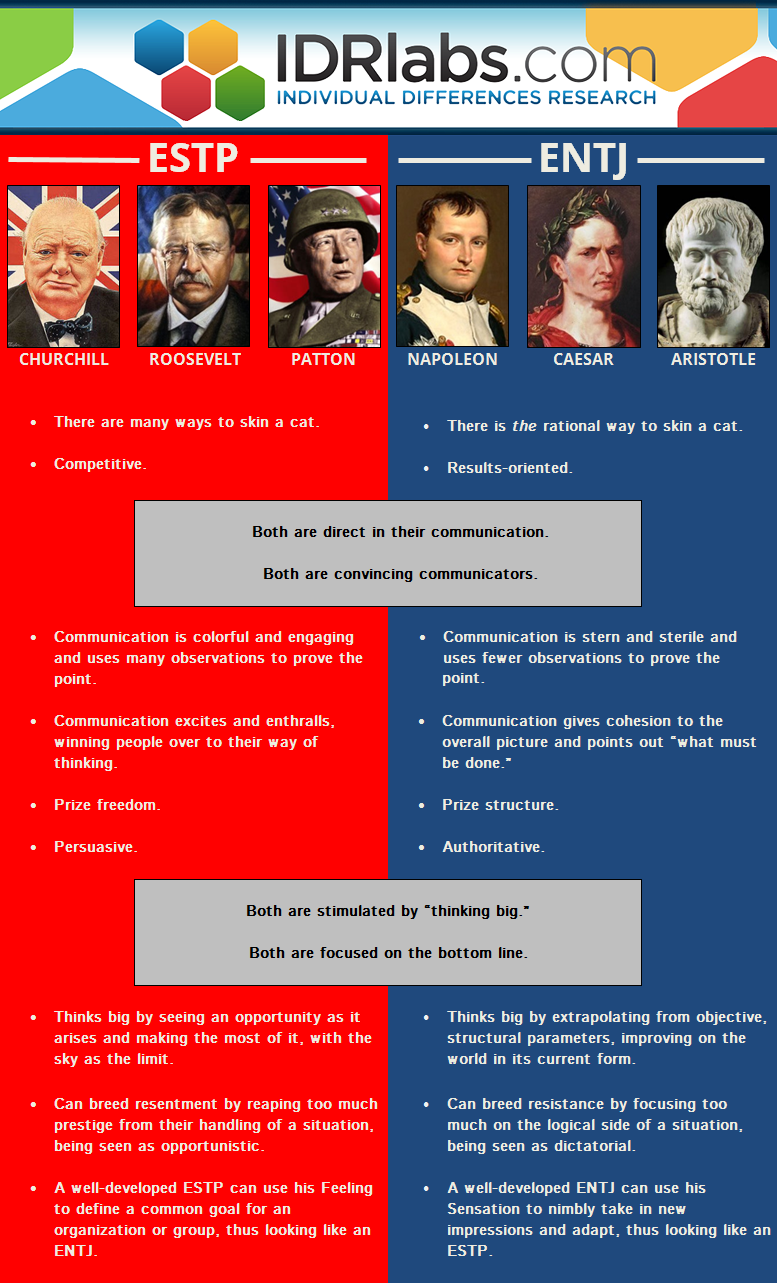
Subjugation शब्द, कम से कम जिस तरह मैं इसका उपयोग करता हूं, imply करता है कि focus obstacle को eliminate करने पर है, और exhilaration ENTJ के fight जीतने के बाद आती है। हालांकि, ESTP के लिए, “conquering” शब्द का मतलब है कि जबकि winning exhilarating है, focus fight itself पर अधिक है; conquering के act पर, rather than उसके बाद के moment पर। ENTJ को fight के means से earned control और power पसंद है; ESTP को fight itself पसंद है, और well fight करना।
इसके अधिकांश को ESTP के Se को ENTJ के Te से contrast करके explain किया जा सकता है। सबसे पहले, ENTJ एक rational thinker है, जो किसी चीज के judgment या conclusion पर focused है, और यह किसी certain scheme में कहां fit होता है, जबकि ESTP ideas या events को experience करने और उनसे जितना possible हो उतना get करने पर focused है, क्योंकि idea essentially dead हो जाती है once यह उनके mind में file away हो जाती है। ENTJ का Te end के means के रूप में fight करता है, और यह end ही है जो वे really चाहते हैं, लेकिन ESTP का Se fight के experience के लिए fight करता है।
当然, जब मैं “fight” कहता हूं, तो मैं इसका metaphorical अर्थ लेता हूं। ESTP preferences किसी individual को violence की ओर predispose नहीं करतीं जितना मुझे concerned है। “Fight” से मेरा मतलब ESTP द्वारा undertake किया जाने वाला कोई भी endeavor है, entrepreneurship से big game hunting, acting से speech देने तक सब कुछ। इन सभी में, ESTP mindset ISTP के समान है, क्योंकि दोनों real time में activity को well perform करना चाहते हैं और flexible और expert enough रहना चाहते हैं sudden changes के adapt करने के लिए, लेकिन जबकि ISTP activity को strategizing, understanding, और mastering पर focused है, ESTP activity को experience करने, performing करने, और ultimately conquering करने पर focused है।
इससे imply नहीं होता कि Se unthinking है, और enhanced sense perception के synonymous। Sense perception एक biological trait है, और Jungian typology को biology के बारे में कुछ कहना नहीं है। Jungian typology, however, information के प्रति लोगों के philosophical perspectives के बारे में बात करता है, और Se सभी functions में outside world के साथ सबसे direct relationship रखता है। Se types केवल अपने immediate surroundings के प्रति sensitive नहीं हैं, बल्कि अपनी world में general state of affairs के प्रति, news से personalities तक, how things work तक।
यह ESTP का एक और core aspect introduce करता है: वे here and now में जीते हैं। इससे ESTP के लिए usually recognized से कहीं अधिक implications हैं। ESTP, कम से कम necessarily नहीं, एक slobbering hedonist या grasshopper नहीं है जिसने winter के लिए sufficiently prepare नहीं किया और cold में freeze हो गया। Dominant Se को अक्सर refined taste द्वारा characterize किया जाता है, और here and now में जीना मतलब Se का morbidly near-sighted होना नहीं है। बल्कि, ESTP का present में grounding imply करता है कि वे exceptionally resourceful हैं, क्योंकि वे speculation या future visions के unfold होने पर rely नहीं करते, बल्कि whatever उनके पास hand पर है उसके साथ work करते हैं, here and now, thick of things में, fray में जहां stuff constantly हो रही है। Battle के midst में what could be की speculation के लिए time नहीं है, केवल what really is पर absolute focus; otherwise, game-changing opportunities pass you by हो सकती हैं।
यह here-and-now mentality ESTP को एक distinct impatience देती है, या अधिक accurately, keep moving की desire। Famous ESTPs के कई quotes इसे demonstrate करते हैं:
- “मैंने कभी किसी चीज के बारे में procrastinated नहीं किया।”
- “हम rather run the risk of wearing out than rusting out करें।”
- “अभी vigor के साथ applied good solution perfect solution से बेहतर है जो ten minutes later applied हो।”
- “हम old lady की तरह street crossing के middle में stand करके hit हुए बिना नहीं रह सकते।”
ESTP की energy naturally here-and-now में flow करती है, और long-term planning में नहीं, distant speculation, या strategic waiting में, जैसा कई INTJs या INFJs के साथ है। इस प्रकार, ESTPs अक्सर thick of things में best work करते हैं, खुद को fray में throw करके, जहां things इतनी fast हैं कि उनके resourceful और powerful mind के साथ keep up कर सकें। ESTPs अक्सर incredible obstacles को overcome करने की fascinating ability रखते हैं little more than rallying speech और pure horsepower के blitzkrieg से जो resourceful way में applied हो। उदाहरण के लिए, जब Eisenhower ने General Patton को message भेजा Trier city को bypass करने का, क्योंकि इसे capture करने में four divisions लगेंगे। Patton ने reply किया कि उन्होंने already Trier city को only two divisions से ले लिया है, और पूछा “आप क्या चाहते हैं कि मैं इसे वापस दूं?” दूसरे शब्दों में, ESTP का here-and-now के साथ direct relationship उन्हें better achieve करने की अनुमति देता है acting immediately strength, vigor और willpower से, rather than अपनी strength को reserve करके और time over portioning करके। Ten minutes में anything हो सकता है, वे कह सकते हैं, better to act now so we don’t miss any opportunities। If we don’t flinch, और resolute courage maintain करें, तो यह amaze करेगा कि हम क्या कर सकते हैं।
ESTP के Se, here-and-now focus के three more distinct effects हैं।
पहला, here and now future में anything पर precedence लेता है, previous plans या even agreed rules सहित, उदाहरण के लिए, Patton का Trier city लेना before receiving any direction, या Douglas MacArthur का Korean War में China की ओर disobedient advance। ESTP कभी-कभी annoyed हो सकता है कि rules, plans या authority उन्हें beautiful opportunity miss करा रहे हैं।
दूसरा, ESTP अपनी life में variety को greatly appreciate करता है, क्योंकि वे past के किसी part को hold नहीं कर रहे हैं या future में extensively project नहीं कर रहे हैं, इसलिए routine में settle होने का कोई reason नहीं है। यह भी इसलिए है क्योंकि Se, Ne की तरह, किसी चीज के different angles analyze करता है, लेकिन rather than इसके possibilities को different angles से examine करके object के around much more broad view get करना, वे thing itself को different angles से analyze करते हैं, more focused view get करके। फिर भी, Se naturally resonate करता है idea के साथ कि cat को skin करने का more than one way है, opposed to Ni के sentiment को, जो इस statement के merit को recognize कर सकता है, लेकिन still unconsciously feels कि cat को skin करने का ideal way है।
तीसरा, ESTP perspective, और therefore things के उनके descriptions, अक्सर vivid snapshots जैसे होते हैं। ESTP जानता है कि things को very visceral way में describe कैसे करें, single moment में आने वाले suspense या beauty या awe को recreate करने के लिए। जबकि Ni को possibilities के very compelling depictions create करने के लिए जाना जाता है, जैसे Plato की theory of forms या Nietzsche का Ubermensch, Se को reality के very compelling depictions create करने के लिए जाना जाता है, जैसे Hemingway का terse but vivid writing style या Patton के brutal और visceral explanations।
Tertiary Fe ESTP को एक और advantage देता है: वे surrounding sentiment के standards के adapt कर सकते हैं। दूसरे शब्दों में, practiced ESTP लोगों को comfortable feel कराने, others को please करने, appearances keep करने, और good show on करने में very good हो सकता है। यह ESTP की famous और notorious persuasion की power है जिसने उन्हें con man या salesperson के stereotype को earn किया है। यह stereotype उसी तरह लिया जाना चाहिए जैसे ENTJ को stereotypically brutal tyrant माना जाता है। और जबकि unpleasant version का ESTP con man हो सकता है, pleasant version Winston Churchill होगा जो World War II के raging heart के through British people की spirit carry कर रहा था। ESTP के visceral और vivid descriptions और facts और time के moments के साथ direct relationship, साथ ही logical, hard principles का कभी-कभी stubborn holding, yet charming और compelling understanding of other people और what they find encouraging: यह सब combine होकर ESTP को brilliant spokesman के potential देता है।
हालांकि, ESTP का dominant Se, जैसा मैंने पहले alluded किया है, Ni को repress करता है। यह interesting हो सकता है कि ESTP INFJ का unrepressed, या “alternate universe” version है, यदि आप चाहें, क्योंकि जबकि INFJ Se को repress करता है और कम developed Ti रखता है, ये ESTP के लिए more dominant traits हैं, जो alternatively Ni को repress करता है और Fe पर less focus डालता है। INFJ और ESTP के बीच relationships therefore कम से कम कहने को interesting हो सकती हैं। इन types के historical figures ने एक certain mistrust, frustration, या even disgust of each other demonstrate किया है, और यह likely attributed किया जा सकता है fact को कि each other का repressed side represent करता है, side जो हमेशा उन्हें trip up करता है और सबसे अधिक confuse करता है। Thomas Jefferson और Andrew Jackson एक-दूसरे को less than agreeable पाए, और Churchill का Gandhi के प्रति disgust well-known है (और当然 Churchill vs. Hitler – ed.)।
ESTP में repressed Ni के concerning, यदि हम Se को here and now पर focused मानें, और फिर Ni को practically everything but here and now पर focused मानें – reality से independent possibilities; future के distant predictions और past के overarching patterns – ESTP को such future speculation objectionable लगता है। ESTPs को thick of things में throw करना पसंद है, rather than plan के properly mature होने का wait करना, और objects के साथ उनका direct relationship objects के above या around anything को, much less अपने own subject के above या around, relevant लेकिन नहीं बनाता। इस reason से, ESTP को academic banter या jargon, या long-winded philosophizing greatly disliking के लिए जाना जाता है, जिसे वे often feel करते हैं pompously intelligence assume कर रहा है when it has no immediate relevance at all।
जबकि ESTP Ni के contemplative spirit को revile कर सकता है, truth यह है, जैसा सभी types और उनके repressed functions के साथ, कि ESTP Ni को just as enticing और dangerous पाता है जितना INFJ अपना repressed Se पाता है। ESTP सबसे often अपनी Ni द्वारा tricked होता है अपनी ideas के reach को overestimate करने के लिए। ESTP big idea person है, और जबकि वे wait around करना पसंद नहीं करते, उनके पास big plans हैं जो वे अपने resourceful style में implement करने seek करते हैं, लेकिन कभी-कभी ये big ideas too big हो जाती हैं, so that वे pan out नहीं होतीं जैसा ESTP ने thought किया था। एक great example है Douglas MacArthur का American-Korean War में Chinese पर advance; उसने already Korea का significant portion जीत लिया था, लेकिन अपनी excitement में believed कि United States successfully all of Korea conquer कर सकता है और even China के against winning war begin कर सकता है। इस प्रकार इस Ni vision द्वारा caught, इस vague speculation द्वारा जो उसे fulfilled feel हुई, उसने orders disobey किए और northern Korea में further march किया, Chinese को earnestly northern Koreans reinforce करने incite करके। MacArthur ने Chinese reaction को underestimate किया, और South Korea में driven back हो गया, अपनी previously conquered land का much lose करके।
तो, summary में, ESTP conquering है, fight को its own sake के लिए loving। उनका here and now पर focus उन्हें extremely adaptive और resourceful बनाता है, present action में अपनी energy put करना prefer करके rather than long-term plan develop होने का wait करना। उनका tertiary Fe उन्हें exceptional persuasion और encouragement की powers देता है, जबकि उनका repressed Ni उन्हें academic long-windedness के aversive और अपनी intuitions के overestimating बनाता है।
पढ़ने के लिए धन्यवाद, और सभी ESTPs के लिए, present world से deal करने में अपनी vitality, courage, और resourcefulness के लिए धन्यवाद।
इस piece को video के रूप में यहां देखें।